“They can run as much as they want,” Harold said. “I have some old wooden blocks in the attic that my grandson used to play with, and I still know how to make a decent pitcher of sweet tea.”
The image of Emma twirling her hair, Noah lining up his plastic blocks on the linoleum, and Liam clutching his green dinosaur in our small, cramped duplex kitchen came over me.
If I took the job, I could pay the three hundred dollar electrical bill on Monday, five days before the shut-off deadline on the fifteenth.
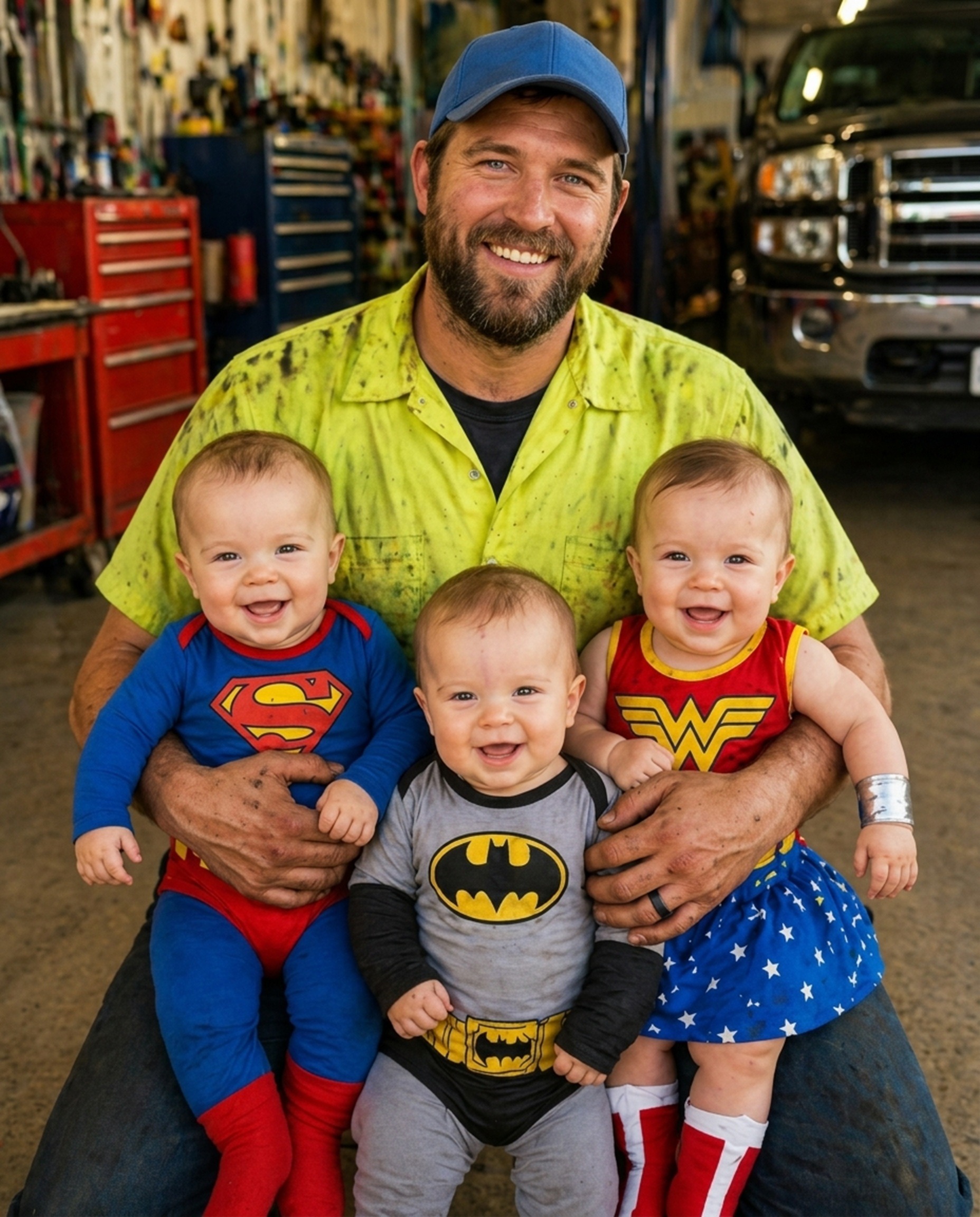
“They’re loud, Harold,” I warned. “And they’re fast. You turn your back for a second, and Liam is trying to climb the neighbor’s fence.”
“I spent thirty-five years working for the postal service, Evan,” Harold said with a dry chuckle. “I have dealt with worse than three five-year-olds.”
Cole stood up from the porch railing, his boots squeaking on the damp wood. “Sounds like a fair trade to me, Evan. And I can tell you the chief won’t mind me giving you a ride back to the duplex so you can get to work.”
“I’ll pay you the first week in advance,” Harold said, reaching into his pocket and pulling out three crisp hundred-dollar bills and a twenty. “That way you can buy whatever supplies you need before tomorrow morning.”
He placed the cash on the small green table between our chairs. The blue ink of the bills seemed to glow against the chipped paint of the metal table.
That money was the difference between keeping my children warm and sitting in a dark, cold house next week.
I reached out and took the bills, folding them carefully and tucking them into my front pocket.
“We will be here at eight tomorrow morning,” I said, my voice sounding steadier than I felt.
“I’ll have the tea ready,” Harold said, his hand extending toward me.
I stood up and took his hand, his grip warm and dry in the crisp autumn air.
I shook Harold’s hand, agreeing to the arrangement while the morning sun warmed the porch.
Two weeks later, the damp oak leaves in Harold’s backyard had turned the color of an old penny.
I hauled a thick bundle of fallen maple limbs to the edge of the gravel alley, my work boots sinking into the soft, waterlogged turf with every step.
Noah sat near a rotting oak stump, carefully lining up yellow and blue plastic blocks in a straight, perfect row that stretched toward the garden bed.
Beside him, Liam ran in wide circles through the tall, uncut grass, making high-pitched engine noises while his green toy dinosaur soared through the air.
Emma stood near the bottom of the back porch steps, her eyes fixed on Harold Lawson as he adjusted the wool cardigan around his neck.
“Do you have a swing, Mr. Lawson?” Emma asked, twirling a strand of brown hair around her finger.
Harold adjusted his collar and smiled down at her from his metal lawn chair, his hands resting on his knees.
“I do not have a swing, young lady,” Harold said, his voice carrying that slow, formal politeness. “But I have a very old apple tree that might hold one if your father approves.”
I stopped and wiped my brow with the back of my hand, rubbing my left wrist where my watch used to sit.
The grass was still wet from the morning mist, and the smell of damp earth and wood rot was heavy in the autumn air.
“We do not need to trouble Mr. Lawson about swings, Emma,” I said, lifting another heavy branch.
“It is no trouble at all, Evan,” Harold said, leaning forward slightly.
He looked at the triplets with a quiet intensity that made me lower the branch.
“They have a lot of energy,” I said, trying to fill the quiet.
“Energy is a very fine thing to have in a yard,” Harold said, his gaze lingering on Liam as the boy tripped, laughed, and scrambled back to his feet.
“Liam, keep your eyes on the ground,” I called out.
Liam did not answer, already running toward the back fence where a patch of wild clover grew.
Emma took a step closer to Harold, her hand reaching out to touch the arm of his chair.
“My dad can build anything,” Emma said. “He built a shelf for our kitchen.”
“Is that so?” Harold asked, looking over at me with a soft smile.
“It was just some pine scrap from the shop,” I said, though my chest warmed a little.
“A shelf that holds weight is a good shelf,” Harold said.
He stood up slowly, placing both hands on his cane to steady himself before he took a step.
“I believe the sun is high enough for lunch,” Harold said.
The children stopped what they were doing and looked at me, waiting for my nod before they moved toward the house.
The kitchen smelled of toast and hot chicory coffee, a sharp contrast to the cold air outside.
Harold moved around the yellowed laminate countertops with slow, deliberate steps, retrieving five tall glasses from the cupboard.
He poured fresh lemonade from a glass pitcher, the ice cubes clinking softly against the sides.
“During my thirty years with the postal service,” Harold said, setting a plate of round butter crackers on the yellowed table, “I carried a leather pouch that weighed forty pounds on Mondays.”
Liam stopped chewing his cracker, his eyes wide.
“Did you have to fight dogs?” Liam asked.
“Only the small ones,” Harold said, a dry smile touching his lips. “The big ones usually just wanted to share my sandwich.”
The triplets laughed, the sound bright and loud in the small, quiet kitchen.
I sat on the wooden stool near the back door, cradling a mug of the chicory coffee Harold had brewed for me.
It was bitter, but it was hot, and it took the chill out of my fingers.
Noah looked up from his glass of lemonade, his voice a soft whisper.
“Did you ever lose a letter, Mr. Lawson?” Noah asked.
Harold went still for a second, his fingers brushing against his shirt collar.
“I never lost a single envelope,” Harold said. “Every message found its home, eventually.”
He turned back to the counter, his back to us as he wiped a stray drop of lemonade with a clean dishcloth.
On the small wooden desk near the pantry, a stack of unopened mail lay next to a glossy white business card.
I could see bold blue lettering on the card from where I sat, though I could not make out the name.
“My dad is a mechanic,” Emma said, her voice full of pride. “He fixes the big trucks.”
“He is a very skilled man,” Harold said, turning back to us with a gentle nod.
“He works all night sometimes,” Emma added.
I cleared my throat, shifting my weight on the stool.
“That is enough about work, Emma,” I said.
The children fell quiet, sipping their drinks while Harold watched them with that same soft expression.
He looked like a man who had spent too many years talking only to the walls.
“The yard is looking much better, Evan,” Harold said.
“There is still a lot of brush to clear by the back fence,” I said.
“We have plenty of weekends ahead of us,” Harold said.
I looked down at the dark grease stained deep into the creases of my palms.
For the first time in months, my mind was not running through the math of our grocery bills or the cost of winter coats.
The warmth of the kitchen felt like a shield against the rest of the world.
By three o’clock, the shadow of the neighbor’s garage had stretched across the entire backyard.
The triplets were playing near the porch steps, sorting smooth gray pebbles into piles of different sizes.
I wiped down my shovel with an old shop rag, preparing to load my tools into the back of my truck.
Harold stepped out onto the porch, holding a small white envelope in his hand.
“This is for your labor today, Evan,” Harold said, extending the envelope toward me.
I reached out and took it, the paper clean and crisp against my dirty fingers.
I opened the flap and looked inside, expecting the fifty dollars we had discussed for a half-day of yard work.
Instead, there was a stack of crisp, green bills.
I pulled them out, my thumb counting three hundred-dollar bills.
“Mr. Lawson, this is too much,” I said, trying to hand the bills back to him. “We agreed on fifty.”
“The work you did today would have cost me much more if I hired a commercial crew,” Harold said, adjusting his collar.
“But I am not a commercial crew,” I said. “And this is far more than the job is worth.”
“It is worth that much to me,” Harold said.
I looked at the bills in my hand, my chest tightening as I realized what this meant.
Three hundred dollars was exactly the amount of our past-due electric bill.
It felt too easy, like a trap I did not see.
“I cannot take this, Mr. Lawson,” I said.
“You can, and you will,” Harold said, his voice carrying a firm, quiet authority that reminded me of my own father.
“But why?” I asked.
Harold looked past me, his eyes resting on the triplets as they laughed over a particularly shiny pebble.
“Because some things are worth more than the paper they are printed on,” Harold said.
I stood there, the cash heavy in my palm, torn between my pride and the memory of the shut-off notice on my kitchen counter.
A cold breeze swept through the yard, rustling the dry leaves at our feet.
I folded the money and slid it into my front pocket, the weight of it settling against my thigh.
“Thank you, Mr. Lawson,” I said.
“You are very welcome, Evan,” Harold said.
He leaned against the wooden porch railing, his gaze still fixed on the children.
The sun was sinking lower, casting a long, amber glow across the front yard.
Harold sat down on the wooden bench, gesturing for me to join him.