I knelt by the old wooden bench near the garden bed, tightening the last brass screw into the cedar armrest.
My knuckles brushed the rough wood, but the splinter did not catch this time.
The bench was solid now, anchored deep into the dirt where the soil was soft and wet.
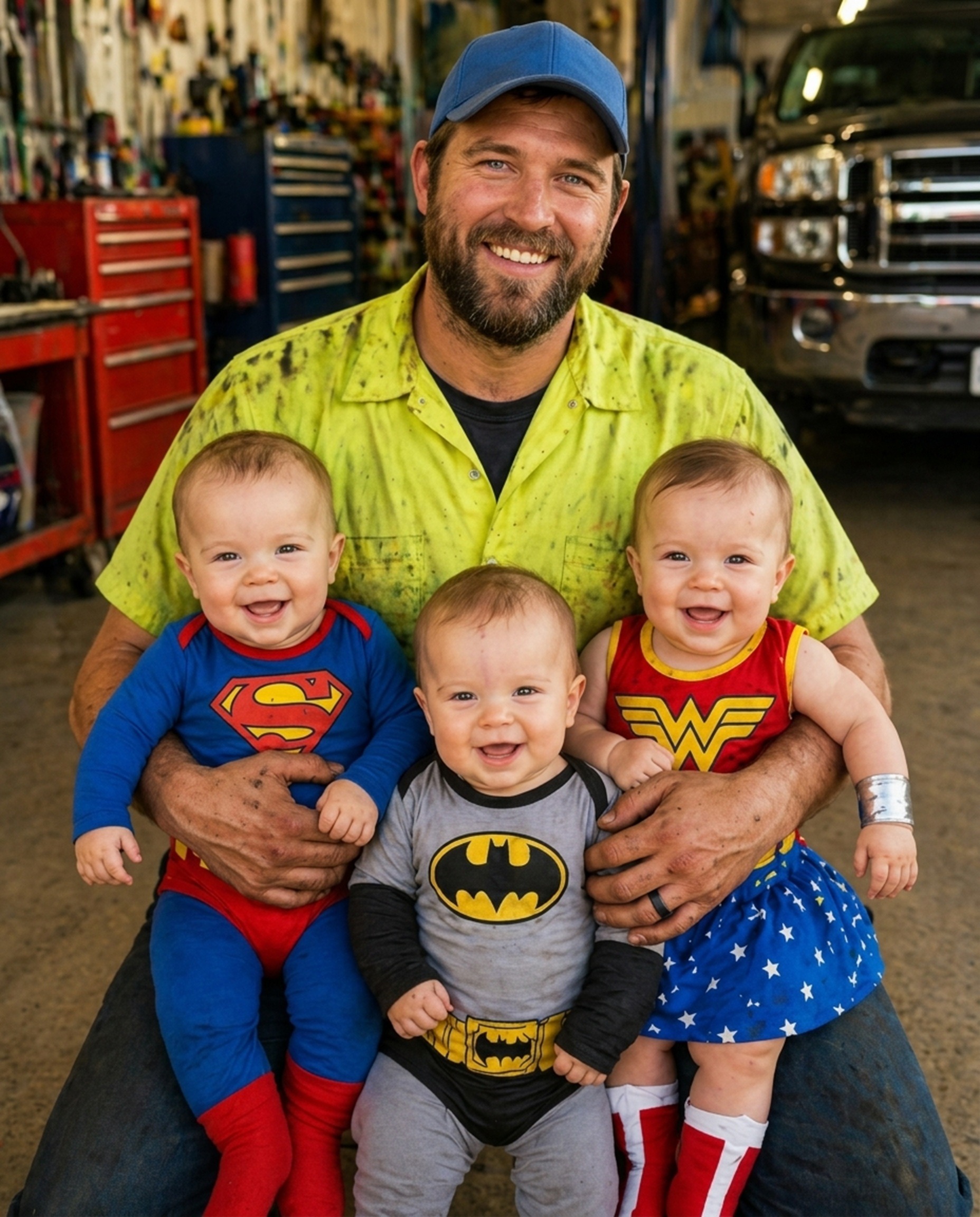
I had spent the morning scraping the old gray paint off the legs, revealing the clean, white pine underneath.
It took two hours and a whole pack of twelve-dollar shop rags to clean the grease from my hands afterward, but the work was satisfying.
Harold sat three feet away in a green lawn chair, his legs crossed at the ankles.
He wore a clean checkered shirt, and his collar was loose, showing the pale skin of his throat.
A tall glass of sweet tea sat on the small folding table beside him, the ice melting into thin circles of water.
“You put an extra support under the middle,” Harold said, his voice carrying that slow, steady rhythm.
“The old pine was rotting through,” I said, putting my screwdriver back into the canvas bag. “It would have split the next time two people sat down.”
Harold nodded once, his eyes following Liam as the boy circled the silver maple tree.
“My father built the original one in fifty-eight,” he said. “He used common nails, but they held for forty years.”
He reached down and touched the edge of the new cedar board, his fingers tracing the grain.
The skin on his hand was thin as parchment, showing the blue veins underneath.
“A good repair lasts longer than the first build,” he said.
I pulled my rag from my back pocket and wiped the grease from my thumb.
“It depends on who is doing the fixing,” I said.
We sat in silence for a minute, listening to the wind move through the maple leaves.
The neighborhood was quiet, save for the occasional car passing on the main road two blocks away.
It was the kind of afternoon where nobody was in a hurry, not even the kids.
Noah finished his row of blocks, then carefully tapped the last one with his index finger to make sure it was aligned with the edge of the step.
“He gets that from his grandfather,” Harold said, gesturing toward Noah. “My father could not stand a crooked line. He used to spend twenty minutes aligning the firewood in the shed.”
“I think he gets it from my side,” I said with a small smile. “If a socket wrench is out of place in my chest, I can feel it without looking.”
Harold laughed, a dry, quiet sound that ended in a soft cough.
He took a small sip of his sweet tea, the condensation on the glass dripping onto his palm.
“Officer Cole stopped by yesterday morning,” Harold said. “He told me they finally revoked Vance’s business license in three counties.”
“It took them long enough,” I said.
“They found four other houses in the county where he had taken deposits and never delivered the shingles,” Harold said. “One of them was an old widow over in Greenfield.”
I tightened the drawstring on my tool bag and swung it onto my shoulder.
“Some people look at a gray head and only see a dollar sign,” I said.
“Well, Cole said the state attorney is looking into the criminal side of it now,” Harold said. “I do not think we will be seeing his truck around Oak Street again.”
“Good,” I said. “He was a bully.”
“He was a man who forgot that some things cannot be bought or sold,” Harold said, tapping his fingers against the sweet tea glass. “When you spend your life trying to take from people who cannot fight back, you end up with a very empty house.”
“He almost had yours,” I said.
“He had my fear, Evan,” Harold said, looking out at the yard. “That was the only thing he really owned. Once you helped me stand up to him, he had nothing left to hold over me.”
Emma ran past the bench, her sneakers squeaking on the damp patio stones.
She stopped near Harold’s chair, twirling a strand of her dark hair around her index finger.
Her cheeks were flushed from the heat, and her cardigan was half-unbuttoned.
“Mr. Lawson, do you have any more of those lemon cookies?” she asked.
Harold smiled, the deep lines around his eyes softening as he leaned forward.
“I believe there might be three left in the jar on the counter,” he said.
“Can Noah and Liam have some too?”
“Only if you share them on the porch,” Harold said.
Emma did not wait for another word, turning on her heel and running toward the screen door.
The spring sun hit the white trim of the cottage, making the peeling paint look almost silver.
I stood up, stretching my back, and looked toward the alley where my truck was parked.
The three hundred dollar electric bill that had kept me awake in November was paid off, and the red notices had stopped coming to the duplex.
I had worked thirty extra hours of overtime at the auto repair shop during the winter, but the real difference was the Saturday mornings spent here.
Harold never let me leave without putting forty dollars into my pocket, even when all I did was rake leaves or clear the gutters.
“The grass is growing fast this week,” I said, pointing toward the back fence. “I can bring the mower around on Thursday after my shift.”
“There is no rush, Evan,” Harold said, adjusting his collar. “The yard has waited this long. It can wait another few days.”
He reached into his trousers and pulled out the worn black leather wallet.
The leather was scuffed at the corners, but it was clean, the thick stack of bills no longer bulging inside.
Most of the fifteen thousand dollars was gone now, sitting in a secure educational trust at the Oak Creek Savings and Loan under three small names.
He opened the billfold slowly, his fingers avoiding the empty money slot.
Instead, he reached into the small slit behind the plastic window and pulled out the faded photograph.
The woman in the yellow dress looked out from the square of paper, her smile preserved under a layer of old dust.
Harold held it by the very edge, his hand steady as he stared at the image.
“She would have liked this weather,” he said softly.
“She has her mother’s chin,” I said, looking down at the picture over his shoulder.
“She did,” Harold said. “And she had Emma’s temper, too, when she was small. You could not tell her a thing once her mind was set.”
He carefully slid the photograph back into its hiding place behind the lining.
The wallet clicked shut, the sound small in the quiet yard.
“I used to think about selling this place after Sarah passed,” he said, looking toward the roofline. “The green paint is too hard to keep up with, and the rooms are too cold in January.”
“We can seal the windows before the frost comes back,” I said.
“It is not the draft that makes a house cold, Evan.”
Emma came back out through the screen door, carrying a small paper plate with three yellow cookies.
She walked with great care, her eyes fixed on the crumbs to make sure none fell into the dirt.
Noah followed her, his blue blocks forgotten on the step, while Liam tucked his green dinosaur under his arm.
They sat in a small circle on the porch boards, their knees touching as Emma divided the food.
“This one is the biggest,” Liam whispered, pointing his finger.
“We share it equal,” Emma said, her voice sharp with five-year-old authority. “Mr. Lawson said so.”
Harold watched them from his chair, a small, tired smile on his face.
He slowly pushed himself up from the green canvas seat, his knees making a soft popping sound as he stood.
He walked over to the porch steps, his gait careful but steady, and sat down on the top step near the post.
Emma immediately moved closer, her shoulder resting against his knee.
“Mr. Lawson?” she asked, her mouth full of lemon cookie.
“Yes, Emma?”
“Noah says you used to carry the mail in a big blue truck.”
“I did,” Harold said. “For nearly thirty-two years. I carried letters all the way from the courthouse down to the creek.”
“Did you ever lose one?”
“Not a single one,” Harold said. “People depend on the mail. If you lose a letter, you might lose a story.”
Emma chewed slowly, her eyes wide as she looked up at his face.
She reached out and patted his knee with her sticky hand.
“Are you our grandpa now?” she asked.
The yard went very quiet, the only sound being the distant hum of a lawnmower three streets over.
Noah stopped chewing, his eyes darting from Emma to Harold’s face.
I stood by the wooden bench, my hand resting on the smooth cedar backrest, waiting.
Harold looked up at me, his eyes bright with a sudden, wet shine that he did not try to hide.
He did not adjust his collar this time.
He reached down and pulled Emma closer, his arm wrapping around her small shoulders.
“We are family now, Emma, and nothing is ever going to change that,” Harold said.
Noah slid over next to him, his small hand reaching out to touch Harold’s sleeve.
Liam sat on the bottom step, his green dinosaur resting on his knee as he watched the birds in the maple tree.
I made the choice to return the lost wallet, and that single act of honesty brought my family a lifetime of support.
Harold remained a constant presence in our lives, watching the triplets grow up in his green yard.
I refused to accept any direct cash reward for myself, choosing instead to let Harold build a genuine bond with my children.
The old duplex was eventually paid off, and the mechanics shop felt a little lighter each morning.
Harold sat on the porch, holding the old photograph in his worn hands as the children played.
“Are you our grandpa now?”
The ENG.