The metal teeth of the old pipe wrench sheared off with a dry snap.
“That is forty dollars of my time I am not paying for,” Henderson said, his voice rising above the idle of a box truck out in the lot.
I looked at the broken tool in my palm, then at his rusted Dodge Caravan up on the hydraulic lift.
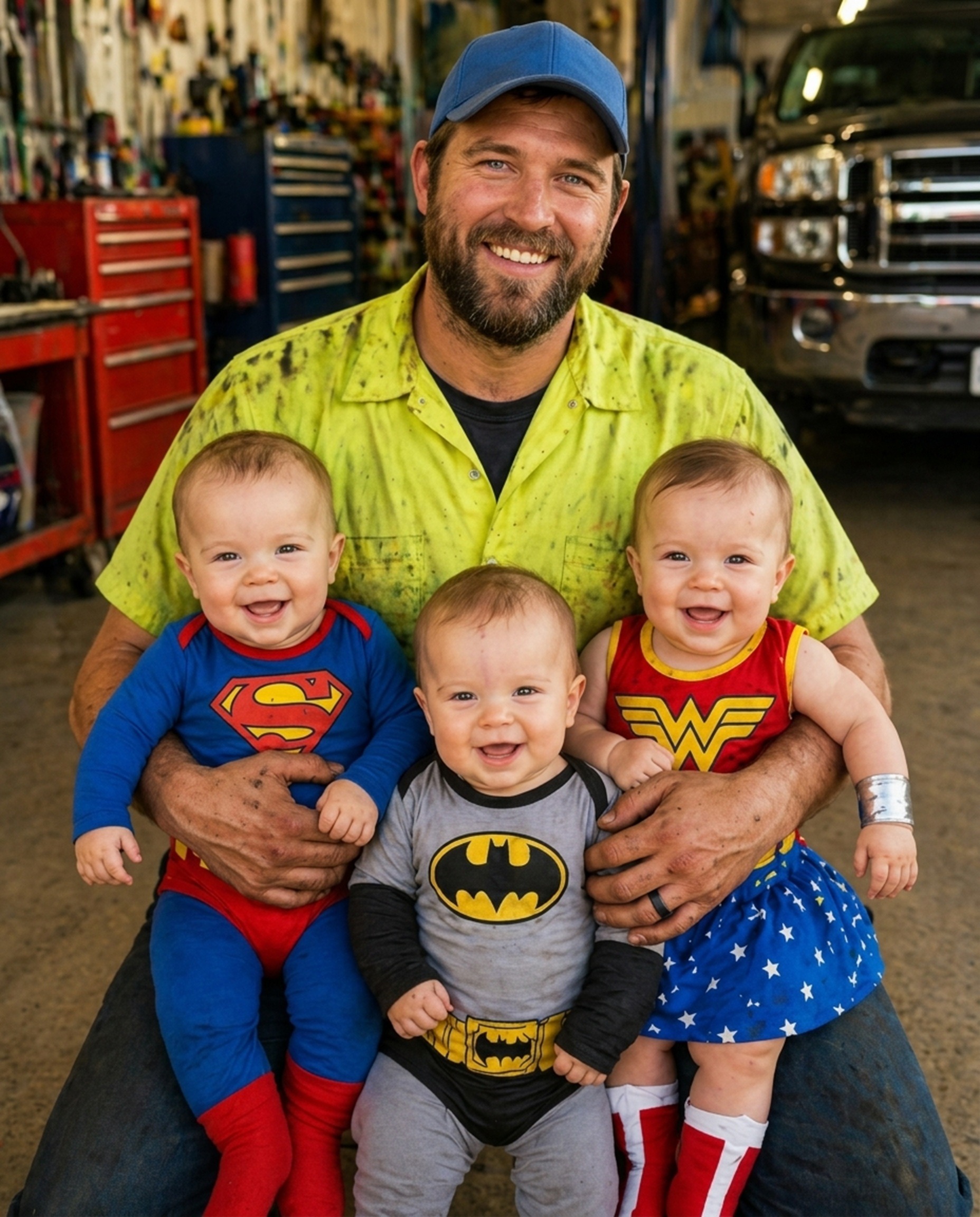
“The distributor cap is back-ordered from Cleveland,” I said.
I rubbed my left wrist, where the strap of my Timex had left a pale strip of skin before I had to pawn it three weeks ago.
“Cleveland is two hours away, Carter,” he said, slamming his hand against the faded red fender.
“They do not have the driver,” I said.
He spat onto the gray concrete, right near a fresh puddle of dark transmission fluid, and turned toward the open bay door.
“Put the old one back in,” he said, his work boots crunching on the damp autumn leaves outside.
“The old cap is cracked into three pieces, Mr. Henderson,” I said.
He did not turn around.
The side door banged shut behind him, leaving the shop quiet except for the steady drip of water from the metal eaves.
A pack of shop rags cost twelve dollars now, and the distributor cap was already charged to my commercial account.
I set the broken wrench on the workbench, right next to a cold mug of burnt chicory coffee.
The bill for the parts was due by the end of the week, and my bank account was down to sixteen dollars.
The drive home was five minutes of cold air coming through the rusted vents of my Ford pickup.
The gallon of milk on my kitchen counter had four dollars and ten cents marked on the red cap in black marker.
Liam clutched his green toy dinosaur against his chest, his eyes wide as he watched the milk pool around the toaster base.
“It is swimming,” Emma said, twirling a strand of brown hair around her finger.
Noah did not say anything, but he lined up four yellow plastic blocks in a perfect row on the dry end of the table.
I grabbed a blue shop rag from my pocket and threw it over the white puddle before it reached the edge.
The smell of burnt toast mixed with the heavy scent of the chicory coffee I had brewed that morning.
A thin trail of black smoke rose from the toaster slots, curling toward the low ceiling of our duplex kitchen.
“Nobody touch the plug,” I said.
I pulled the lever up on the toaster, but the bread was already black and hard as coal.
“Can we have cold toast?” Emma asked, her words coming in a rapid, breathless rush.
“We have plain bread,” I said.
I threw the charred slices into the plastic bin under the sink, the dry crusts hitting the bottom with a hollow thud.
On the refrigerator door, the pink utility shut-off notice held its place under a magnet shaped like a school bus.
November fifteenth was circled in thick black ink.
Three hundred dollars was the number written in the center of the page, and the deadline was five days away.
We sat down to the dry slices of white bread, the three of them chewing without making a sound.
“I am going back to the shop for an hour,” I said to the quiet room.
Noah looked up from his blocks, his small forehead wrinkling, but he only nodded once and moved the green block to the end of his line.
The wind outside the garage was pushing the wet oak leaves against the metal door with a sound like gravel hitting a shield.
I took the push broom and started at the back wall, behind the tire balancer where the dust gathered in thick rolls.
My boots made a dull scraping sound on the concrete as I pushed the pile toward the center of the bay.
Under the hydraulic lift, where Mr. Henderson’s Caravan had been parked, something caught the edge of the broom.
It was heavy enough to resist the soft bristles.
I nudged it with the toe of my work boot, expecting a discarded oil filter or a frozen caliper bolt from last week.
Instead, the toe of my leather boot kicked a thick black leather wallet.
It slid out from the shadow of the steel support beam and stopped near the floor drain.
The leather was old and scratched, but it was thick, the kind of tri-fold that did not bend easily.
I picked it up, expecting the weight of copper coins or a heavy brass key ring inside.
The grease on my thumb left a dark smudge across the grain of the cowhide.
I walked over to the desk by the tool chest, where the single yellow bulb of the desk lamp hummed.
My hand was steady until I unclipped the silver band that held the wallet closed.
Inside, there were no credit cards in the slots, and no driver’s license visible through the plastic window.
There was only paper, packed so tightly the seams of the leather were pulling apart.
I pulled the first stack out, my thumb catching on the clean edge of a hundred-dollar bill.
There was another stack behind it, and another behind that, all bound with thick tan rubber bands.
I counted ten bills in the first small pile before my hand started to shake.
“I just need one break, just one, to get us through the month,” I whispered to the empty garage.
The bills were all hundreds, smelling of old paper and the cedar lining of a drawer.
I counted fifteen thousand dollars in total, laid out on the greasy green blotter of my desk.
Three hundred dollars of this would keep the lights on in the duplex.
The rest would pay the rent through the winter, buy three new sets of coats for the triplets, and fix my truck.
I looked at the window, where the rain was starting to streak the glass in long, gray lines.
Nobody had called the shop since five o’clock.
Nobody was looking for it yet.
I stared at the thick stack of bills, my heart hammering against my ribs as I counted the money.
I slipped my thumb inside the leather sleeve behind the cash and pulled out a small piece of laminated plastic. The plastic was yellowed at the edges, scratched from years of sliding in and out of a tight slot. It was an Ohio driver’s license, showing a man with thin shoulders and a crown of white hair that looked like dry winter grass.
The name read Harold Lawson. Above the address on Cherry Street, the birth date confirmed he was seventy-eight years old, a retired postal worker who lived alone in that green cottage with the peeling paint on the corner of Elm. He lived less than a mile from my duplex, in a quiet neighborhood where the sidewalks were cracked and covered in yellow oak leaves.
I looked at his face in the photo. He was wearing a stiff collar, done up to the very top button, looking straight into the camera lens with a formal, old-fashioned politeness. It was the face of a man who still polished his shoes every Sunday morning, even if he had nowhere to go.
The wallet in my hands felt heavier now, its thick black leather smelling of old paper and cedar shaving cologne. Fifteen thousand dollars in crisp, banded hundred-dollar bills sat nestled in the main compartment, enough money to pay my rent for two full years and clear every grocery tab I had in town.
I rubbed my left wrist where my watch used to sit before I pawned it back in August. My fingers searched for a buckle that was no longer there, touching only the pale, smooth skin where the cheap strap had protected it from the grease of the shop floor.
The utility shut-off notice for my duplex was sitting on my kitchen counter at home, printed with a balance of three hundred dollars due on November fifteenth. That date was less than three weeks away, and my checking account had exactly twelve dollars and forty cents left after I bought a fresh pack of shop rags for twelve dollars on Tuesday.
A single hundred-dollar bill from this stack would buy a whole month of groceries, the real milk that cost four dollars and ten cents a gallon instead of the powdered stuff I had been mixing with tap water to make it stretch.
I stared at the license again, the old man’s eyes clear and steady under the laminated surface. If he had this much cash on him, he was either very rich or very foolish, and in Oak Creek, nobody got rich working for the postal service.
The silence of the garage was absolute, save for the occasional drip of transmission fluid hitting a metal drip pan in the corner of bay two. The concrete floor was cold under my boots, holding the chill of the Ohio autumn that was settling into the valley.
I reached down and touched the edge of the workbench, my fingers finding a stray lock washer and sliding it back and forth along the wood. The money was right there, unguarded, a simple mistake by an old man who probably had more than he could ever spend in his remaining years.
But my children would know if I brought home things we could not afford, or if they saw the sudden ease in my shoulders when I paid the electric bill. Noah, at five, was already too quick to notice when my chest went tight at the grocery checkout.
I closed the leather flap of the wallet, the thick black hide resisting the fold because of the sheer volume of cash stuffed inside. I could not bring myself to slide it into my front pocket, nor did I want to leave it sitting on the open workbench where the morning light would hit it through the high windows.
I walked over to the wooden desk in the corner of the office, my boots making a dull, hollow sound on the plywood floor of the small room. The desk was an old oak piece we had inherited from the previous owner, its surface scarred by cigarette burns and dark rings from decades of coffee cups.
In the bottom right drawer, buried under old tax forms from three years ago and a box of rusty oil filter wrenches, was a small brass key. I reached deep into the drawer, my fingers brushing against the tarnished metal of the key before I pulled it out.
The brass was dull, but the teeth were still sharp, fitting into the lock cylinder of the drawer with a dry, stiff click. I placed the black leather wallet inside the drawer, pushing it all the way to the back behind a stack of unused invoice books.
I slid the drawer shut and turned the key to the left, the internal latch dropping into place with a heavy thud that felt permanent. I tugged on the brass handle once, twice, ensuring the wood held tight and the secret was locked away in the dark.
The key went into my front pocket, sliding down next to my pocketknife and a loose valve stem cap. I knew I could not take the wallet home to the duplex, not with the kids running around and the constant fear that I might reach in and pull out a single bill just to buy a box of cereal.
I switched off the shop lights one by one, the glowing green exit sign casting long, distorted shadows across the hydraulic lifts and the tool chests. The cold air hit my face as I stepped out onto the gravel lot, locking the heavy chain-link gate behind me.
The walk back to the duplex was short, the wind kicking up dry maple leaves that scraped along the asphalt like small claws. When I opened the kitchen door, the smell of burnt chicory coffee and toasted bread hit me, a thick, heavy scent that seemed to hang in the low-ceilinged room.
Emma was sitting on the linoleum, her dark hair tangled as she twirled a single strand around her index finger, her eyes fixed on a picture book.
“You took a long time, Daddy,” she said, her voice rising in that rapid, breathless way she had when she was tired. “Did you find the green truck’s wheels?”
“Not tonight, Emma,” I said, setting my lunchbox on the counter next to the sink. “Just had to clean up the bay before morning.”
Noah was nearby, sitting on his heels, carefully lining up three blue plastic blocks in a perfectly straight line on the floor, his face completely serious as he adjusted the gap between them.
“We had toast,” Liam said, running out of the hallway with his green plastic dinosaur clutched in his hand. “Noah dropped his milk, but I helped clean it up.”
I looked at the counter where a wet dishcloth lay in a gray puddle, the white laminate stained with the grease from my own knuckles.
“You guys did a good job,” I said, kneeling down to scoop Liam up into my arms, his small body warm and smelling of baby soap. “Let’s get those shoes off and get ready for bed.”
The bedroom they shared was small, containing two metal cots and a single mattress on the floor where Emma slept. The window was drafty, a sheet of plastic taped over the frame to keep out the October wind, but the plastic was already coming loose at the corner, clicking softly against the glass.
I tucked the heavy flannel blankets around Noah, his small hand reaching out to touch my sleeve, his eyes wide and watchful in the dim light of the hallway.
“Are you still worried about the paper with the bold writing, Daddy?” he whispered, his eyes scanning my face for a sign of trouble.
“No, buddy,” I said, swallowing the lump in my throat as my fingers brushed the brass key in my pocket. “Everything is fine. You just go to sleep.”
Emma climbed into her bed, her eyes already half-closed as she pulled her pink blanket up to her chin, her finger still twirling her hair.
“Tell me about the yellow boat tomorrow?” she asked, her voice dropping into a soft murmur.
“I will,” I said, kissing her forehead. “Every single detail, I promise.”
I stayed in the doorway until all three of them were breathing in that slow, rhythmic way that meant they were sleeping.
I walked back into the kitchen, the silence of the duplex settling around me like a damp coat. The utility bill lay on the table, its bold block lettering reminding me that three hundred dollars was due in exactly eighteen days.
I sat down in the wooden chair, the wood creaking under my weight as I reached into my pocket and pulled out the brass drawer key. I set it in the center of the white formica table, right next to the salt shaker, where the yellow light from the overhead fixture made the tarnished metal look almost gold.
If I kept that money, no one would ever know. Harold Lawson had likely lost it hours ago, perhaps on his walk from the bank, and he had no way of tracing it to my shop floor under the hydraulic lift.
But then I thought about the way Harold looked in his driver’s license photo, his neat collar and the quiet, old-fashioned dignity in his eyes.