PART 8: The Threat My Parents Created Became the Reason I Finally Started Making Ella Legally Mine
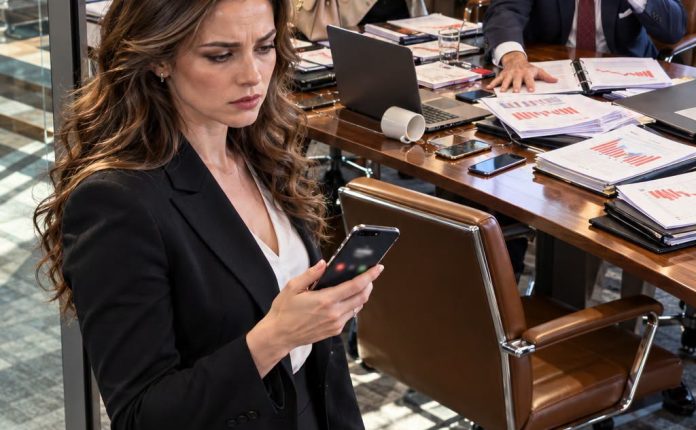
I sat at the kitchen table with Rachel’s message open on my phone.
My first reaction was disbelief.
Not because the words were unclear.
Because I had spent the previous two weeks preparing for war.
Court filings.
Custody evaluations.
Legal arguments.
Questions about Michael.
Questions about me.
Questions about Rachel’s past.
I had imagined strangers examining the most intimate parts of Ella’s life while deciding whether the home we had built counted enough.
Then the person I expected to fight sent:
I won’t stand in the way.
I laughed once.
Too loudly.
Too shakily.
Ella was at school.
The house was empty.
The laugh turned into something halfway between crying and breathing.
I put both hands over my face.
For months after Michael died, adoption paperwork felt impossible.
Not because I doubted wanting it.
Because every form made his death more real.
Each legal question forced me to acknowledge that the person who had originally connected Ella and me was gone.
I told myself we had time.
Ella already called me Mama.
Her school knew me.
Doctors knew me.
Neighbors knew me.
Everyone important understood who we were.
The wedding place card had exposed the flaw in that assumption.
Everyone understanding emotionally was not enough.
My parents had found the exact legal gap I had been too grief-stricken to close.
They meant to use it against me.
Instead, they had forced me to finish what Michael and I had already wanted.
I called my lawyer immediately.
She answered during the second ring.
“Judy?”
“Rachel texted.”
Silence.
“What did she say?”
“She will support the adoption.”
Another pause.
“Send me the message.”
“I will.”
“Do not reply beyond acknowledging receipt until we discuss the wording.”
“I know.”
“Good.”
I almost laughed.
“You sound surprised.”
“I am pleasantly surprised.”
“That makes two of us.”
“Judy.”
Her voice softened.
“This is good.”
I closed my eyes.
“I know.”
“Not finished.”
“I know.”
“But good.”
“Yes.”
That distinction mattered.
Relief could not become carelessness.
Even miracles needed paperwork.
I forwarded the message.
By lunchtime, my lawyer had begun outlining the next steps.
Formal consent.
Review of Rachel’s legal status.
Documentation regarding Michael.
Home records.
School records.
Evidence of the parent-child relationship Ella and I had already lived for years.
The process sounded clinical when listed aloud.
To me, every item contained memories.
School records meant emergency contacts.
Parent-teacher meetings.
Permission slips.
A kindergarten photograph where Ella refused to smile because she had decided serious faces looked “more professional.”
Medical records meant vaccinations.
Ear infections.
One terrifying fever at three in the morning.
Home records meant the room Michael painted pale yellow before Ella changed her favorite color to purple two weeks later.
Legal documents reduced life to evidence.
For once, I welcomed that.
I wanted the record.
I wanted every ordinary day written into something no relative could dismiss as fantasy.
Rachel met separately with counsel.
She did what she promised.
No sudden reversal.
No attempt to bargain for money.
No demand for immediate involvement.
She asked for only one thing to be recorded clearly.
If Ella wanted contact when she was older, Rachel hoped the door would not be permanently closed.
My lawyer asked what I thought.
I took time before answering.
A month earlier, my fear would have said no.
Absolutely not.
But the supervised visit had shown me something.
Ella did not need me to erase her history in order to be her mother.
Her biological origin did not threaten what we had.
Secrets could.
Fear could.
Other adults turning identity into a weapon certainly could.
“I won’t promise what Ella will want.”
“You shouldn’t.”
“But when she is old enough to understand, I won’t lie to her.”
My lawyer nodded.
“That is reasonable.”
I looked at Rachel’s signed consent.
“She gets to choose what that relationship means someday.”
“And until then?”
“I’m her mother.”
The words came easily.
Not defensively.
Fact.
When I told Ella that we were working on adoption paperwork, she did not react the way I expected.
I imagined excitement.
Maybe questions.
Instead, she frowned.
“What does adopted mean again?”
I sat beside her on the floor.
“It means a judge makes a legal paper saying what we already know.”
“What do we know?”
“That I’m your mama.”
“You already are.”
“I agree.”
“Then why does a judge need to say it?”
I nearly laughed.
“Because grown-ups make rules complicated.”
“That’s dumb.”
“Yes.”
She considered.
“Will Grandma still say fake?”
The question stripped the humor away.
I reached for her.
“No.”
Ella watched me.
“She can say whatever she wants.”
I tucked hair behind her ear.
“But it will never change the truth.”
“What truth?”
“You are my daughter.”
Ella nodded as though I had just confirmed tomorrow was Tuesday.
Then returned to coloring.
Children can make profound things feel wonderfully ordinary.
The legal process moved more slowly.
Forms.
Appointments.
Signatures.
Waiting.
Every time impatience rose, I reminded myself that slow certainty was better than rushed risk.
During those months, my family remained silent.
No apology.
No explanation for contacting Rachel.
No attempt from Andrew to repair anything.
At first I wondered what they knew.
Had Rachel told them she was supporting the adoption?
Did Mom realize her plan had backfired?
Then I stopped caring.
That was another kind of freedom.
Their reaction did not need to be part of every decision.
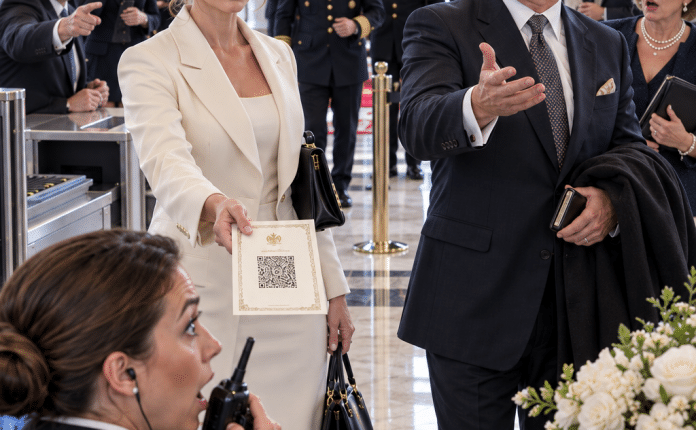
One evening, I took the folded place card from the drawer where I had stored it after the wedding.
Fake daughter.
The words looked almost absurd now.
Cheap black ink on expensive cream paper.
Two words chosen by adults who believed naming a child could define her.
I turned the card over.
Blank.
For years, my family had treated labels as reality.
Golden son.
Difficult daughter.
Real family.
Fake daughter.
People like that believe if they repeat the label often enough, everyone else will eventually live inside it.
I folded the card again.
Then put it into the folder containing copies of the adoption documents.
Not because the cruelty deserved preservation.
Because I wanted to remember exactly why I stopped allowing anyone else to define our family.
My parents had tried to use Ella’s biological mother as a weapon.
Instead, Rachel chose not to participate.
She signed.
My lawyer filed.
And what began as a threat slowly became the process that would close the only loophole my family had left to exploit.
The adoption was not final yet.
There were still hearings.
Reviews.
Waiting.
But for the first time since Michael died, I could see the finish line clearly.
And this time, I intended to reach it.
END PART 8