PART 3: After Michael Died, My Parents Asked When I Planned to Give Ella Back
The call came on a rainy night.
I remember the sound before I remember the words.
Water striking the windows.
The dryer running somewhere down the hallway.
Ella asleep in her room.
Michael had been driving home.
There had been an accident.
The person speaking to me used the gentle tone strangers use when they know their next sentence will divide your life into before and after.
There was nothing anyone could do.
He died instantly.
For days afterward, people moved around me as though underwater.
Funeral arrangements.
Paperwork.
Food appearing at the house.
Messages I barely read.
Voices saying:
I’m so sorry.
Let us know what you need.
Take care of yourself.
I remember very little of it clearly.
I remember Ella.
That first night, she climbed into my lap and wrapped both arms around my neck.
“When’s Daddy coming home?”
I could not answer.
How do you explain permanent absence to a child who still thinks next Tuesday is impossibly far away?
I held her.
That became my answer to almost everything.
For weeks, Ella woke crying.
Sometimes she screamed Michael’s name.
Other times she simply wandered into my room carrying her stuffed rabbit.
I would move over.
She climbed beside me.
I rubbed her back until she slept.
Some nights, I never did.
Childhood grief does not look like the funeral.
It looks like cereal.
School shoes.
A drawing.
Then suddenly:
“Daddy liked this song.”
Or:
“Can we call him?”
Or the same impossible question.
“When’s he coming back?”
I wanted to absorb all of it.
Every ounce of grief.
Anything that might leave less inside her.
That was when I made the mistake of believing my parents might finally soften.
Surely death would rearrange priorities.
Surely they could look at a six-year-old who had lost her father and stop debating whether biology mattered.
I went to see them.
Dad sat reading the newspaper.
Mom was folding laundry.
I explained that Ella was struggling.
“She needs family.”
Dad did not lower the paper.
“She has you.”
“She needs more than me.”
Silence.
“I’m asking if you can spend time with her.”
Dad finally lowered the paper.
“Judy.”
I knew that tone.
“What?”
“When are you giving her back?”
For a second, I genuinely thought grief had damaged my ability to understand language.
“Giving who back?”
“Ella.”
I stared.
“To whom?”
“Her mother,” Mom said.
She did not even stop folding.
“She’s still out there somewhere.”
I looked from one to the other.
“You know what happened.”
No response.
“Drugs.”
I heard my own voice getting quieter.
“The court.”
“Custody.”
“She hasn’t raised Ella.”
Mom sighed.
“You cannot keep living in this fantasy.”
“What fantasy?”
“That she’s your child.”
“She is six.”
My voice cracked.
“She just lost her father.”
Dad lifted the newspaper again.
“She isn’t biologically yours.”
I felt something inside me split.
Not break completely.
I was still too practiced at making excuses.
Maybe they did not understand adoption.
Maybe grief made everything strange.
Maybe they were worried about legal problems.
Maybe.
Maybe.
Maybe.
I carried those excuses longer than I should have.
Then Andrew got engaged.
I had never seen my parents so happy.
Elizabeth came from money.
Real money.
Not flashy in the way my parents were.
Established.
Her family belonged to country clubs my mother suddenly knew everything about.
Dad began mentioning names I had never heard before.
Wedding planning became their full-time hobby.
Mom spent weekends at bridal boutiques.
Dad discussed guest lists with people who had never been invited into our lives before.
When I married Michael, they had claimed they could not afford to help.
For Andrew, money appeared like magic.
Flowers.
Venue.
Reception.
Extra decorations nobody needed.
Mom told everyone:
“Our son only gets married once.”
I did not point out that I had supposedly only married once too.
There was no point.
Andrew’s wedding was not simply a family event.
It was their opportunity to display him.
Successful son.
Beautiful bride.
Wealthy new relatives.
Status.
Everything my choices had failed to give them.
I considered declining the invitation.
Then Elizabeth called.
Not Andrew.
Elizabeth.
“I really hope you and Ella come.”
Her voice sounded sincere.
“Are you sure?”
“Of course.”
“There’s been some tension with my family.”
She paused.
“I know.”
That surprised me.
“What did Andrew tell you?”
“Not much.”
There was something careful in her answer.
“But I’ve noticed things.”
I should have asked what.
Instead, I thanked her.
Ella heard the word wedding and became impossible to dissuade.
“Will there be a cake?”
“Yes.”
“Dancing?”
“Probably.”
“Flowers?”
“Definitely.”
She planned her dress for two weeks.
The morning of the wedding, she spun in front of the mirror.
“Do I look grown-up?”
“Terrifyingly.”
She giggled.
I watched her.
For one moment, I considered staying home.
A feeling.
Nothing more.
Then I told myself I was being unfair.
Elizabeth had been kind.
Maybe Andrew was changing.
Maybe my parents would behave because they wanted everything perfect in front of Elizabeth’s family.
They cared about appearances.
Surely appearances could work in our favor for once.
I was wrong.
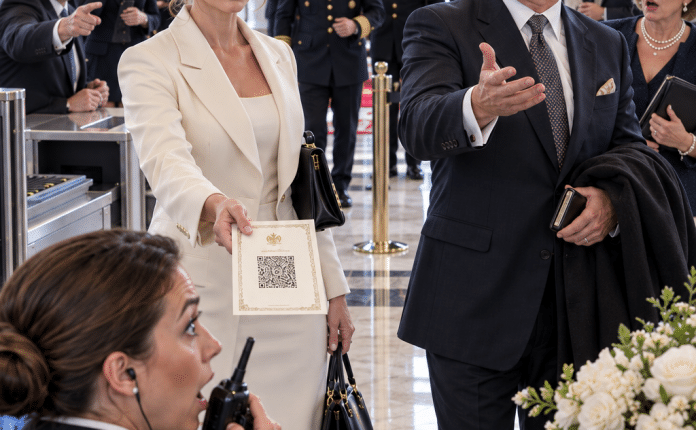
By the time we entered the ballroom, the room was exactly what my parents had promised.
Chandeliers.
White roses.
Lights.
An expensive spectacle.
Ella’s excitement made me relax.
She stared at the cake.
The musicians.
The tables.
Then the ushers began seating guests.
I followed behind her.
Every chair had a cream-colored card.
Andrew and my parents had been obsessing over table arrangements for weeks.
I knew they had personally reviewed the details.
Ella ran ahead.
She saw her place card.
She lifted it.
And before I could reach her, she proudly read two words aloud.
“Fake daughter.”
The room went quiet.
That was when every excuse I had made for my parents finally ended.
They had not misunderstood Ella.
They had not failed to connect.
They had not needed more time.
They had decided what she was worth.
Then they printed it.
END PART 3