“Is it a memorial?” I asked. “Did the teachers help you plan it?”
“No teachers,” Kayla said. “And it isn’t a sad thing. Olivia hated when people got quiet and sad around her, you know that.”
“She did,” I said. “She always tried to clear the air, you see.”
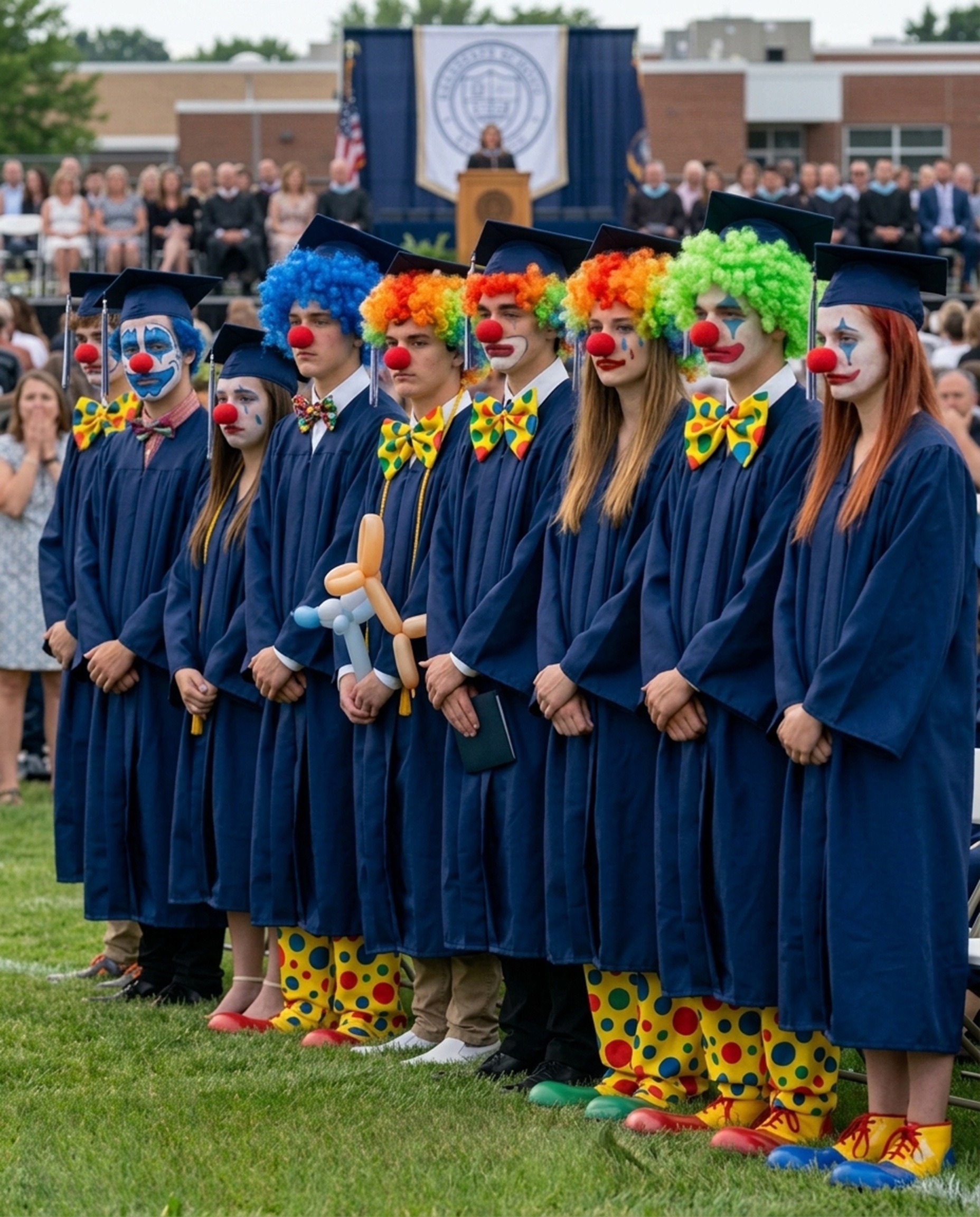
“Exactly,” Kayla said, standing up suddenly. “So don’t expect a normal, quiet graduation. It is going to be exactly what she wanted.”
She did not offer any more details, even when I asked if she wanted a glass of iced tea. She excused herself, saying she had to help with the decorations in the assembly hall before the afternoon rehearsals started.
After Kayla left, the house felt larger and much too quiet. I carried the squash casserole into the kitchen and set it on the counter near the ticking wall clock.
The blue note was still resting on the kitchen table next to the salt shaker. I picked it up, unfolding the small square of paper to read Olivia’s neat, slanted handwriting one more time.
She had written only three sentences, asking me to wear something bright and to sit near the front if I could. The final line was the one that made my chest tighten: Please do this for me, Mom, so I can feel like I made it to the end of the line.
My black purse sat on the chair by the door. It was the leather one I only used for church and funerals, its brass latch slightly tarnished from sitting in the back of the closet.
I opened the main compartment and cleared out the old receipts and loose pennies. I placed the folded blue note inside, slide-clicking it into the zippered side pocket where it would stay safe.
The graduation cap remained on the counter, its dark blue fabric catching the midday light. I reached out and smoothed the tassel, letting the yellow threads slide through my fingers.
There was no changing my mind now. Even if Brian chose to stay behind in the silence of his workshop, I would have to find a way to walk through those school doors by myself.
We sat at the dining room table at five o’clock. The sun was still high enough to cast long, pale bars of light across the wallpaper, but the room felt cold.
Brian kept his eyes on his plate, carefully cutting his meat into perfect, uniform squares. He checked his silver wristwatch twice before he even took a bite.
“Kayla brought over a casserole this morning,” I said, passing him the salt.
“That was nice of her,” Brian said. He cleared his throat and adjusted his fork. “She is a good kid. Just trying to sand down the rough edges of the week, I suppose.”
“She wants me to be there tomorrow,” I said. “She was very insistent about it.”
Brian did not look up from his plate, but his hand tensed around the handle of his knife.
“I cannot do it, Evelyn,” he said, his voice flat and quiet. “You know I cannot.”
The dining room clock ticked against the wall, each second sounding like a small hammer hitting a nail.
“I am not asking you to do anything you cannot bear, Brian,” I said. I smoothed my floral skirt under the table, the fabric rustling slightly in the quiet room.
“There are too many people,” he said, staring at the salt shaker. “Too many eyes. It is better if you go.”
He checked his watch again, though only four minutes had passed since the last time.
I reached into my pocket and touched the outline of my purse keys. Tomorrow morning at ten o’clock, the music would start playing in the assembly hall, and the front row would be filled with families who still had their children.
I stood up from the table, leaving my plate half-full, and walked back into the kitchen. My black purse sat on the counter, heavy with the weight of the promise I was about to keep.
I took the folded note from the zippered pocket one last time, looking at the blue ink before folding it back into my purse and clicking the brass latch shut.
The metal latch of my purse remained cold against my fingers as I turned the ignition key of the grey Buick and let the engine die.
The odometer showed eighty-two thousand miles, the numbers slightly dusty behind the clear plastic screen.
Outside, the gravel parking lot hummed with the sounds of a Friday morning in June.
Parents in light summer suits and floral dresses stood in small clusters, their laughter carrying through the open window of my car.
A young man in a blue gown adjusted his mortarboard while his father leaned against a shiny red truck, holding a camera ready.
I sat still, the heavy black mortarboard cap resting on my lap, my thumbs smoothing the fabric of my printed skirt.
You see, the fabric of the skirt was too thin for the morning breeze, but I did not want to go back home to the quiet kitchen.
The blue note Olivia had written was folded tight inside my purse, a small square of hope that felt too heavy for the leather bag.
I looked at the families posing by the brick sign of Oakhaven High School.
A mother was straightening her son’s collar, her hands moving with a quick, practiced tenderness.
I gripped the steering wheel, my knuckles turning white against the grey plastic.
There was a silver balloon shaped like an eight bouncing against the side of a minivan, its string tied to the door handle.
I wondered if Brian was still sitting at the kitchen table with his cold coffee, staring at the empty space where the wooden jewelry box had been.
He had looked so small when I left, his silver wristwatch catching the light as he checked the time for the third time in ten minutes.
My fingers drifted back to Olivia’s cap, tracing the yellow tassel that lay flat against the cardboard.
A family of five walked past the hood of my car, their voices rising as they debated who would hold the program.
The mother looked directly at me through the windshield, her smile fading into a quick, polite nod before she looked away.
I knew what she saw: a woman alone in an old car, holding a black cap that belonged to nobody who would walk across that stage today.
I opened the car door and stepped out into the humid June air.
The gravel crunching under my low heels sounded incredibly loud in the space between the parked cars.
A young girl in a yellow dress ran past me, nearly tripping over her own patent leather shoes before her father caught her.
“Slow down, sweetie,” he said, laughing as he swung her up into his arms.
I pulled the strap of my purse tighter over my shoulder and walked toward the brick entrance.
The double doors of the main entrance were propped open with heavy rubber wedges.
The smell of fresh floor wax met me at the threshold, thick and chemically sweet.
Principal Davis stood just inside the lobby, his tall frame slightly stooped as he greeted the arriving families.
He wore a dark blue suit that looked slightly too large for him, and his gold-rimmed glasses caught the fluorescent light.
“Good morning, Evelyn,” he said, his voice measured and deep.
He pulled the wide end of his silk tie loose and began polishing his lenses with it, his eyes squinting in the bright room.
“Thank you for coming,” he added.
“I had to be here,” I said, holding the graduation cap tight against my side.
“Of course,” he said, replacing his glasses and adjusting the temples behind his ears. “We have a seat reserved for the family near the front, if you would prefer.”
“The back will be fine, Principal Davis.”
He looked at me, his gaze lingering on the black cap under my arm, and for a second his formal posture softened.
“We want today to go smoothly,” he said, his voice dropping to a quieter register. “The students have been very quiet this week.”
“Have they?” I asked.
“Unusually so,” he said, turning to greet another family with a practiced nod.
I moved past him into the hallway, my low heels clicking against the polished tile.
A glass display case behind Principal Davis held dozens of silver trophies, their wooden bases dark with age.
The school’s brass emblem was mounted on the wall above them, polished but slightly tarnished at the edges.
A teacher I did not recognize was directing people toward the double doors of the assembly hall, her hand waving toward the crowd.
The rows of folding chairs stretched across the polished floor, divided by a wide center aisle.
I found a seat in the very last row, close to the exit sign that glowed red above the door.
The metal chair was cold through my skirt.
“Evelyn? Is that really you?”
Sarah, who lived three streets over and always kept her hedges trimmed to exactly four feet, slid into the seat next to me.
She smelled of heavy lavender perfume and peppermint.
“Oh, you poor thing,” Sarah said, her voice carrying over the murmur of the crowd. “I told my husband just this morning that I could not imagine how you would get through today.”