The scent of the roasting chicory filled the small kitchen, cutting through the lingering smell of Declan’s heavy pine cologne.
I set the pot on the burner and waited for the first slow bubble to rise to the surface of the dark water.
I watched the water come to a boil, the steam rising to fog the small window pane above the sink.
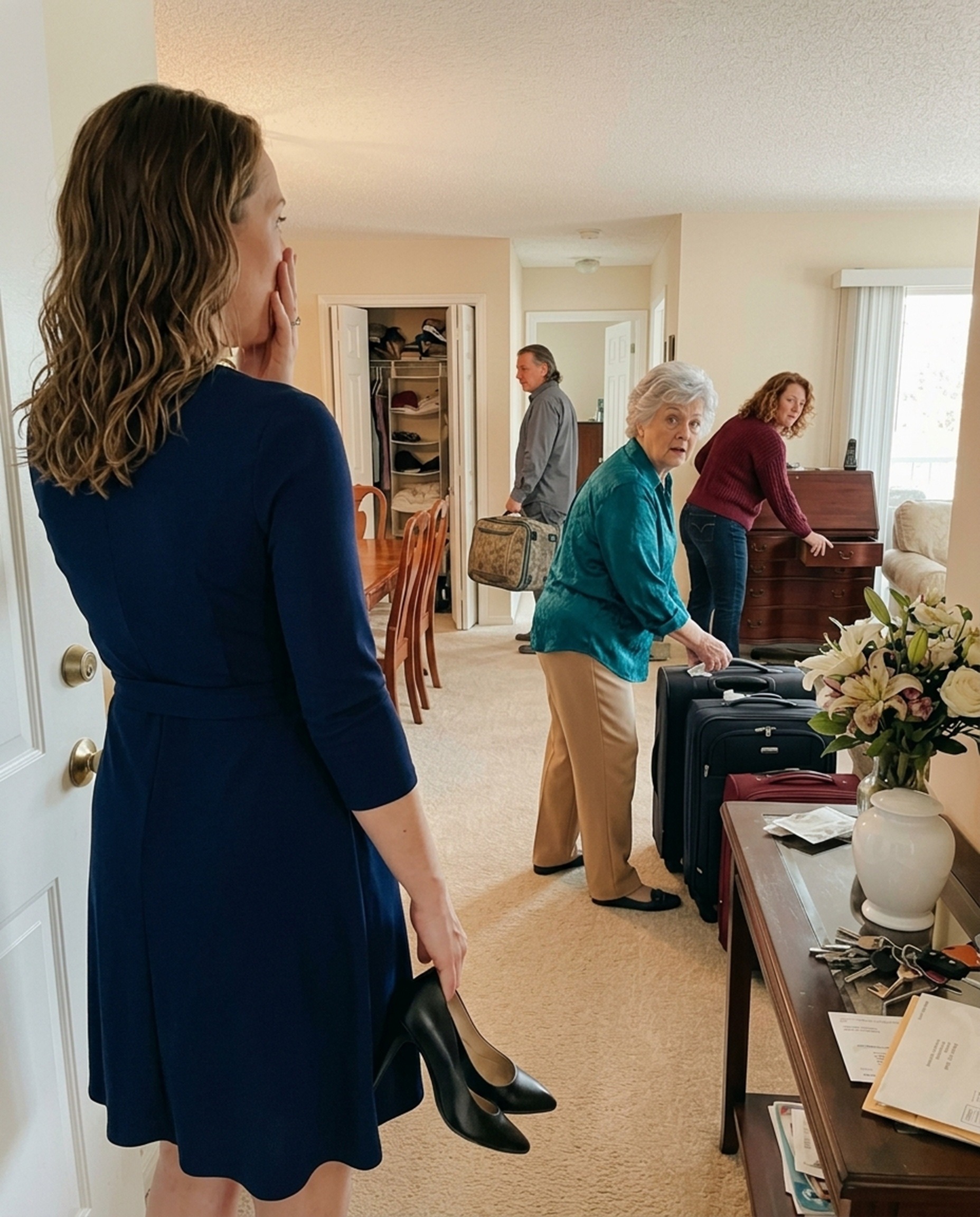
I wiped a circle in the condensation with my bare forearm, looking out toward the old fort in the distance.
The chicory was a taste Bradley had acquired during his summers in New Orleans, a dark, heavy blend that always seemed too strong for my liking, but today it was the only thing I wanted.
While the coffee brewed, I wiped the clean granite counter where Marjorie had set her floral teacup the night before.
The faint ring of dried tea disappeared under my damp cloth, leaving the surface smooth and cold.
When the coffee was dark enough, I poured a single cup into the blue ceramic mug Bradley had used every morning.
I sat down at the small pine table by the window, holding the warm mug between my palms.
Outside, the early morning mist was lifting off the saltwater, exposing the grey wood of the marina docks.
Across the harbor, the horn of the Bridge of Lions blew two long, low blasts that rattled the kitchen window glass.
The drawbridge began its slow, majestic ascent, parting in the middle to let a single white shrimp boat pass.
I watched the boat glide past the concrete fenders, its green nets hanging like giant webs in the damp morning air.
My husband had sat in this very chair six days before his final hospital stay, watching the exact same routine.
He had kept his thoughts behind his clean reading glasses, organizing the harbor trust so quietly that even the walls seemed to have kept the secret.
Now, the six hundred dollars in monthly condo dues were paid, the blue-sealed harbor trust deed was locked in Elena’s safe, and the threat had departed.
But his chair was still empty.
I took a slow sip of the hot chicory coffee, letting the bitter, earthy taste settle on my tongue.
The silence of the kitchen was not the heavy, suffocating silence of the past month.
It was a clean slate, waiting for whatever came next.
By three in the afternoon, the sky had cleared to a pale, washed-out blue that offered no warmth to the historic district.
The buzzer by the entryway sounded twice, a short and sharp signal that did not startle me.
I walked to the wall monitor and pressed the black button to speak.
“It is Luis, Mrs. Rowan,” the speaker hummed. “I have the locksmith with me.”
I released the lock and opened the heavy front door.
Luis, our condominium building manager, stood in the hallway holding his heavy plastic clipboard against his chest.
Beside him was a younger man in a grey work shirt, carrying a black metal toolbox that clinked with loose files and brass pins.
“We want to make sure everything is completely secure today,” Luis said, his eyes scanning the quiet hallway behind me.
I stood back to let them enter the foyer.
“Thank you, Luis,” I said, pausing between my words to let the quiet return. “I appreciate you coming up so quickly.”
Luis adjusted his glasses, his fingers tapping a fast rhythm on the plastic frame of his clipboard.
“We checked the garage registry this morning,” he said. “The silver sedan was gone before sunrise, and I have flagged the plate with our overnight security team so they cannot enter the gate again.”
The technician knelt by the doorframe, immediately taking out a screwdriver to remove the old brass plate.
The sound of metal scraping against metal filled the entryway as the old cylinder slid out of the wood.
“We are changing the deadbolt and the latch,” Luis said, checking a line on his clipboard. “The master key on file will be updated in our office vault.”
He looked at me with a professional, quiet sympathy that did not require any words.
“No one else has access to that vault,” Luis added, his pencil scratching a checkmark on his page.
I watched the technician slide a new, gleaming silver cylinder into the empty space in the door.
My mind went back to the duplicate brass key Marjorie had held up in this hallway, her fingers tapping against her purse as she claimed the home.
That brass key was useless now, a piece of scrap metal in an old lady’s handbag on her way back to Atlanta.
The technician, whose name tag read Toby, worked methodically, oiling the strike plate before lining up the new deadbolt.
“It is a high-security cylinder,” Toby said without looking up. “The keys are patented, which means nobody can make a duplicate at a local hardware store without your signature and a security code.”
He tightened the screws, tested the throw of the deadbolt twice, and then stood up.
He reached into his pocket and pulled out a small plastic ring containing two bright silver keys.
He handed them to Luis, who checked them against his clipboard before passing them to me.
“These are yours, Mrs. Rowan,” Luis said, his voice dropping to a low, respectful register. “The transition is completely registered with the association.”
The metal felt cold and heavy in my palm.
“Thank you,” I said, my pause lasting until the technician had closed his toolbox. “This is exactly what Bradley wanted.”
Luis gave a short, polite nod, adjusted his clipboard, and led the technician back out into the carpeted corridor.
I stood in the open doorway for a moment, watching them walk toward the elevator at the end of the hall.
Then I stepped back and closed the door, hearing the latch slip into its new place with a soft, clean sound.
The sun went down behind the historic district, leaving the study in a deep, purple shadow.
I did not turn on the desk lamp.
I sat in Bradley’s high-backed leather chair, the leather creaking slightly under my weight.
On the polished oak desk sat the white envelope Elena had delivered to me before she left.
It was the final letter of instruction, written in Bradley’s precise, slanted handwriting.
I picked up the bone-handled letter opener he had kept in the top drawer since we lived in Savannah.
I slid the blade under the paper seal, releasing a faint scent of old cedar and dried ink.
I unfolded the single sheet of cream paper, noting the slight watermark of the legal bond he had preferred for all his formal correspondence.
“My dear Avery,” the letter began.
I could hear his voice in the words, the low, measured cadence he used when we sat on the balcony after dark.
The text was written in his characteristically small, neat hand, each letter perfectly formed with a fountain pen.
“I must apologize for the necessary obfuscation of our assets over these final months,” he had written. “It was clear to me that my family’s predatory patterns would emerge the moment my physical presence was no longer a deterrent.”
I paused, taking a slow breath as I pictured him sitting in this very room, calculating the risks and building the trust like a fortress around me.
“If you are reading this, the harbor trust has done its work, and the people who came as collectors have been sent away.”
I paused, my eyes tracing the sharp lines of his signature at the bottom of the page.
“They did not understand that strength does not require a loud voice,” the letter continued. “We built something quiet, Avery, and it is entirely yours.”
I looked around the silent study, at the empty spaces on the bookshelves where Declan had pulled down the ledgers.
The room was no longer a battlefield.
It was just a room, filled with the books he had loved and the furniture we had chosen together.
The letter did not ask me to keep his things exactly as they were.
It did not ask me to mourn him in the dark.
“Live your life with the same quiet strength we shared,” he had written in the final paragraph. “Turn the key, Avery, and do not look back.”
I folded the paper carefully along its original creases and placed it back into the envelope.
I did not put it in the desk drawer.
Instead, I walked down the short hallway to the front door, the two new silver keys resting in my sweater pocket.
The evening air was cool as I stepped out onto the small balcony one last time before the night settled.
Below, the streetlights of St. Augustine were flickering on, casting long yellow reflections on the wet coquina sidewalks.
The harbor was calm, the water dark and still under the rising moon.
I went back inside and stood at the entrance.
I took the new silver key from my pocket and slid it into the lock of my front door.
I turned the new silver key in the lock, listening to the solid click of my secure home.
The END.