The bank had not even hesitated to use Clara’s death as a legal shield, turning her act of kindness into a pending transaction that they could ignore. I pressed my palm against my stomach, feeling the slow, heavy weight of the future pulling at my energy.
At four o’clock, a dark blue sedan pulled into Clara’s driveway, its tires crunching slowly over the dry grass near the property line.
George Sterling climbed out of the car, carrying his tan leather briefcase and a small yellow legal pad. He did not walk toward Clara’s porch, but instead walked slowly around the perimeter of her lawn, inspecting the flowerbeds and the overgrown edges of the grass.
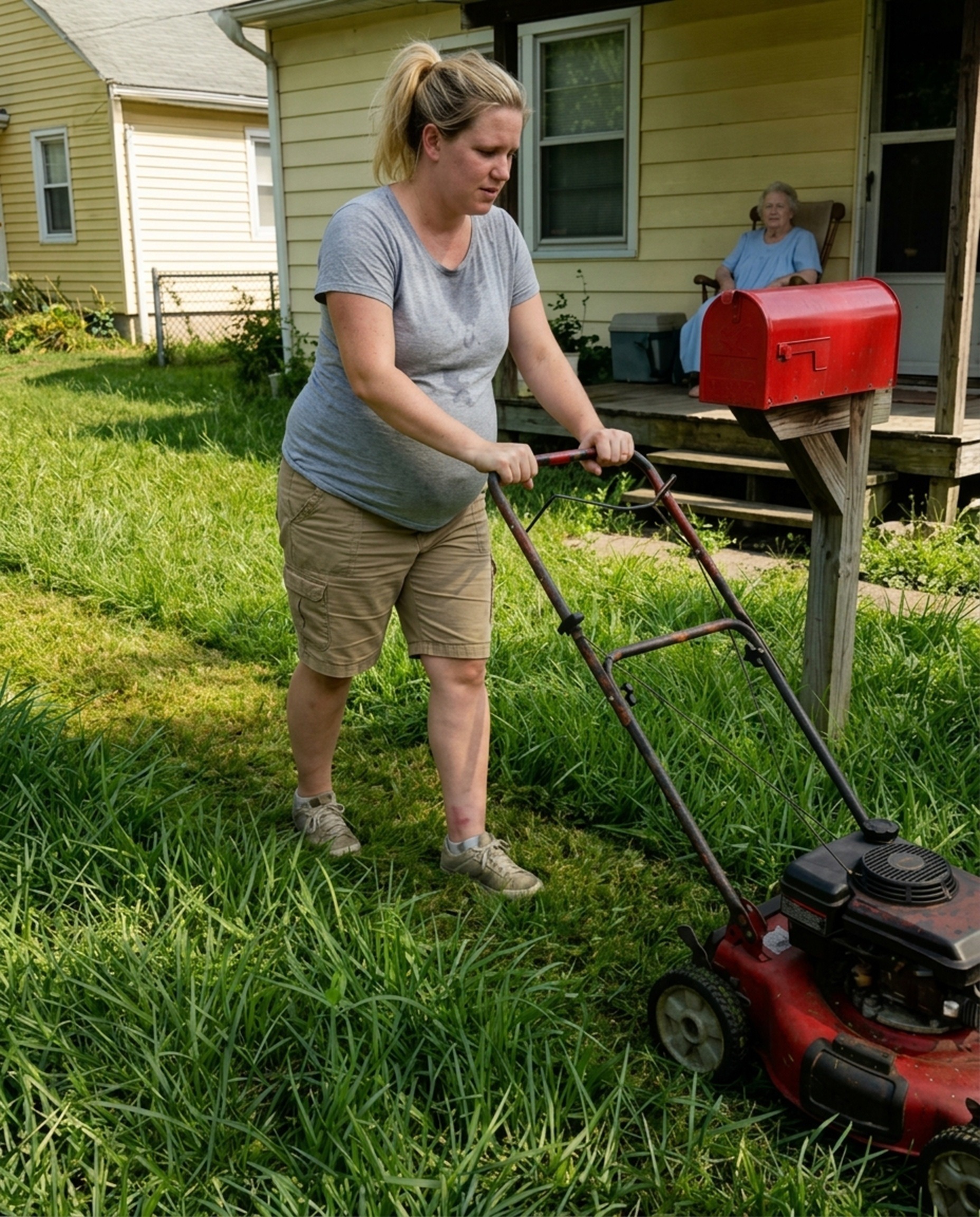
I walked down my steps and met him near the old wire fence that separated our yards.
“I went to the bank, Mr. Sterling,” I said.
George stopped and looked at me, his face carrying a solemn, tired expression that made him look older than sixty. He reached into his pocket and pulled out his blue silk cloth, using it to polish his gold-rimmed spectacles with slow, circular movements.
“I expected as much,” George said, his deep voice carrying clearly in the still afternoon air. “Harold Finch is a stickler for corporate protocol when it serves the bank’s interest.”
“He said the trust is frozen,” I said. “He said they are going ahead with the auction on the twelfth.”
George put his glasses back on, tucking the blue cloth into his vest pocket. “They are acting in bad faith, Nora. They know a clean title on a vacant house is worth more to their investors than a resolved mortgage.”
“Is there nothing we can do?” I asked, looking at the quiet house.
“I will contact the probate court and request an expedited certification of the trust release,” George said, tapping his legal pad against his briefcase. “But you must understand that the bank will use every legal technicality to keep the property on the auction block.”
“Clara wanted me to have this house,” I said.
“Clara made her arrangements with absolute precision,” George said, his voice softening. “But the bank has a team of corporate lawyers whose only job is to find the cracks in those arrangements.”
“I don’t have the money to fight them in court,” I said.
George looked at me, his eyes steady behind his clean lenses. “We are not finished yet, Nora. Go inside, try to get some rest, and let me handle the probate filings.”
He turned back toward his car, his shoes leaving dark footprints in the dry grass. I stood by the wire fence, watching the dust settle behind his sedan as he drove away, feeling more alone than I ever had before.
The kitchen clock showed five minutes past eight when I turned back from the window.
I wiped my face with a paper towel and threw it into the yellow plastic bin under the sink.
There was a dry, crusty ring of dried coffee at the bottom of my mug, and I let the tap run hot until the porcelain cleared.
The wooden kitchen table was covered in envelopes, yellowed notices, and scribbled legal pads that had kept me awake for three nights.
I sat down and pulled the piles toward me, sorting them by date.
Near the corner of the sugar bowl sat the loose blue gas cap I had taken off Clara old lawnmower to keep it from rattling into the weeds.
I picked up the plastic cap, rubbing the dirt from its threaded underside with my thumb.
Clara had kept that machine running for twenty years by paying attention to the smallest loose screws.
I took the blue cap and set it directly on top of the foreclosure notice with the red border.
I was not going to let them take the house my father had built.
My phone screen lit up with a reminder for my ten o’clock appointment in town.
I folded the letters into my canvas bag, placed the blue gas cap inside my pocket, and went out to the car.
The drive to the courthouse square took twelve minutes.
George Sterling, the trust attorney, was already waiting by his front door when I pulled up to the curb.
His office smelled of old paper and the lemon oil he used on his dark oak desks.
He did not ask me how I was sleeping.
He polished his gold-rimmed spectacles with a blue silk cloth, then gestured toward the two green leather chairs facing his desk.
“Did you bring the file, Nora?” he asked.
I unzipped the canvas bag and laid out every piece of paper in chronological order.
I had three separate pages of lined paper detailing my phone calls with Thomas Kelly, complete with the exact times and dates.
At the very top, I placed the copy of the temporary forbearance agreement Thomas had tried to get me to sign on my porch.
George picked up the agreement first, his eyes moving quickly down the page until they stopped at the bottom paragraph.
He tapped his finger against the paper, right over the clause that waived my legal right to contest a foreclosure sale.
“He told me this was a standard courtesy,” I said.
“This is not a courtesy,” George said, his formal, resonant voice filling the quiet room.
He set his spectacles back on his nose and looked at me for several seconds without speaking.
“You kept the original envelope this arrived in?” he asked.
“I kept everything,” I said, pulling the postmarked envelope from the bottom of my bag.
George nodded slowly, a small change in his expression that looked almost like a smile.
“Most people in your position simply stop opening the mail,” he said.
“I had a baby to think about,” I said.
He leaned back in his leather chair and picked up a black fountain pen.
“Let us look at the timeline Clara left behind,” he said.
We moved into the small parlor room behind his main office, where three large cardboard boxes of Clara’s estate files were stacked on a long table.
George opened the top box and drew out a thick blue binder containing the Higgins family trust agreement.
“Arthur Higgins was a cautious man,” George said, turning the heavy cream pages.
“He wanted to be sure Clara could make decisions without a bank trustee blocking her path,” he said.
“Does the trust allow her to pay off someone else’s mortgage?” I asked.
“Section four, paragraph B,” George said, pointing his pen at a line of clean, typewritten text.
The clause allowed the sole trustee to make discretionary distributions for the welfare of the Oakhaven community.
“She signed the authorization check on Monday afternoon,” George said.
“That was twelve hours before her heart stopped,” I said.
“Exactly,” George said, “which means the funds were legally cleared and committed while she was alive.”
He stood up and walked to a steel filing cabinet in the corner.