“I bought it because it is my mother’s house,” I said. “And because the bank was going to sell it to an investor who would have torn it down for a duplex.”
He looked away, his gaze fixing on the backyard where the metal barrel had been. “There is nothing left in there of hers, Leo. You know that.”
“I know,” I said. “I have the papers in my folder. We can talk inside.”
I followed him into the living room. The room was cold, the air smelling of old tobacco and damp plaster. The green vinyl chair where my father used to sit was positioned by the window, a small stack of unpaid tax notices sitting on the side table next to a half-empty box of generic tea bags.
I set my black leather folder on the kitchen table. The wood was scratched, the finish worn away where the hot coffee mugs had sat for thirty years.
“I am not evicting you, Walter,” I said, opening the brass latch on the folder.
He stood by the kitchen counter, his hands deep in his pockets. He looked at the clean white pages I laid out on the table.
“What is that?” he asked.
“It is a lease,” I said. “A twelve-month residential lease. The rent is four hundred dollars a month, payable on the first. I will cover the property tax and the insurance. You pay the gas and the electric.”
He did not move toward the table. He just stared at the papers from across the room.
“Four hundred?” he said. “The mortgage payment was eleven hundred. That is why the bank took it.”
“I do not have a mortgage,” I said. “I paid the twenty-two thousand in cash from my savings. The four hundred covers the maintenance and the county taxes.”
“I do not need your pity, Leo,” he said, his voice tightening as he crossed his arms over his chest. “I ran Hayes Construction for thirty years before the material costs went up. I do not need my son playing landlord.”
“It is not pity,” I said, my voice low and deliberate. “If you do not sign, the notice to quit is on the next page. You will have thirty days to find an apartment in town. The average rent for a one-bedroom on the north side is nine hundred.”
He looked down at his boots, the leather split at the toe where the steel insert was showing through. The silence in the room lasted for a long minute, the only sound the slow ticking of the clock on the wall.
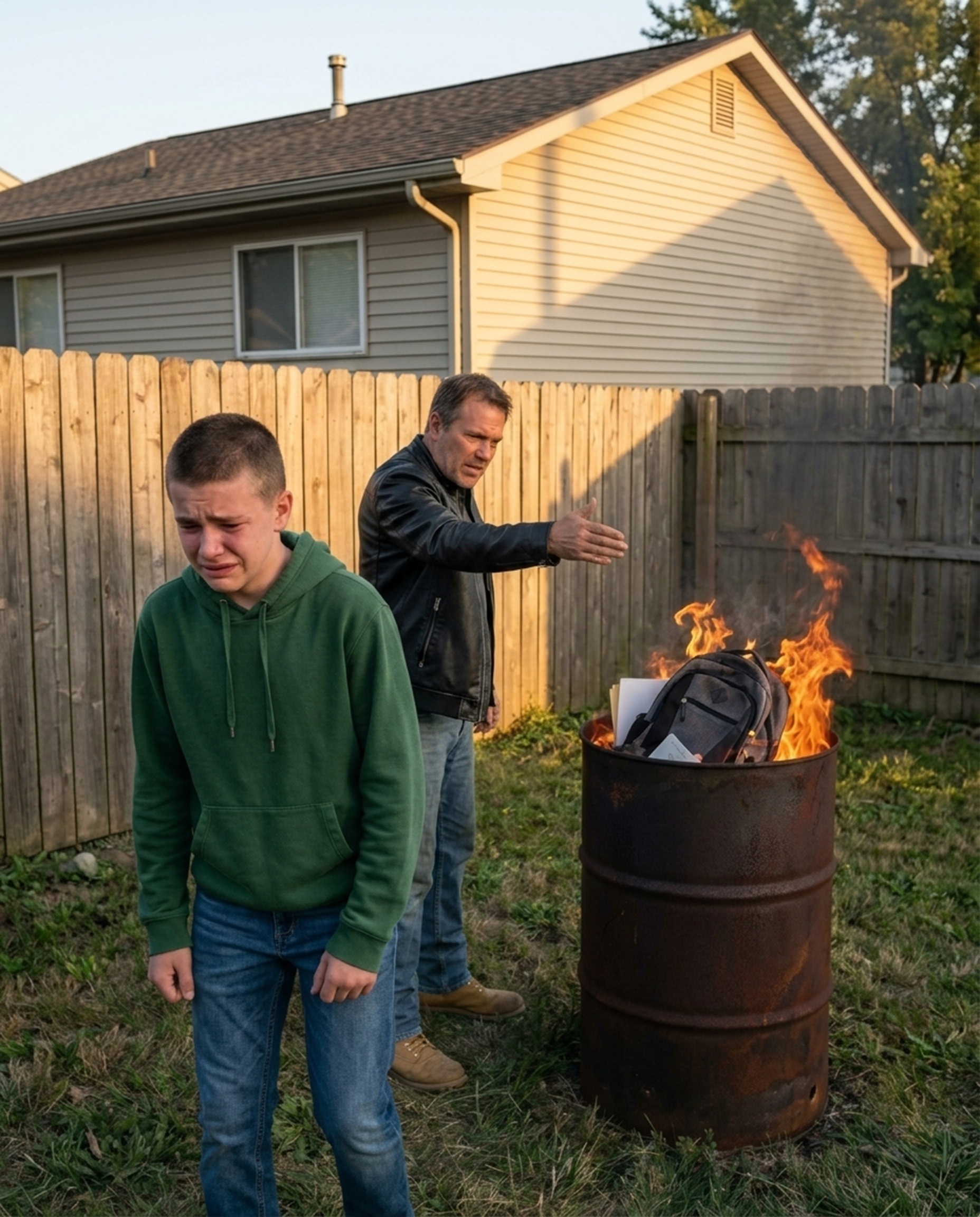
“Why would you let me stay?” he asked, his arms slowly uncrossing, his hands falling to his sides. “After the night I burned your things.”
“Because you have nowhere else to go,” I said. “And because I want the house taken care of while I am in Columbus.”
He walked over to the table, the floorboards silent under his socks. He picked up the blue ballpoint pen I had laid beside the papers. He did not read the first two pages. He scrolled down to the signature line on the third page, his hand steadying against the wood as he pressed the pen to the paper.
His signature was smaller than it used to be, the letters crowded together, but he signed it without another word.
He set the pen down and looked down at the signed lease agreement on the kitchen table.
The pen lay on the wood beside his thumb. Walter did not move his hand, and he did not look up when I reached across the table to pick up my copy of the signed lease.
My fingers brushed his sleeve, but he remained still. He kept his arms crossed tight over his ribs, his chin tucked down as if he were waiting for a blow that was not coming.
I slid the folded document into my back pocket and walked out to my truck.
The next morning, the street was quiet when Nate parked his car behind my Ford. He had a box of galvanized framing nails in his passenger seat and a thermos of black coffee.
We did not talk about the lease or the three hundred dollars Walter was scheduled to pay on the first of each month. We carried my new miter saw and the pressure-treated cedar planks up the front walkway.
“This bottom step has been off by two inches since we were ten,” Nate said, tapping the toe of his boot against the rotten riser.
“Three inches,” I said, setting down the tool bag.
I took the flat bar from the canvas pouch and jammed the wedge end into the seam of the old wood. The dry rot gave way with a soft grunt, the rusted nails popping out of the stringer like old teeth.
Nate held the level against the side framing while I ran the circular saw through a fresh cedar board. The smell of sawdust was clean and sharp in the morning air.
“Your dad is watching from the dining room window,” Nate said, chuckling under his breath.
I did not turn around to look. I lined up the edge of the new riser, drove two six-penny nails through the face, and checked the plumb line myself.
“He can watch,” I said.
We worked through the morning without shouting or rushing. Nate handed me the drill, his fingers tapping against the plastic casing as he kept time to some quiet rhythm in his head.
When the last deck screw sank flush into the cedar, I stood up and walked the length of the step. The wood did not give a single fraction of an inch under my weight.
“The porch is steady now,” I said.
Nate picked up the empty coffee thermos and tossed it into his front seat. “Gail called me before I left Columbus. She wants to know if you can look at a four-family brick building on Third Avenue next Tuesday.”
“Tell her I will be there by nine,” I said.
He looked at the house, then back at me, his hand resting on his car door. “You really going to let him stay here alone?”
“He signed the papers,” I said.
By three in the afternoon, the sun had cleared the roof of the garage and was beating straight down on the gravel driveway. I walked around to the backyard with a pair of leather work gloves tucked under my arm.
The metal burn barrel sat in the corner of the lot, near the wild blackberry brambles. Its sides were bubbled black and orange from years of high heat, and the bottom had rusted through to the dirt.
I reached down and grabbed the rim, but a shadow fell across the weeds beside me.
Walter stood there with his sleeves rolled up to his elbows. He did not have his boots on, only his old work shoes with the laces untied.
“That barrel still has some use in it,” Walter said.
“It is junk,” I said. “The county has rules about open burning now anyway.”
I pulled the barrel toward the truck, the metal scraping against the stones with a harsh, dry screech. A heap of cold grey ash spilled out of the rotted bottom onto my boots.
“You do not have to clean up every single thing,” he said.
I looked at the spot where the ashes lay. Six years ago, the smoke from this very barrel had drifted across the fence while I stood in the driveway with forty-three dollars in my pocket.
“The yard needs to be clear,” I said. “It is in the lease.”
He crossed his arms over his chest, his mouth set in a hard, straight line. But he did not step forward to stop me when I hoisted the barrel over the tailgate of my truck.
The weight of the iron made the truck suspension groan once, then settle. I strapped it down with a yellow ratchet tie-down, pulling the webbing until it clicked twice.
Walter watched my hands. He looked at the magnetic sign on the door of my truck, his eyes lingering on the words Hayes Restoration.
“You spell the name right on the checks,” I said.
“I know how to write a check, Leo,” he said.
He turned his back and walked toward the rear kitchen door, his steps slow and heavy in the dry grass. He did not look back to see if I was following.
The sun was dropping behind the maples on the western side of the street when I went inside to wash my hands. The brass key to the front door felt heavy in my pocket, jingling against the copper coins.
I used the key to open the door, the latch sliding back with a solid, familiar click that did not stick anymore. I had oiled the brass lock cylinder before lunch.
In the kitchen, the light was yellow and soft. Walter was standing by the sink, rinsing a small glass under the tap.
He did not turn the water off when I came in. He just set the glass on the drainboard and reached into a brown paper bag on the counter.
He pulled out a brand new blue ceramic coffee mug, still bearing the white price sticker on the bottom. He peeled the adhesive off with his thumb, leaving a small square of grey glue on the glaze.
“They had them down at the hardware store,” Walter said, his voice flat.
He set the blue mug on the laminate counter, right next to the white drip coffee maker. It sat there in the exact spot where my mother used to keep her own blue mug before the fire in the backyard took it.
I stood by the refrigerator, rubbing the small scar on my left palm with my thumb. The ceramic was a slightly larger shade of blue than the old one, but it was solid.
“It is a good size,” I said.
“They had red ones too,” he said. “I figured this was better.”
He reached for his tin of coffee grounds and began measuring the dark roast into the paper filter. His movements were slow, but his hands did not shake as much as they had when he signed the lease.
“I have two jobs starting in Columbus next week,” I said. “I will be back on the weekend to check the gutters.”
“The gutters are fine,” he said, without looking up from the scoop.
“They are not fine,” I said. “They are packed with maple keys. I will do them on Saturday.”
He poured the water into the back of the machine and flipped the red toggle switch. The heater began to gurgle, drawing the water down into the basket.
“The rent will be in your account on the first,” he said.
“I know,” I said.
I walked out of the kitchen.
The air on the porch was cool now, smelling of damp earth and the fresh cedar I had cut that morning. The yellow streetlights along Piedmont Road were just starting to flicker on, one by one.
I walked down the new steps, counting them under my breath out of old habit. One, two, three, four.
Every board was square. Every nail was set deep into the wood where the rain could not rot the grain.
I stood by the driver side door of my truck and looked back at the house. The white siding looked clean under the fading orange light of the sunset, the shadows of the maple trees stretching long and thin across the grass.
The deed for the Piedmont Road house sat flat on the kitchen table under the warm afternoon light. Leo chose to let his father remain in the home as a tenant under a structured, fair monthly lease.
Walter signed the papers in silence, his shoulders dropped and his hands slightly shaking. Leo refused to mention the burned possessions or demand an apology for the years of anger.
He picked up his tool bag, stepped out onto the newly repaired front porch, and looked back at the clean white siding.
“The house is in good hands now, Walter.”
The END.