PART 4: One Year Later, I Returned to Medicine on My Own Terms and Understood Why Peace Had Never Made My Life Smaller
One year after Richard’s heart stopped during his birthday dinner, I stood inside a trauma education center while eighteen physicians argued about a simulated mass-casualty scenario.
I had a dry-erase marker in one hand.
Coffee in the other.
And absolutely no desire to be anywhere else.
My life had settled into a rhythm I had once thought impossible.
Two days each week at Northside Community Health.
Two days teaching trauma fellows and directing preparedness simulations.
Occasional surgical coverage with Elias when I felt ready.
Those final words mattered most.
When I felt ready.
My first real operation after years away was not spectacular.
A construction worker arrived with internal bleeding after an accident. The situation was urgent but controlled.
Before scrubbing, I stood alone in the locker room looking at my hands.
They were steady.
I went in.
We operated.
He survived.
Afterward, I sat in my car and cried for almost fifteen minutes.
Not because returning had destroyed me.
Because returning to something you once loved sometimes requires grieving the version of yourself who had to leave it.
Richard recovered better than anyone predicted.
He walked every morning, followed most of his diet, complained theatrically about cardiac rehabilitation, and occasionally sent me photographs of healthy meals with messages blaming me personally for the absence of butter.
Against expectation, we became friends.
Not father and daughter.
Not really family anymore.
Something more unusual.
He had hurt me.
He had apologized without demanding forgiveness.
Then his behavior changed.
That distinction mattered.
Elaine sent me a long letter after the divorce saying she had always admired me more than I realized.
I never answered.
It was not revenge.
I simply had nothing useful left to say.
Richard eventually told me Grant accepted the director-level position at St. Catherine.
His first months were uncomfortable.
The board required him to spend time with nursing operations and clinical-safety teams while holding no authority to chair their meetings.
Apparently, he hated it.
Then, slowly, he started listening.
One nurse challenged a staffing decision during a meeting.
The old Grant would have dismissed her.
This time, he asked for her data and sat through the explanation.
Richard told me the story as though describing a medical miracle.
“That’s good,” I said.
“You aren’t impressed?”
“I’m glad he’s improving.”
Richard studied me.
“You really are finished with him.”
“Yes.”
He nodded.
Then we talked about something else.
That was another kind of freedom.
For years I believed closure required the person who hurt you to understand exactly what they had done.
I no longer believed that.
Sometimes closure is realizing their understanding has stopped being necessary.
At Northside, nobody cared about Major Maddox.
Mrs. Alvarez cared that I remembered her grandson had applied to community college.
DeShawn cared that I kept bothering him about blood pressure until he finally took his medication regularly.
Seven-year-old Mia cared that I warmed my stethoscope before placing it against her back.
Those things mattered.
Ordinary medicine had never been smaller medicine.
Quiet usefulness was still usefulness.
One afternoon Elias found me eating pretzels over resident evaluations.
“You have a visitor.”
“If it’s administration, tell them I died.”
“It’s Richard.”
I looked up.
“Is he okay?”
“He looks offensively healthy.”
Richard appeared carrying a small bakery box.
“One year,” he announced.
“Since what?”
“Since you electrocuted me on a restaurant floor.”
“I defibrillated you.”
“Same thing.”
Elias laughed and disappeared.
Richard opened the box.
Inside was a small chocolate cake.
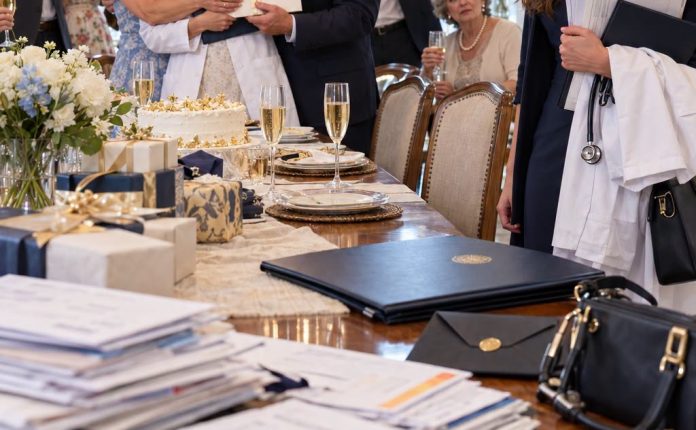
SECOND 65TH had been written across the top in icing.
I stared at it.
“You’re sixty-six.”
“I lost part of the original birthday. I’m reclaiming it.”
We ate cake with plastic forks in the faculty lounge.
After several minutes, Richard put his fork down.
“Grant wanted to come.”
I stopped chewing.
He immediately raised one hand.
“I told him no.”
“Thank you.”
“He understood.”
That was enough.
Richard looked around the room.
“You happy?”
The question was simple enough that an automatic answer almost escaped.
Instead, I considered it.
My apartment with morning light across the kitchen.
My clinic.
My students.
The operating room when I chose it.
The absence of anyone at home measuring my worth against salary, title, prestige, or position.
“Yes.”
Richard smiled.
“Good.”
A month later, the trauma fellowship held its graduation dinner.
Families crowded beneath blue-and-silver banners taking photographs.
Priya found me before dessert.
She had accepted a faculty-track offer at St. Catherine.
“You know I almost quit last year?”
“When?”
“After pediatrics.”
She looked embarrassed.
“I struggled so badly that I thought it meant I wasn’t built for this.”
“And now?”
“Now I think struggling may have been proof I was human.”
I smiled.
“Useful diagnosis.”
She laughed.
Then she hugged me.
“Thank you, Dr. Maddox.”
“For what?”
“For teaching us that being calm doesn’t mean you don’t care.”
I thought about that sentence all the way home.
Grant had mistaken quietness for weakness.
His family mistook my modest job for limited capability.
Even I had sometimes confused peace with retreat.
None of those things were true.
Silence can come from discipline.
A smaller schedule can be deliberately chosen.
A life does not need to look impressive from outside to be meaningful from within.
The people who require evidence of your status before offering respect probably should not be trusted with your self-worth.
On the anniversary of my divorce, I found my wedding ring at the back of a drawer.
I held it beneath the kitchen light.
No anger arrived.
No sudden grief.
Only recognition.
My marriage had not been meaningless.
It taught me something I should have understood years earlier.
Competence does not require applause.
Love should not require credentials.
And respect that appears only after someone discovers your title, salary, degree, military rank, or reputation was never respect in the first place.
I placed the ring in a small envelope with a few other things I no longer needed.
Then I opened the window.
The city was waking beneath a bright blue morning.
My phone buzzed.
Priya.
Emergency simulation at eight. Coffee at seven-thirty?
I smiled.
Absolutely.
I packed my bag and left.
At the trauma center, Elias was already arguing with a broken projector.
Priya handed me coffee.
A fellow had programmed the morning simulation around a multi-vehicle collision with limited blood products and more patients than teams.
For one second, looking through the observation glass, I felt Armitage rising at the edges of memory.
Dust.
Canvas.
Helicopters.
Mason.
I let the memories exist.
Then I looked at the simulation room in front of me.
Different place.
Different year.
Different Claire.
“Ready?” Priya asked.
“Yes.”
The scenario began.
Within ten minutes, one fellow became overwhelmed and started issuing instructions too quickly.
I stopped the simulation.
“What are you seeing?”
He stared at the monitors.
“Too many problems.”
“That isn’t a diagnosis.”
He took a breath.
Then another.
He began sorting priorities.
Airway.
Hemorrhage.
Available staff.
Blood.
Transport.
When we restarted, he performed better.
Afterward he apologized for freezing.
I stopped him.
“You paused under pressure. Then you recovered. Learn from it.”
He nodded.
“Should I have been faster?”
“Eventually.”
I leaned against the table.
“But speed without judgment is just a quicker way to make the wrong decision.”
Elias watched from the doorway.
Later he smiled.
“You sound like your old commanding officer.”
“That is deeply insulting.”
“She was right frequently.”
“Even worse.”
He laughed.
That afternoon, I drove to Northside.
My final patient was a teenager with recurring stomach pain.
Nothing dramatic.
No emergency.
No surgical heroics.
After talking for twenty minutes, I realized most of her symptoms appeared before exams.
Her mother had been calling them laziness.
The girl believed something terrible was wrong with her.
I explained what anxiety can do to the body and arranged follow-up rather than dismissing her.
When she left, she looked relieved.
That mattered as much to me as any operating room.
Maybe more.
Grant had once believed choosing Northside proved I lacked ambition.
He saw medicine as a hierarchy.
Prestigious hospital above neighborhood clinic.
Executive above nurse.
Specialist above generalist.
Visible achievement above quiet work.
I had spent enough time near death to know people rarely organize meaning that neatly.
The soldier whose life you cannot save matters.
So does the frightened child whose stethoscope you warm.
The fellow learning not to confuse confidence with competence matters.
So does the older man finally taking his blood-pressure pills.
None of those lives care how impressive your résumé sounds at dinner.
Richard called occasionally.
We talked about cardiac rehabilitation, books, bad television, and his determination to negotiate with every nutritional recommendation as if cholesterol guidelines were opening offers.
He rarely mentioned Grant.
I appreciated that.
When he did, the updates were simple.
Grant was still at St. Catherine.
Still learning.
Still attending counseling.
Still rebuilding professional relationships.
I hoped he became better.
I did not need to witness it.
That distinction took me years to understand.
Someone can change without being invited back into the life their previous behavior damaged.
Forgiveness, growth, and reconciliation are different things.
None automatically requires the others.
Months later, I crossed paths with Grant at a hospital education event.
He was speaking with two nurses when he noticed me.
For a moment, neither of us moved.
Then he excused himself and approached.
“Claire.”
“Grant.”
“You look well.”
“So do you.”
He glanced toward the simulation rooms.
“Richard said you’re operating occasionally.”
“When I want to.”
He nodded.
“I’m glad.”
There was no resentment in his tone.
No joke.
No attempt to tell me what I should be doing instead.
That was new.
He looked down briefly.
“I understand something now that I didn’t during the divorce.”
I waited.
“I kept thinking your career was the thing I failed to appreciate.”
He shook his head.
“It wasn’t.”
“No.”
“I failed to appreciate you before knowing what the career was.”
I held his gaze.
“Yes.”
He nodded.
“I’m sorry.”
“I know.”
We stood there for another second.
Then I wished him well.
He did the same.
We walked in opposite directions.
No dramatic reunion.
No last-minute reconsideration.
Nothing needed repairing between us anymore.
That chapter had finished.
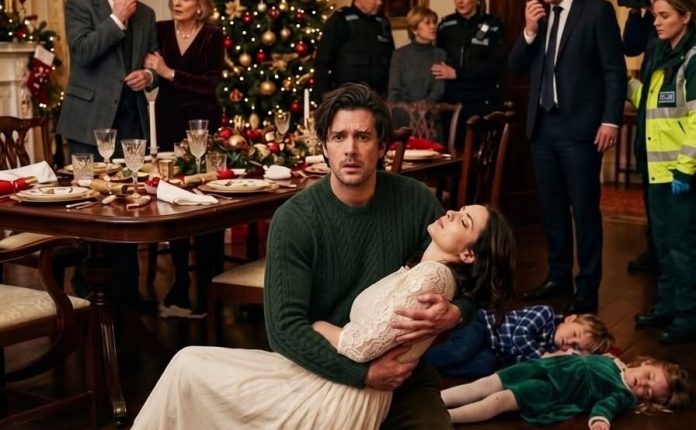
Later that evening, I thought about Richard’s birthday.
Grant laughing.
Elaine smiling into her wine.
Richard reaching for another roll.
The knife tapping against porcelain.
Then the collapse.
My hands finding no pulse.
Grant trying to stop me.
Dr. Warren recognizing me in the hospital corridor.
For a long time, I had treated that night as the evening my hidden past became visible.
Eventually I understood it differently.
Nothing about me had been hidden.
My medical training existed.
My Army career existed.
My scars existed.
My reasons for leaving existed.
The photographs were inside our house.
The diploma was inside our house.
The stories had been offered.
Grant simply had not been listening.
That was why learning my résumé could never repair the marriage.
I never needed a husband who admired Major Maddox.
I needed one who respected Claire before Major Maddox entered the room.
One morning, after a simulation session, Priya asked whether I ever regretted leaving full-time surgery.
“No.”
“Even now that you enjoy operating again?”
“Especially now.”
She looked confused.
So I explained.
Leaving saved something in me that continuing might have consumed.
Returning later did not prove leaving had been a mistake.
It proved choices can be right for one season without becoming permanent sentences.
Peace had not been surrender.
The clinic had not been failure.
Teaching was not a consolation prize.
Occasional surgery was not evidence that I should have stayed in trauma all along.
My life no longer needed one definition.
That realization felt larger than anything Grant had failed to understand.
For years, he believed I chose a smaller life because I was incapable of a bigger one.
He was wrong.
I had chosen peace because I knew exactly what its absence cost.
Now I could choose challenge too.
I could teach.
Operate.
Work at Northside.
Go home to a quiet apartment.
Say no when I wanted.
Say yes when I was ready.
Nothing had to impress anyone.
Nothing had to prove the woman at Richard’s birthday table had secretly been important all along.
I had been important before Elias Warren recognized me.
Before Richard apologized.
Before Grant learned my rank.
Before anyone at St. Catherine whispered about Armitage.
The title had never created my worth.
Neither had the uniform.
Neither had the boards.
They were simply things I had done.
The lesson I carried forward was much simpler.
Respect should arrive before the résumé.
Love should make room for curiosity.
And no one who truly knows you should need a trauma surgeon standing in a hospital corridor to explain who you are.