PART 1: My Husband Laughed at My Medical Degree During His Father’s Birthday Dinner, Until Richard Collapsed Before Anyone Could Reach Him
Grant made sure everyone heard him.
“You really need to stop acting like you’re some kind of trauma specialist, Claire.”
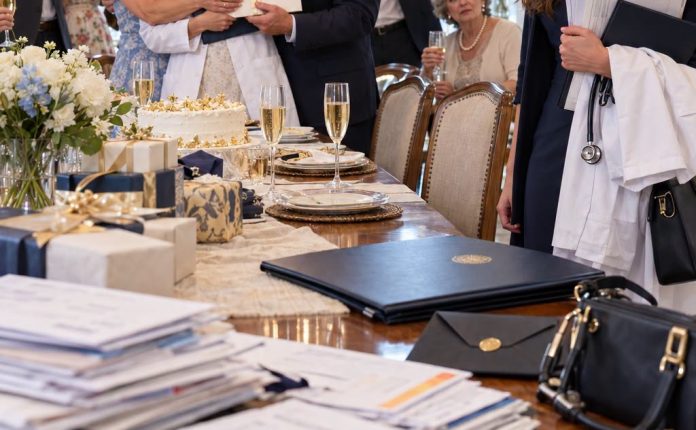
His father’s sixty-fifth birthday dinner had filled a private room at the Hawthorne Club with polished silver, dark wood, expensive wine, and people connected to St. Catherine Regional, where Grant served as executive vice president of operations. Several hospital executives sat close enough to hear his joke clearly.
All I had done was suggest that Richard Whitmore skip another salted dinner roll. He had mentioned headaches the previous week, and his blood pressure had been high. Richard paused with the bread in his hand while Grant leaned back in his chair, smiling as though my concern had given him another opportunity to entertain the table.
“Dad, she spends three days a week at a neighborhood clinic,” Grant said. “She sees sore throats and school physicals. Let cardiology worry about your heart.”
A few people laughed.
Elaine, his mother, touched my arm.
“Grant is only teasing.”
That phrase had excused almost everything during our four-year marriage. Grant was teasing when he introduced me as someone who “helped out at a clinic.” He was teasing when he said my medical education had been wasted. He was teasing when he corrected people who called me Doctor.
I stopped arguing about it long ago.
“I chose work I like,” I said.
Grant lifted his wineglass.
“That’s what people say when they stop being ambitious.”
Richard laughed, tore open the roll, and reached for the butter.
Then I noticed his left hand.
The knife trembled against the plate.
Once.
Twice.
I watched his face more closely. The color around his mouth had changed. Perspiration had appeared beneath his hairline although the room was cool. He pressed two fingers against the center of his chest and shifted in his chair as though uncomfortable.
“Richard, are you feeling pressure?”
Grant sighed audibly.
Richard shook his head.
“Probably indigestion.”
“Does it move into your shoulder or arm?”
“Claire,” Grant warned.
Richard tried to answer.
Nothing came out.
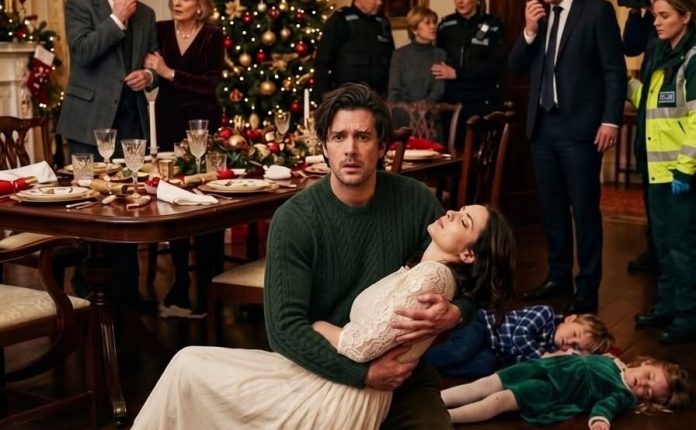
His fork slipped from his hand and struck the plate. His eyes widened, then his body folded sideways. The wineglass beside him shattered first. Richard hit the hardwood floor an instant later as chairs scraped backward and Elaine screamed.
Everyone froze.
I moved.
I dropped beside Richard and rolled him flat.
“Richard. Can you hear me?”
No response.
His mouth opened in a gasping movement that someone unfamiliar with cardiac arrest might mistake for breathing.
I knew better.
My fingers found his neck.
Nothing.
The dining room vanished around me.
“Call emergency services.”
Nobody moved.
I pointed at a server near the doorway.
“You. Call now. Tell them sixty-five-year-old male, witnessed cardiac arrest, no pulse, CPR started. Bring the AED from the lobby.”
He ran.
I positioned my hands over Richard’s sternum and started compressions.
Grant dropped beside me.
“Dad?”
“Move back.”
“What happened?”
“No pulse.”
“He was eating. Maybe he’s choking.”
“He isn’t choking.”
Grant grabbed my shoulder.
“Claire, stop. You’re going to break his ribs.”
I knocked his hand away without interrupting compressions.
“If you interfere again, I’ll have someone move you.”
His face changed.
In four years, he had never heard that voice from me.
Almost nobody in my civilian life had.
Elaine sobbed behind us.
“Grant, do something.”
He stared at his father.
Then at me.
That look hurt more than I expected. Richard had no heartbeat beneath my hands, yet Grant’s first instinct was still to believe that I, his wife, had no idea what I was doing.
The server came running with the AED.
I opened Richard’s shirt, placed the pads, and let the machine analyze.
Shock advised.
“Everyone clear.”
Grant reached toward me again.
“Wait for the ambulance.”
I looked at him.
“If we wait, he may die.”
Something in my expression finally stopped him.
I delivered the shock.
Richard’s body lifted slightly from the floor.
Then I resumed compressions immediately.
My hands knew the rhythm without thought. My shoulders settled over my wrists. My breathing slowed. Around me, people cried, whispered, called for help, and moved furniture.
For one unwanted second, the room smelled wrong.
Wine became dust.
Mahogany became canvas.
Somewhere inside memory, helicopter blades pounded desert air while metal instruments rattled across a surgical tray. A young soldier’s boots protruded beneath a bloody sheet.
I forced the image away.
Not tonight.
Not Richard.
Footsteps thundered down the corridor.
The paramedics arrived roughly four minutes after Richard collapsed.
I gave the lead medic the handoff without stopping.
“Witnessed arrest. Ventricular fibrillation on AED. One shock delivered. Continuous compressions. No advanced airway. Downtime under five minutes.”
The medic checked Richard’s neck.
His expression changed.
“Pulse.”
Elaine made a broken sound behind me.
The medic checked again.
“We have return of circulation.”
I sat back on my heels.
Only then did I notice how hard my own heart was pounding.
Grant stared at his father while the paramedics prepared the stretcher.
One of them looked at me.
“Are you medical?”
Before I could speak, Grant answered.
“She works at a clinic.”
The paramedic looked from him to me.
His expression suggested he understood that the sentence had avoided the question.
I stood and wiped my hands with a linen napkin.
When they wheeled Richard out, the lead medic turned once.
“That was one of the cleanest prehospital handoffs I’ve heard in a while.”
Grant said nothing.
Outside, the ambulance disappeared into traffic.
Elaine sat in the back of our car clutching Richard’s jacket while Grant drove toward St. Catherine far too quickly.
For several minutes, there was only the sound of traffic.
Then Grant spoke.
“Where did you learn that?”
I watched the lights passing the passenger window.
“Medical training.”
“That wasn’t basic clinic training.”
“No.”
“What does that mean?”
“It means what I said.”
He glanced at me.
“You were running that arrest like somebody who has managed codes.”
The word suddenly almost made me laugh.
Nothing about my training had happened suddenly.
Four years of medical school.
Five years of surgical residency.
Critical-care fellowship.
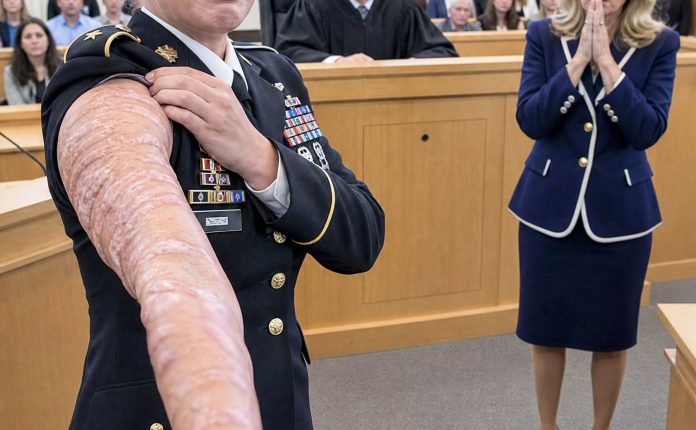
Seven years in the Army Medical Corps.
Long nights in forward surgical units.
Mass casualties.
Operations performed while explosions sounded beyond canvas walls.
I had spent years becoming the person Grant had just watched.
What was sudden was his interest.
“I told you I went to medical school.”
“Plenty of people get medical degrees and end up doing other things.”
“I didn’t tell you I went through a medical program. I said medical school.”
He frowned.
“You never talk about it.”
I turned toward him.
“You never ask.”
Elaine leaned forward.
“Please. Not now.”
We reached St. Catherine minutes later.
The moment Grant entered the hospital, his entire posture changed.
This was where he felt powerful.
Administrators recognized him before we reached the consultation suite. Grant clipped his badge visibly onto his jacket and began issuing requests.
He wanted senior cardiology notified.
He wanted imaging prioritized.
He wanted Richard’s chart routed directly.
He wanted cardiac anesthesia standing by.
People moved when he spoke.
Elaine squeezed his hand when we entered a private waiting suite reserved for donors and executives.
“Thank God you work here.”
Grant crouched beside her.
“He’ll get everything this hospital has.”
“You saved us tonight,” she whispered.
I stared at her.
Grant noticed.
“She means I got him here.”
“The ambulance got him here.”
His mouth tightened.
“Can we not do this?”
I walked outside and poured coffee from a machine near the nurses’ station.
Once the adrenaline faded, my hands began shaking.
That frightened me less than the memories returning beneath it.
A twenty-two-year-old soldier asking whether he was going to die.
Rotor wash whipping sand against my face.
A nurse named Beth leaning her forehead against mine because neither of us had enough strength left to talk.
I had left trauma surgery for a reason.
Not because I could no longer do it.
Because I could.
Again and again.
Until functioning had begun to feel more dangerous than breaking.
Northside Community Health Center had initially been temporary. After leaving the Army, I volunteered there while deciding what came next.
Then I discovered that I liked ordinary medicine.
Children with fevers.
Construction workers avoiding physicals.
Diabetic grandmothers who arrived carrying vegetables from their gardens.
Problems that usually ended with people walking back out the door.
Three days a week became permanent.
I maintained my license.
Completed continuing education.
Occasionally helped with disaster-response training.
Grant knew almost none of it.
Not because I had built a secret life.
Because he had built a version of me and stopped asking questions once he found it convenient.
He appeared beside the coffee machine.
“Mom thinks you scared Dad by mentioning his blood pressure.”
I turned slowly.
“What?”
“She’s upset.”
“He had a cardiac arrest.”
“I know that.”
“Then tell her that.”
He rubbed his forehead.
“You get incredibly cold when people are emotional.”
I looked at the coffee trembling slightly inside my cup.
Cold.
Detached.
Those words had followed competent people through combat medicine for generations.
“You mean calm.”
“I mean detached.”
I met his eyes.
“And which one kept your father alive tonight?”
Before he answered, an emergency physician approached.
“Mr. Whitmore?”
Grant straightened immediately.
“I’m Dr. Patel. Your father has an acute coronary occlusion. Cardiology is taking him to the cath lab.”
Elaine stood.
“Will he survive?”
“He has a serious condition, but he has a good chance. His circulation was restored very quickly.”
Grant nodded.
“I arranged for—”
Dr. Patel continued.
“The person who began CPR and used the defibrillator probably protected both his heart and neurological function.”
Grant stopped talking.
Dr. Patel turned toward me.
“You treated him?”
“Yes.”
“You delivered the shock?”
“Yes.”
His gaze sharpened slightly.
“Are you a physician?”
Grant answered automatically.
“She works at a community clinic.”
Dr. Patel looked back at him.
“That wasn’t what I asked.”
Silence filled the suite.
I looked at Grant.
Then I answered for myself.
“Yes. I’m a physician.”
Grant stared at me.
Elaine did too.
Dr. Patel merely nodded.
“That explains the quality of the response.”
He walked away.
Grant waited until the corridor was empty.
“What exactly do you mean, you’re a physician?”
“I mean I have an M.D.”
“I know you went to medical school.”
“No, Grant. You know the sentence ‘Claire went to medical school.’ You have apparently never been curious enough to learn what happened after.”
His face reddened.
“What happened after?”
Before I could answer, a nurse appeared.
“Richard’s procedure has started.”
Grant turned toward her.
But the look he gave me first was different from every other look he had given me that night.
For the first time, he seemed afraid that the woman he had spent four years defining might be someone he had never actually bothered to know.
END PART 1