PART 4: One Hidden Account Proved His Apologies Still Had a Limit
The account held a little more than eleven thousand dollars in debt.
Nathan had opened the credit card eighteen months earlier and enrolled in electronic statements, which explained why nothing had ever appeared among the envelopes in our kitchen.
Denise found it because one transfer from his personal checking did not match the balances he had disclosed.
I did not call Nathan immediately.
I finished my workday.
A month earlier, I would have demanded answers the second I knew something was wrong. Waiting would have felt impossible.
Now I understood that urgency often benefited the person who wanted me reacting before I had time to think.
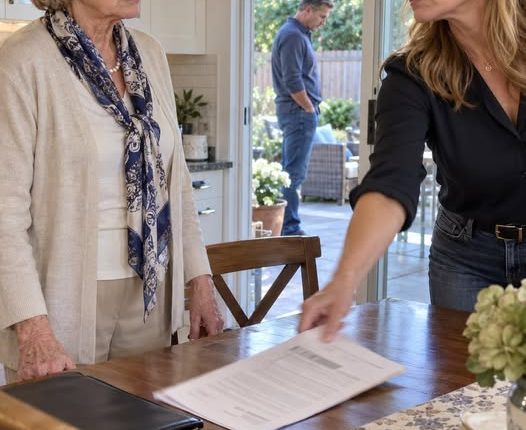
I printed the account information.
Drove home.
Changed out of my uniform.
Made tea.
Then waited.
Nathan walked in at 6:17.
He saw the paperwork on the kitchen table.
His face told me everything.
“You knew.”
He closed the door slowly.
“Rachel.”
“You knew this existed when Denise asked for full disclosure.”
“Yes.”
“And you deliberately left it out.”
“I was going to handle that one myself.”
For a second, I almost admired the consistency.
After the apologies.
Counseling.
Tears.
Financial plans.
Promises about complete transparency.
Nathan still believed concealment was acceptable if discovery could be avoided long enough.
“You don’t understand what you did.”
“I do.”
“No.”
I pushed the statement toward him.
“You understand that I found it.”
“That isn’t fair.”
“Stop saying that.”
He went silent.
“When did you open it?”
“Eighteen months ago.”
“What was it for?”
“Mostly balance transfers.”
“Mostly?”
He looked at the floor.
“A trip.”
“What trip?”
“The Asheville weekend.”
I remembered.
Nathan had gone with coworkers on what he described as a leadership retreat. I was on duty that weekend.
He returned complaining about bad hotel coffee and long meetings.
“How much?”
“Thirty-two hundred.”
“For one weekend?”
“Golf. Restaurants. Hotel.”
“You said work covered most of it.”
“I know.”
The same quiet that had settled over me at the gas station returned.
But this time, it felt final.
Nathan moved closer.
“I panicked.”
“For eighteen months?”
“No. When Denise asked for everything. I knew if you saw another account, you’d leave.”
I stared at him.
“You lied because you were afraid lying would make me leave.”
He closed his eyes.
“And your solution was more lying.”
“I thought I could pay it down.”
“Stop.”
He stopped.
I walked into the living room.
Our wedding photograph sat on the entry table.
Nine years earlier, we had looked happy.
We had been happy.
That mattered.
So did this.
Good memories did not erase current reality simply because both were real.
Nathan followed.
“What are you thinking?”
“That I kept waiting to discover the real problem.”
He looked confused.
“First I thought it was what you said about Mom.”
I counted quietly.
“Then the debt.”
“Rachel—”
“Then insecurity.”
He stopped.
“Then secrecy.”
I turned toward him.
“But the real problem is simpler.”
His face went pale.
“When honesty threatens your comfort, you choose comfort.”
“That isn’t who I want to be.”
“I believe you.”
“Then give me another chance.”
“I did.”
“One mistake—”
I laughed before I could stop myself.
“One?”
He looked down.
“You refused my eighty-one-year-old mother one night in an empty guest room because her need irritated you.”
His eyes filled.
“You hid almost fifty thousand dollars in debt.”
I continued.
“You moved twelve thousand dollars from our shared account.”
“Rachel—”
“You called me thirty-eight times when you needed access to my money for your mother.”
He wiped his face.
“You told Colin I would never leave because you believed my loyalty guaranteed you protection from consequences.”
He said nothing.
“And then, after I discovered everything, after we started counseling, after you promised full transparency, you hid another eleven thousand dollars.”
Tears rolled down his face.
I felt sadness.
But for the first time, I did not feel confused.
That mattered.
“I’m filing for legal separation.”
Nathan’s face collapsed.
“Rachel.”
“I need distance.”
“You said we were trying.”
“I was.”
“So was I.”
I shook my head.
“No.”
His mouth opened.
“You were trying to keep me.”
“That’s the same thing.”
“No.”
I went upstairs.
Pulled out a suitcase.
Started packing uniforms.
Nathan followed but remained near the bedroom doorway.
“Where are you going?”
“Mom’s tonight.”
“You’re leaving our house?”
“For now.”
He looked stunned.
“Judith is going to think I’m a monster.”
“This isn’t about Mom.”
“I love you.”
I folded another shirt.
“I know.”
“Doesn’t that matter?”
“Yes.”
Hope appeared briefly.
I looked at him.
“It just doesn’t matter more than everything else.”
That stopped him.
Mom opened her front door before I reached the porch.
She saw the suitcase.
Then my face.
She did not ask a single question.
She simply stepped aside.
The guest room smelled faintly of lavender detergent. Clean towels were folded on the bed. A glass of water waited on the nightstand.
The sight nearly undid me.
Weeks earlier, Nathan had refused this woman one night in our unused guest room.
Now she gave hers to me without asking how long I needed it.
At breakfast, I told her about the hidden account.
She listened without interruption.
“Are you divorcing him?”
“I don’t know.”
Mom spread jam across toast.
“I still love him.”
“I know.”
“I hate that.”
“Why?”
“Because it makes leaving harder.”
She looked at me.
“Love can tell you what you feel.”
Then she took a bite.
“It can’t always tell you what to do.”
I almost smiled.
“I’m eighty-one,” she added. “I’ve had time to learn some things.”
The next several weeks were harder than the anger.
Nathan did not become cruel.
He did not threaten me.
He did not insult Mom.
He continued counseling.
Made payments.
Sold things he did not need.
Worked through his debt.
That almost made separation worse.
If he had turned vicious, leaving would have been easy.
Instead, he finally began doing the work I had begged him to do while I was still living with him.
Three months into the separation, Nathan asked to meet at the same diner where we had first discussed counseling.
He looked healthier.
Still tired.
But steadier.
“I paid off one card.”
“That’s good.”
“I sold the golf equipment.”
“I heard.”
“I’m seeing a therapist separately now.”
“I’m glad.”
Nathan stared into his coffee.
Then he said something I did not expect.
“I’m not asking you to come home.”
I looked at him.
“I used to think everything I was doing was about saving our marriage.”
He rubbed one thumb along the mug.
“Now I think I have to fix myself even if you never come back.”
Something tightened painfully in my chest.
For months, I had wanted to hear a sentence like that.
Real responsibility.
No bargaining.
No reward attached.
And now that it had finally arrived, I understood something equally painful.
Change could be genuine and still come too late to save what caused it.
I looked at Nathan across the table.
“I hope you mean that.”
“I do.”
“I hope you keep doing it.”
His eyes met mine.
“But?”
I thought about the empty guest room.
The debt.
The email.
The second account.
Mom standing aside so I could enter her house without explanation.
“I don’t know what happens to us yet.”
Nathan nodded slowly.
For once, he did not ask me to solve the uncertainty for him.
And that was the first real evidence of change I had seen.
It was also the moment I began accepting that the change might belong to his future rather than ours.
END PART 4