“Nine,” I said.
The anesthesia took me under as I held the memory of my brother’s grease-stained hands.
My knee was propped on three pillows when the doorbell rang at nine in the morning. I had to use both hands to swing my leg off the sofa, the heavy black brace locking with a sharp metallic click. I hobbled to the door on my crutches, my shoulders aching from the new strain.
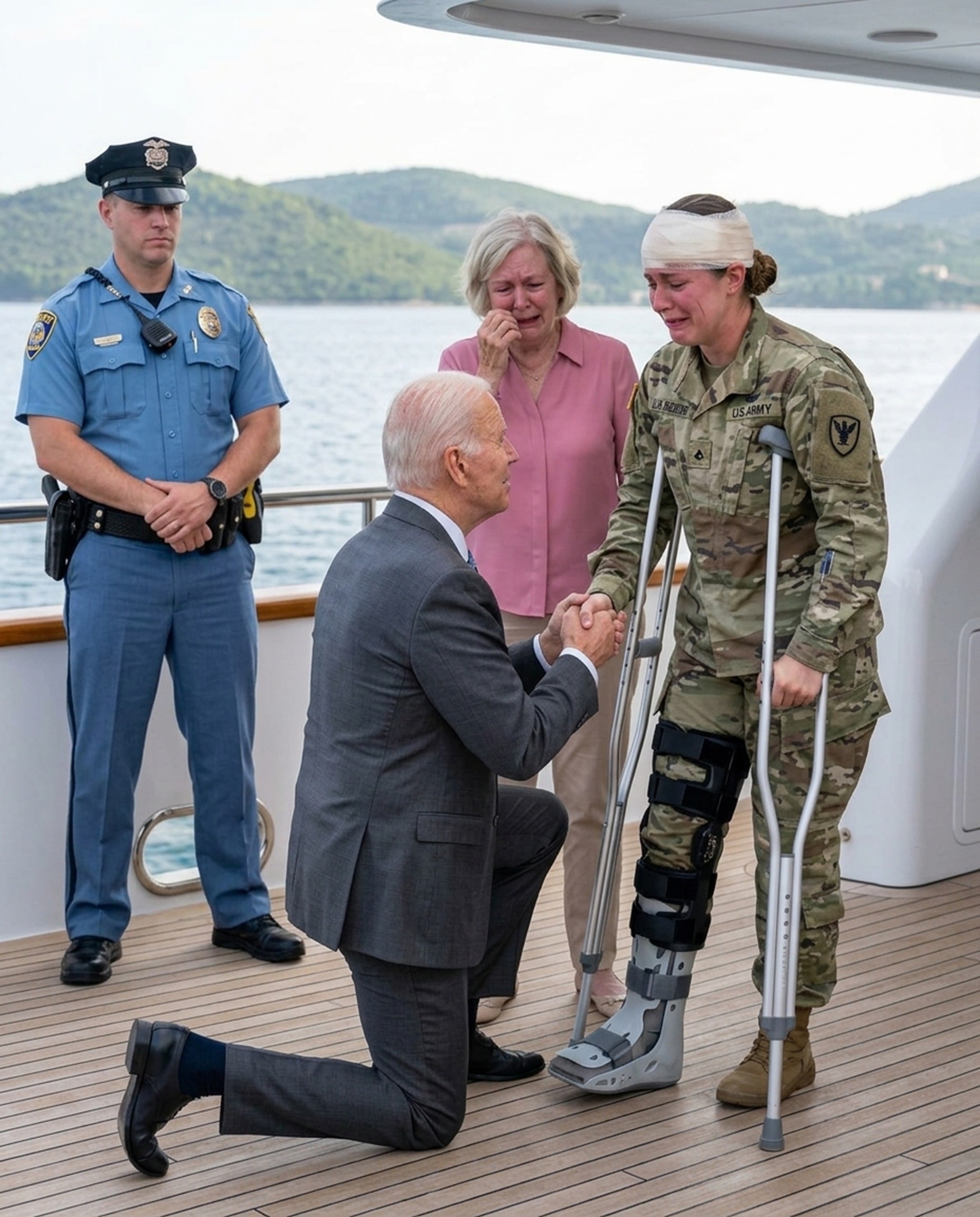
Beatrice stood on the welcome mat, holding a warm Pyrex dish wrapped in a blue kitchen towel. She wore her beige trench coat and a double strand of pearls that she immediately began to turn between her thumb and forefinger.
“I brought you some chicken broccoli casserole, Carla,” she said, stepping past me into the small living room. “You look pale, dear. The army really should take better care of its people.”
She set the dish on the kitchen counter and looked around my apartment, her eyes lingering on the military duffel bag in the corner. She smoothed her linen skirt with both hands, a slow, practiced gesture she used when she was uncomfortable.
“The surgery went fine, Mom,” I said, keeping my voice level. “Edward helped me get home.”
Beatrice frowned slightly at the mention of my brother, then reached into her designer purse. She pulled out a small envelope and a folded piece of paper.
“Your father and I want to help,” she said, sliding the envelope toward me on the table. “It is three hundred dollars. Just a little something for your groceries while you recover.”
The envelope sat on the table. Three hundred dollars was a drop in the ocean compared to the five thousand I owed the payday lender, but I did not say that. I checked my watch. Nine fifteen.
“And this?” I asked, pointing my crutch at the folded paper.
“Just a little bit of housekeeping,” Beatrice said, her voice dropping to a soft, patronizing whisper. “We just want to put this family friction behind us.”
She patted my hand. Her fingers were cold.
“It is just a standard release,” she said. “Sign it, and we can all move past this silly business with the joint savings account.”
“The account you emptied?” I asked.
Beatrice sighed, her fingers returning to her pearls. “We had to balance some family obligations, Carla. You always figure things out because you are the tough one. This just formalizes the transition.”
She did not wait for me to sign. She kissed my cheek, leaving a faint scent of lavender, and walked out the door.
I sat alone in the quiet apartment for a long time. At noon, I hobbled into the kitchen to make a cup of black coffee. It cost me two dollars and fifty cents a bag from the commissary, and I drank it black to save on cream.
I unfolded the paper Beatrice had left on the counter. The header read Voluntary Release and Waiver of Liability.
I read the legal language slowly, tracing the lines with my index finger. It did not mention family friction or moving forward. It stated that I, Carla, fully released Beatrice from any claims, audits, or disputes regarding the joint savings account ending in 4012 at the Glen Burnie branch.
The language was incredibly specific. It exempted her from any liability for unauthorized withdrawals or transfers. Why would my mother need a formal legal release for a simple family disagreement?
I grabbed my yellow legal pad from the counter. I wrote down the date Beatrice had emptied the account, matching it against the day Arthur had claimed he purchased the new boat.
If Beatrice had simply moved the money to help Diane, she would not need a notarized waiver. A parent does not demand a legal release from their own daughter unless they are trying to cover a track.
She was terrified of something official. If the bank audited the joint account, or if I filed a formal dispute with the military legal assistance office, the paper trail would lead directly to her.
I looked at the signature line at the bottom, which was already notarized with a seal.
The phone rang on the coffee table at four in the afternoon. I limped back to the living room and picked it up.
“Carla, girl,” my father’s booming voice filled the small room. “How is that million dollar knee?”
“It is fine, Dad,” I said, checking my watch. “I started my physical therapy exercises today.”
“Good, good,” Arthur said. I could hear the wind howling in the background of his call, followed by the faint sound of a halyard slapping against a mast. “Listen, I know things got a little tense last week. Money makes people jumpy.”
He sounded overly jovial, the way he did when he was pitching a new residential contract to a wealthy client. I heard him adjust his expensive watch collar, a nervous habit that carried through the receiver as a dry scraping sound.
“I want to make it up to you,” he said. “We are taking the new boat out this weekend. The Last Resort is sitting in her slip right now, fully gassed up.”
“I cannot travel far with this brace, Dad,” I said.
“Nonsense,” he boomed. “We can pick you up. It is a beautiful vessel, Carla. She is forty-five feet of pure luxury. You deserve a little comfort.”
“How did you pay for it, Dad?” I asked, keeping my voice flat.
There was a sharp pause on the line. The boisterous warmth vanished from his voice, replaced by a tight, defensive tone.
“We made an investment, Carla,” he said. “A smart business move. We have to invest where the potential is.”
“While my savings account was emptied,” I said.
“Your mother said she dropped off that paperwork,” Arthur said, ignoring my statement. “You signed it, right? It is just to keep the bank happy. We need to get that finalized today.”
The urgency in his voice was a physical weight.
“I am still looking it over,” I said.
“Don’t overthink it, Carla,” Arthur said, his voice dropping its boisterous edge entirely. “Just sign it and get it back to us. We will see you Saturday.”
The line went dead before I could answer.
I stared at the black screen of my phone. The urgency in his voice did not match his invitation to a luxury boat ride.
I grabbed my laptop and pulled up the Maryland Department of Natural Resources boat registration database. I typed the name of the boat into the search bar.
The Last Resort.
The screen loaded slowly, the blue progress bar dragging across the monitor. I expected to see my father’s name, or perhaps my mother’s, listed as the primary owner.
Instead, the registration details showed a different entity entirely. The owner was listed as a corporate entity called Baltimore Bay Holdings LLC.
I opened a second browser window to look up the state corporate registry. I typed in the name of the holding company.
The corporate status page loaded in a flash of white light. The status of Baltimore Bay Holdings LLC was listed in bright red letters.
The company was in active forfeiture.
I scrolled down to see the names of the officers registered to the bankrupt entity. Arthur’s name was there, but so was another name I did not expect to find.
The waiver was not an olive branch, it was a shield to protect her from her own daughter.
I walked into Walter’s office at nine in the morning. The radiator under the window hissed like a leaky air valve on a five-ton utility truck, filling the room with dry, metallic heat.
I sat on the edge of the leather chair, keeping my weight off my left knee. My watch read 0902.
Walter polished his wire-rimmed glasses with a small microfiber cloth. He did not look up until the lenses were clean, then he slid them onto his nose.
“I have the certified title search for the Glen Burnie property,” Walter said.
He picked up a thick blue folder from his desk and laid it flat between us. The paper inside smelled of fresh toner and old filing cabinets.
“My mother always called that place our anchor,” I said.
Walter did not smile. He reached for a fresh yellow legal pad and unscrewed the cap of his fountain pen.
“An anchor only works if it is attached to something solid,” Walter said.
He turned the first page of the search document for me, pointing to a line stamped by the county recorder.
“Look at the date on this entry,” Walter said.
The timestamp showed November of last year.
“That was the month my sister Diane opened her second boutique,” I said.
“And it was the month your father signed the first refinance agreement,” Walter said.
He leaned back, his chair giving a brief, high-pitched creak.
“They took out four hundred and fifty thousand dollars,” Walter said.
I stared at the figure on the certified copy.
“They told me they did not have five thousand dollars for my knee surgery,” I said.
“They did not,” Walter said.
He leaned forward again, his shadow falling across the legal pad.
“That entire sum went to satisfy a commercial debt from your father’s contracting business,” Walter said.
“The whole thing?” I asked.
“Every penny,” Walter said. “And that was only the beginning.”
He turned another page in the blue folder, revealing a second deed of trust.
“This one was recorded four months later,” Walter said.
My watch ticked against my wrist. It was 1140.
“They took a second loan,” I said.
“A home equity line of credit,” Walter said. “Two hundred thousand dollars at twelve percent variable interest.”
“Who signed it?” I asked.
“Your mother signed as attorney-in-fact for both of them,” Walter said.
He pointed to the signature line. Beatrice’s neat, looping handwriting was unmistakable.
“She told me they were teaching me self-reliance,” I said.
“They were surviving,” Walter said. “Or trying to.”