The morning grass at the Fort Meade training field was slick with a heavy autumn condensation. My right boot slid three inches on the wet sod during the lateral drill, and the knee joint popped with the dry snap of a breaking branch.
I went down hard on my side, the cold moisture soaking through my utility trousers in seconds.
The pain arrived a second later, a sharp, white-hot needle driving straight through the center of my kneecap.
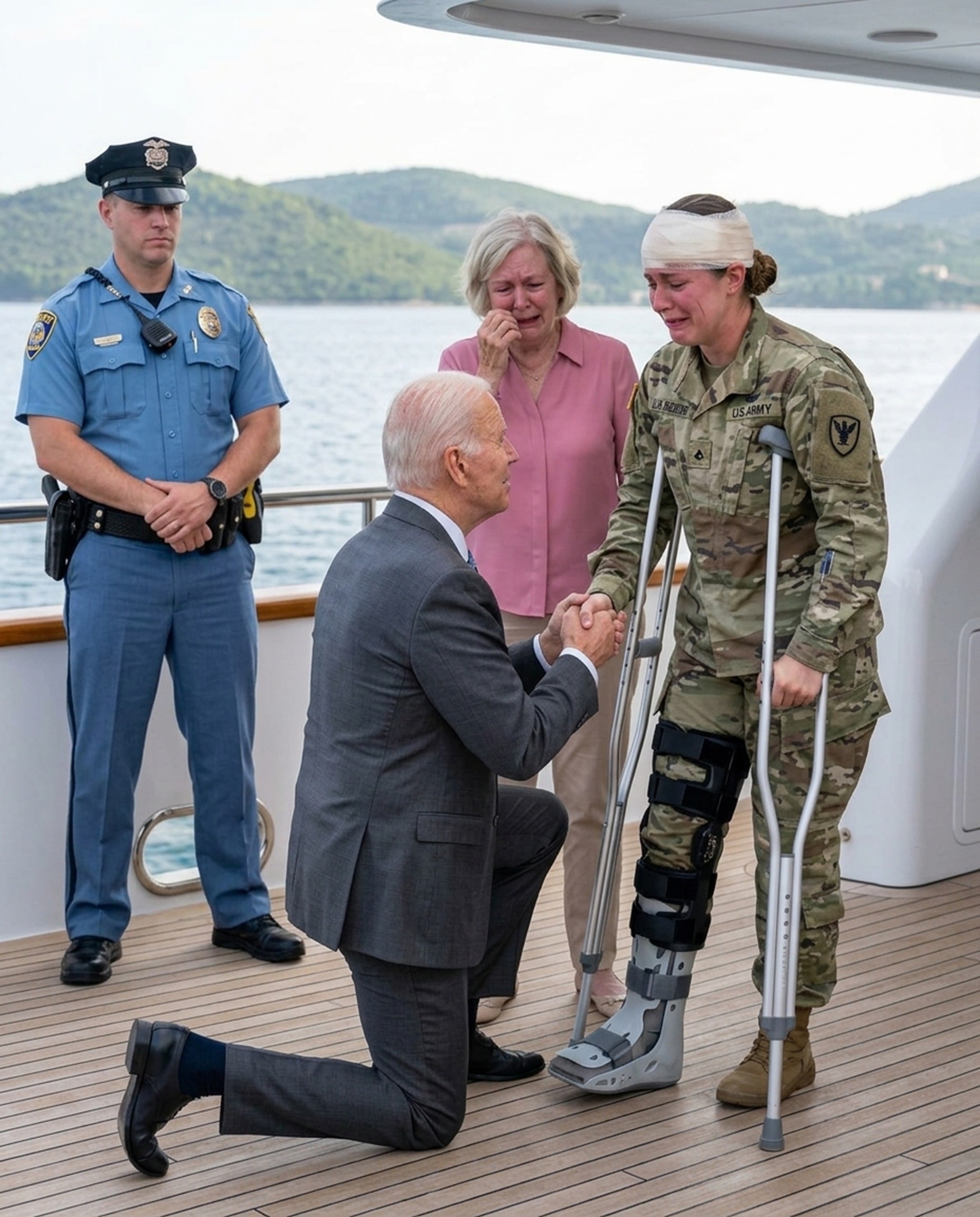
The company medic, Specialist Miller, jogged over from the shaded edge of the obstacle course, his heavy canvas bag slapping against his hip. He knelt in the damp grass and placed his palms against the outer edge of my leg.
“Do not try to bend it, Carla,” Miller said.
I pulled my arm up to check my utility watch. It was exactly eight-fifteen.
“I can finish the drill,” I said.
“You are not finishing anything today,” Miller said, his fingers digging into the swelling tissue under my kneecap. “Your joint is completely unstable.”
I gritted my teeth and looked back at the watch screen. The digital numbers flickered under a deep scratch on the plastic casing.
“It is just a twist,” I said.
Miller did not answer. He pulled a black neoprene brace from his pack, wrapped it around my leg, and pulled the straps until the velcro tore with a loud rip.
“This will keep it straight,” Miller said, helping me stand. “But you are going to the clinic right now.”
I leaned my weight on my left leg, my right foot dangling an inch above the wet grass. The pain was a dull, hot throb that radiated up to my hip as we slowly made our way to the utility truck.
At two in the afternoon, I was sitting on a grey vinyl examination table in the base clinic.
I had spent forty minutes in the waiting room, staring at the beige wall and holding a paper cup. The machine in the lobby charged two dollars and fifty cents for a cup of black coffee that tasted like burnt paper.
The physician assistant, Mr. Henderson, hung a dark film sheet against the light box on the wall. The white outlines of my bones showed a distinct gap where the joint should have been aligned.
“Your anterior cruciate ligament is completely severed,” Henderson said, pointing a plastic pen at the dark space between the bones. “The tissue is shredded.”
I looked at my watch. Two-forty.
“Can we schedule the reconstruction surgery here?” I asked.
“The base hospital is booked through January,” Henderson said. “If you want to walk without a permanent limp, you need an off-base specialist within seven days.”
“What is the cost?” I asked.
“The civilian surgeon requires a five thousand dollar down payment before they will book the operating room,” Henderson said, sliding my medical file into a metal rack on the door. “The military insurance covers the remainder, but the deposit must be paid upfront.”
Seven days. The deadline felt like a heavy weight pressing against my chest.
“I do not have five thousand dollars in my savings account,” I said.
“Then you better find someone who does,” Henderson said.
He left the room, his boots squeaking on the linoleum floor.
I rode the bus back to the barracks, the blue vinyl seat vibrating under my injured leg. The smell of diesel fuel and wet wool filled the cabin as the bus bounced over the potholes of Glen Burnie.
The barracks room was cold when I returned at six. I sat on the edge of my green wool blanket, propped my leg on a footstool, and dialed my father’s number.
Arthur answered on the second ring, his boisterous, booming voice filling the small cubicle.
“Carla, girl,” he said. “You caught me at the perfect time. We are celebrating.”
“Dad, I have a medical emergency,” I said.
“I just closed the deal on a forty-two-foot cabin cruiser,” Arthur said, his voice rising over the sound of wind and traffic. “She is a beauty. We are naming her The Last Resort.”
I adjusted the velcro on my brace, the plastic edges digging into my swollen shin. “Dad, I had an accident on the training field today.”
“You are tough, Carla,” he said. “You always bounce back from these things.”
“I tore my ligament,” I said. “I need five thousand dollars for an off-base surgeon by next Tuesday, or the joint will heal wrong.”
The line went quiet for three seconds, the wind noise on his end suddenly muffled.
“Five thousand is a lot of liquid cash right now, Carla,” Arthur said. “My capital is tied up in the business.”
“You just bought a boat, Dad,” I said.
“That is an investment,” he said, his voice turning sharp. “The Last Resort is a corporate asset under the company name. It is completely different.”
I checked my watch. Six-twelve.
“I will pay you back with my monthly service pay,” I said. “I just need the deposit so they can schedule the operating room.”
“We will talk to your mother,” Arthur said. “She manages the household accounts, and things are tight.”
The line went dead before I could reply.
I lay back on my cot, staring at the water stains on the acoustic ceiling tiles. The throb in my knee was constant now, a steady pulse of heat that made my toes twitch.
At nine o’clock, the phone on my bedside table rang. I snatched the receiver, my hand cold against the plastic.
“Carla, dear,” Beatrice said, her soft, patronizing tone instantly filling my ear.
“Mom,” I said. “Did Dad tell you about the five thousand dollars?”
“He did,” Beatrice said. “And we are very concerned about your financial planning.”
In the background of the call, I heard a sharp, fast clicking sound.
“Is Diane there?” I asked.
“I am here,” Diane said, her voice fast and breathless. “Are you still wearing those green army pajamas?”
“It is a utility uniform, Diane,” I said.
Diane let out a quick laugh. “It looks like a canvas sack.”
“Be quiet, Diane,” Beatrice said. “Carla, we have discussed this before. You chose to enlist instead of going to a proper college with your sister.”
“I wanted my financial independence,” I said.
“And independence means handling your own emergencies,” Beatrice said. “We cannot bail you out every time you have a setback.”
“This is my leg, Mom,” I said. “If I do not get the surgery, I will have a permanent limp.”
“A limp will teach you responsibility,” Beatrice said.
“You always figure things out because you are the tough one,” Diane chimed in.
“We have to go, Carla,” Beatrice said. “Our dinner reservation is at nine-thirty.”
The connection severed.
I stared at my swollen knee, listening to the dial tone of my own family’s rejection.
I had just come from the physical therapy room, where the grey exercise mats smelled of old sweat and pine cleaner. My left leg refused to take my full weight, dragging with a dry scrape against the gray linoleum of the barracks hallway. Sergeant First Class Miller stood by the water cooler, holding a clipboard against his chest and chewing on a plastic toothpick.
“Specialist,” he said, not looking up from his paper.
“Detail, Sergeant,” I said. I stood at a stiff, crooked attention, my hand pressed hard against the cold drywall to keep from tilting.
He handed me a yellow sheet of paper with three signatures at the bottom. It was a duty modification form, restricting me to desk work at the logistics office for the next thirty days.
“The clinic sent this over,” Miller said, finally looking at my knee. “The physician assistant says you have six days left to get that ligament sorted, or the captain puts you on a medical board.”
I checked my heavy tactical watch. It was exactly eight fifteen on a Thursday morning. If I did not have the five thousand dollars in hand by next Wednesday at noon, my enlistment was over and my knee would remain a loose hinge.
“Understood, Sergeant,” I said.
“Don’t let me catch you limping on the parade ground again,” he said, turning toward the orderly room. “The command does not like looking at broken soldiers.”
I tucked the paper into my cargo pocket. The rough fabric rubbed against the swelling in my knee, a sharp reminder of the clock running down in my head.
Two privates from the transport platoon walked past, their boots clicking loudly on the clean tile. They didn’t look at my leg, but they didn’t have to. Everyone on base knew what a medical board meant for a specialist’s career.
At noon, I hobbled to the silver phone booth behind the motor pool. The metal bench inside was hot from the midday sun, smelling of stale tobacco, copper wire, and grease from the nearby repair bays. I slid a quarter into the slot and dialed my father’s office line.
“Arthur here,” his booming voice filled the receiver. I could hear the rustle of blueprints in the background and the distant, repetitive whine of a circular saw on one of his residential job sites.
“It’s Carla,” I said. “I need a business arrangement.”
“I told you last night, Carla,” he said. He paused, and I heard the faint click of his metal watch band adjusting over the line. “The cash is tied up in the new vessel. A business owner has to maintain liquid reserves for unforeseen operational costs. The Last Resort is an investment in our profile.”
“I don’t need your cash,” I said. “I need collateral. Let me use the slip lease for the boat. The bank in Glen Burnie will give me a personal loan if you sign over the lease rights for six months.”
The line went silent for three seconds. The only sound was the low hum of a diesel generator across the yard.
“That slip lease is private commercial property,” Arthur said, his voice dropping an octave. “You don’t touch that. The marina fees alone are three hundred dollars a month, paid in advance through a corporate account. You start moving that lease around, and the harbormaster gets suspicious of our corporate filing.”
“Suspicious of what?” I asked.
“It’s a delicate tax structure, Carla,” he said, his tone tightening. “You wouldn’t understand the logistics of waterfront commercial real estate. Just focus on your military job.”
“My military job ends in six days if I can’t walk,” I said.
“You always figure things out,” he said. “You’re the tough one. I have a meeting with a supplier.”
The line went dead before I could answer. I looked at the black receiver, then checked my watch. Twelve fifteen.