“I want to, Dave, I really do,” I said, leaning against the counter. “But it feels like she is setting a trap. Why would she buy a gift card now of all times?”
“Because she knows she went too far on Sunday,” Dave said, running his hand through his hair again. “She wants to smooth things over before we do the test. Does it really matter why she is doing it if it means we can have a normal dinner for once?”
I looked at him, seeing the exhaustion in his face. He spent his days managing teenagers in a high school chemistry lab, and the last thing he wanted was to come home to a cold war between his wife and his mother.
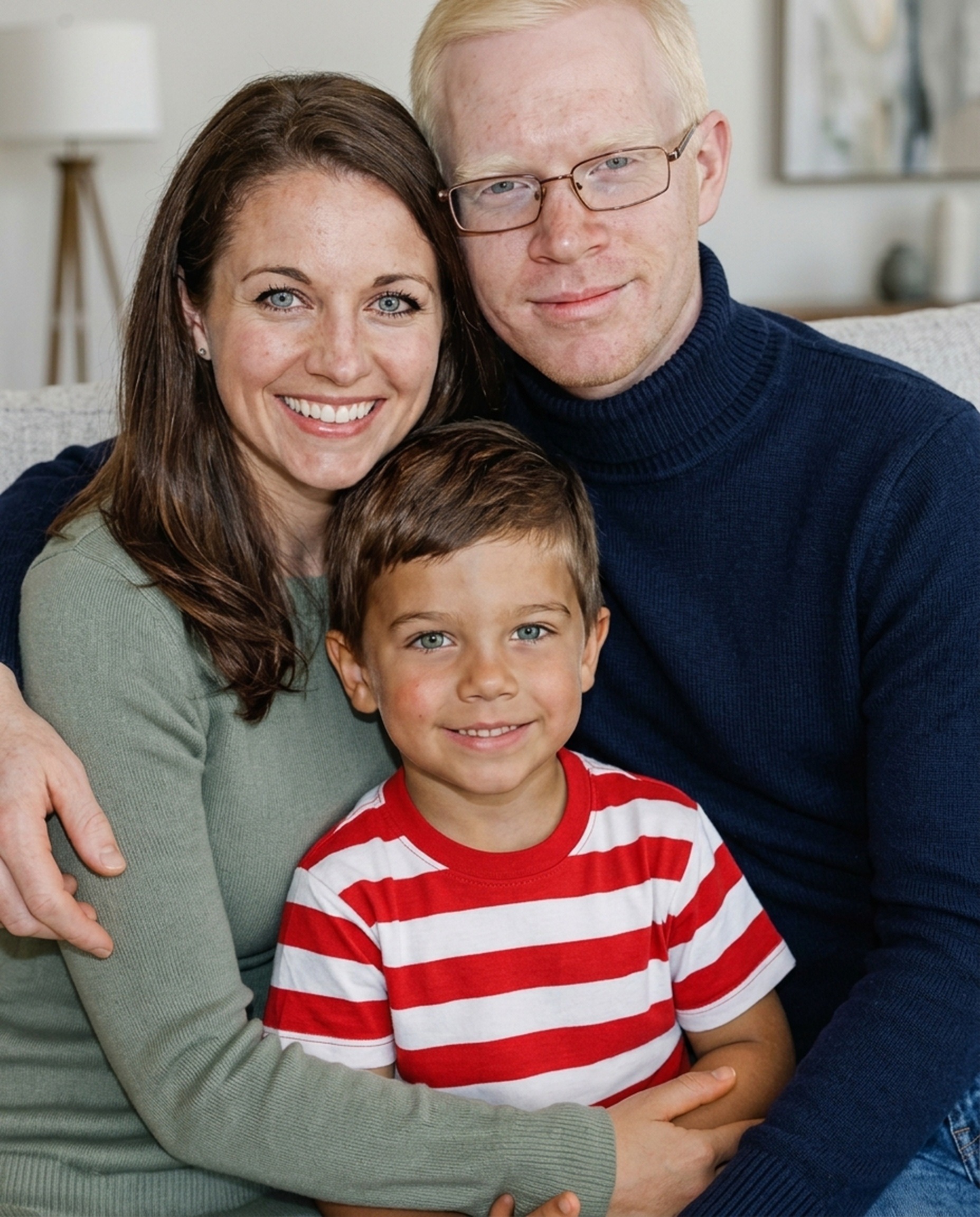
“No,” I lied softly, turning back to the apples. “I suppose it does not.”
But the uneasy feeling did not leave me, even as we unpacked the rest of our things. The sudden shift in her behavior felt deliberate, a calculated distraction while she waited for the opportunity to strike.
The dark mist was rising from the lawns along the street when we arrived back at Patricia’s house for dinner later that evening at eight. We walked into the wide, tiled foyer, the smell of wood polish and lavender greeting us as we stepped inside. I hung Sam’s small yellow jacket on the brass peg near the heavy wooden door.
Patricia came out of the kitchen, her heels clicking sharply on the hardwood floor as she carried a bowl of salad toward the dining room. “Hang your coats up, everyone, dinner is almost ready. We have a lot to get through tonight.”
Dave took Sam into the living room to look at Robert’s old coin collection, leaving me alone in the hallway. I reached for the hanger to put my own wool coat away.
My large leather purse was draping from the hook just below my coat, the brass zipper slightly undone. I turned around to grab the wooden hanger from the closet, my back turned for only a few seconds.
When I turned back, Patricia was standing right beside the coat rack, her hand deep inside the main compartment of my purse. Her fingers were rustling through the loose receipts and old coupons I kept in the side pocket, her movements quick and frantic.
She was looking for the two hundred forty-nine dollar receipt that would show exactly what kind of test kit I had purchased, hoping to find proof of the test before the results arrived.
“What are you doing, Patricia?” I asked, my voice flat and cold in the quiet hallway.
She did not flinch, but she quickly pulled her hand back, her manicured nails brushing against the leather strap of my bag. Her face remained perfectly composed, though her eyes darted toward the doorway of the living room.
“Oh, dear, I thought this was my bag,” she said, her voice smooth and entirely devoid of shame.
I snatched my purse away as Patricia pretended to look for a mint.
The metal clipboard slid across my desk at exactly ten o’clock on Tuesday morning.
The courier wore a dark blue uniform and did not look up from his handheld screen while I signed my name on the glass.
“Just need the initials on the line below that,” he said.
I scribbled my initials and handed back the plastic stylus, my fingers catching on the edge of the screen.
He handed me a stiff, cardboard overnight envelope with a red and blue logo across the front.
It was lighter than I expected for two hundred forty-nine dollars.
I set the package on top of my client ledger, the heavy cardboard hiding three weeks of unpaid invoices.
My office in the back of the Oakhaven municipal building was quiet, save for the low hum of the vending machine in the hallway.
I did not slide my thumb under the adhesive strip.
Instead, I tucked the envelope into my canvas tote bag and zipped it shut.
An hour later, I was standing in our kitchen, laying out slices of whole wheat bread on the wooden cutting board.
Dave sat at the table, a half-eaten turkey sandwich on his plate and his lesson planner open next to his elbow.
The cardboard envelope sat between us, resting against the ceramic sugar bowl.
Dave ran his hand through his blond hair, leaving a few strands standing straight up.
“You aren’t going to open it?” he asked.
“I want to read the charts by myself first,” I said, keeping my voice steady as I spread the mustard.
“We agreed we would look at it together, Clara.”
“I know,” I said. “But I need to understand the scientific layout before we explain it to your father.”
Dave looked down at his planner, his thumb tracing the corner of a yellow sticky note.
“My mother bought Sam a new set of drawing pads yesterday,” he said. “She seemed different on the phone.”
I set the butter knife down on the counter with a quiet tap.
“A few drawing pads do not change what she said at the country club, Dave.”
“She was just anxious about the estate,” he said.
“We need the facts before Sunday dinner,” I said.
Dave closed his lesson planner with a soft sigh.
“I have to get back for the third-period chemistry lab,” he said, standing up and sliding his chair back.
He kissed my cheek, his breath smelling faintly of mustard and red apples, and then the kitchen was empty.
I moved to my small home office off the living room, where the afternoon sun only reached the corner of the rug.
I sat at my desk and took the letter opener from the drawer.
The adhesive strip gave way with a sharp, tearing sound that seemed too loud for the quiet house.
Inside was a single blue folder containing five pages of high-grade paper, each covered in columns of letters and numbers.
My eyes skipped past the genetic markers and the laboratory signatures, searching for the summary table.
The first page showed the relationship between Dave and Sam, with a probability of paternity listed at ninety-nine point nine percent.
I let out a slow breath, my shoulders dropping an inch.
Sam was Dave’s son, just as I had always known.
Then I turned to the second page, which detailed the multi-generation comparison I had requested.
The table compared the genetic profile of Dave to the reference sample we had obtained from Robert’s old medical kit.
My eyes found the line labeled probability of relationship.
The figure printed in bold black ink was zero point zero zero percent.
I stared at the page, my thumb pressing hard against the paper.
“The numbers do not lie, but this cannot be right,” I said to the empty room.
I looked at the header to make sure I had not misread the names.
Robert’s name was printed clearly under the label of alleged father.
Dave’s name was directly below it.
The laboratory had included a standard explanation sheet in the back of the blue folder.
A zero percent match meant there was no biological possibility of a parent-child relationship.
I sat back in my chair, the leather creaking under my weight.
For thirty-six years, Dave had lived as the only son of Robert, inheriting his quiet baritone and his love for the Ohio woods.
Yet the paper in my hand proved they did not share a single drop of blood.
The house was perfectly silent, save for the hum of the refrigerator in the kitchen.
If Robert was not Dave’s father, then Patricia had carried this secret since nineteen eighty-eight.
She had demanded the DNA test to prove Sam was not a true heir, believing she could expose me.
Instead, her own trap had snapped shut on her own life.
I looked at the yellowed envelope from nineteen eighty-eight that I had kept in my desk organizer, wondering what else she had hidden.
The clock on the wall showed ten minutes to three.
Sam would be home from kindergarten soon, and Dave would return shortly after.
I carried the blue folder up the stairs to our bedroom, my steps heavy on the carpeted risers.
A basket of clean laundry sat on the mattress, still warm from the dryer.
I began to fold Dave’s work shirts, aligning the seams with careful precision.