Chapter 1: The Knock in the Snow
At precisely twenty minutes before ten on Christmas Eve, the universe demanded an answer at my front door.
It wasn’t a demanding pound or the frantic ringing of the doorbell. It was three soft, hesitant knocks, placed low on the heavy oak wood, right around the height of my hip. Outside, the Duluth, Minnesota winter was behaving exactly as it always did in late December—a brutal, howling force of nature, driving sheets of ice sideways off Lake Superior.
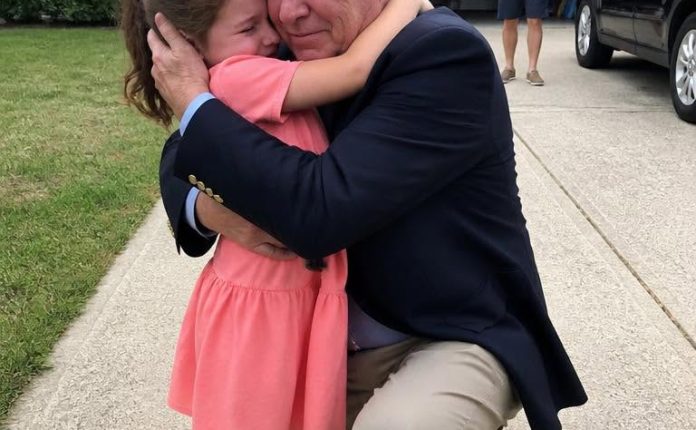
I unbolted the lock, pulled the door inward, and the wind immediately stole the warmth from my entryway. There, standing on the snow-packed boards of my porch, was my nine-year-old niece, Juniper. We all called her Junie.
She was standing in the blizzard in nothing but a pair of thin, cotton socks. She wore no winter coat, no scarf, and certainly no boots. Her small lips had lost all trace of pink, tinted a terrifying shade of translucent blue from the biting cold. In her small, shivering arms, she clutched a glass masonry jar tightly against her chest, as if it contained the cure for freezing to death. Stuck to the front of the glass was a strip of masking tape. Written in her jagged, purple marker handwriting was the sum: $11.40.
Beneath that, a single word: Rent.
“Oh, Junie,” I breathed, dropping to my knees on the freezing threshold.
Exactly three weeks prior, I had informed my entire family that my life was in ruins. I had told them that I had lost my job, that my company had dissolved into bankruptcy, and that the $212,000 I had meticulously saved over a decade was entirely gone.
My mother’s immediate response, typed into a group chat for all to see, had been: Don’t come. We can’t host a broke person.
Yet here was Junie, shivering in the dark. She leaned forward, her teeth chattering so violently I could hear the clicking, and whispered seven words that completely shattered the quiet, cowardly plan I had been building all month.
“I have tooth money for you, Auntie.”
The plan to vanish ended right there on the frozen wood of my porch.
My name is Maya Lindquist, and I am thirty-four years old. I am the sole owner and operator of Lindquist Commercial Refrigeration. If you eat at a restaurant, buy produce at a grocery store, or purchase fresh catch from the fish markets along the frozen edge of the lake in this city, there is a very high probability my hands keep your food from spoiling.
My life is not glamorous. My phone routinely vibrates off my nightstand at four in the morning far more frequently than it rings at noon. A catastrophic failure in a walk-in freezer costs a commercial kitchen thousands of dollars in ruined inventory before the breakfast rush even begins. I am the person they call when the alarms start screaming. I started this enterprise at twenty-four with a single, battered cargo van, a small bank loan, and hands that were perpetually cracked from freon and compressor oil.
By the time I turned thirty-four, I owned a fleet of four service trucks. I had six full-time technicians on my payroll. And, buried in a high-yield savings account, I had secured $212,000 in liquid capital. I had built a fortress of absolute financial security through nothing but bruised knuckles and missed sleep.
My parents, Walt and Carol, lived a mere twenty-minute drive away in the neighboring township of Proctor. For thirty-one years, my father had operated a modest, independent hardware store on Main Street. He was a man who believed heavily in the optics of success, but rarely in the mathematics required to sustain it. Four years ago, the big-box retailers finally crushed him. The store shuttered, leaving behind a mountain of quiet, suffocating debt.
When the bank dispatched a preliminary notice of foreclosure on their four-bedroom home, I didn’t wait for a plea. I drove over in my work boots, smelling of ammonia and exhaust, and handed my father a cashier’s check to cover the six months of missed payments.
Following that humiliation, I quietly contacted their lender. I set up an automated clearing house transfer of $1,840. It left my business account on the fifth of every single month to cover their mortgage. Shortly after, I appended an additional $412 monthly draft to prevent the repossession of my father’s heavy-duty pickup truck.
Neither of them ever uttered the words “thank you.” And I, trapped in the desperate, silent hope of finally earning their unconditional approval, never asked them to.
My older brother, Dale, resided just two streets over from my own modest house with his wife, Renee, and little Junie. Dale drove a regional delivery route for a massive flooring supplier. When the transmission in his personal vehicle violently detonated on the interstate, I transferred $6,300 into his checking account the same afternoon.