PART 12: I Finally Understood What Survived After the Money Stopped Being the Point
Years after I left my parents’ house, people still occasionally asked what winning the lottery felt like.
Most expected a dramatic answer.
Shock.
Joy.
Disbelief.
I usually told them the truth.
“At first, it felt like numbers on a television.”
The money itself took time to become real.
What happened around it became real much faster.
Vanessa asking for half.
Dad threatening to throw me out.
Mom agreeing that my winnings belonged to the family.
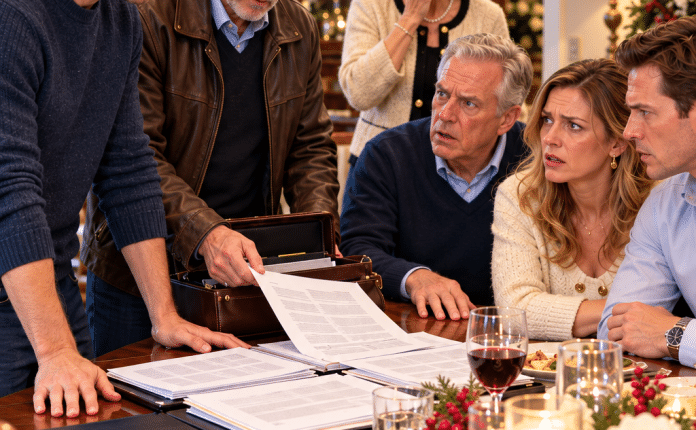
The scissors.
The shredded cardboard across the dining table.
My laughter when they realized the real ticket was already processed.
For a long time, that was the story people would have found most interesting.
Three million dollars.
A greedy family.
A fake check.
A secret transfer.
But that was never the ending.
The lottery did not fix anything.
It did not make my parents fair.
It did not make Vanessa brave.
It did not erase student debt until I paid it.
It did not build Bennett Structural Solutions until I did.
The money gave me something much less dramatic.
Distance.
Enough financial room to say no without immediately losing housing.
Enough security to sign a lease.
Enough business capital to choose clients carefully.
Enough time to stop confusing endurance with responsibility.
That freedom mattered.
But eventually even the money became background.
I still checked investments.
Still met advisers.
Still kept reserves.
Still lived more carefully than someone might expect after winning millions.
The number in the account no longer told me who I was.
Work did not entirely tell me either.
That took longer to learn.
For a while, Bennett Structural Solutions became the place where I proved everything.
That Dad should have read my plan.
That Mom should have celebrated me.
That Vanessa was not the only daughter capable of building something.
Success can become another kind of argument if you are not careful.
Eventually, I stopped arguing.
My parents already knew they were wrong.
Mom told me in a grocery store.
Hearing it did not give back college nights spent exhausted beneath fluorescent lights.
It did not rewrite birthdays.
It did not turn the science-fair ribbon into a family celebration.
It did not make Dad read the twenty pages he dismissed.
Acknowledgment mattered.
It simply did not have the magical power I once assigned to it.
Vanessa changed too.
Her boutique failed.
She found ordinary work.
Paid rent.
Managed debt.
Built savings.
Learned what standing on your own actually meant.
Her letters became more honest because she eventually stopped asking me to rescue her.
I believed her regret.
I believed her growth.
I was proud when she wrote that she had learned to stand on her own.
I never reopened the relationship.
That did not make her growth meaningless.
It made it hers.
My parents downsized and worked longer than they planned.
I did not celebrate that.
I did not intervene either.
For years, their system worked because consequences moved downhill until they reached me.
Once I stopped standing at the bottom, the consequences stayed with the people who created them.
That was not revenge.
It was gravity.
Walter once told me family describes a relationship but does not excuse behavior.
At the time, I needed those words to justify leaving.
Years later, I understood them more completely.
I could acknowledge that Mom loved me in the way she knew how.
I could believe Dad thought hardship would make me stronger.
I could understand Vanessa’s fear of losing favored status.
Understanding did not require returning.
Compassion did not require access.
I never forgave my parents in the version of forgiveness they wanted.
No coffee.
No reunion.
No restoration of the family they remembered.
But hatred disappeared too.
Hatred would have required too much attention.
I had spent enough of my life organizing myself around them.
One morning, I arrived at work before most of the team.
The city was just waking beyond the windows.
A delivery truck reversed into an alley.
Lights appeared in neighboring buildings.
Coffee began brewing in the break room.
I walked past the conference room.
Sophie had already left calculations there for an afternoon review.
Her name appeared on the project lead line.
Years earlier, the first time she challenged me, she apologized before proving herself right.
Now she led people.
She trusted her own work.
That pleased me more than another office expansion ever could.
I entered my office and placed Walter’s old pen beside my notebook.
The same pen he had used for our first independent consulting contract.
He told me when he retired that I no longer needed luck.
He was right.
Not because nothing bad could happen.
Structural engineers know better than most people that certainty is an illusion.
Loads shift.
Materials fail.
Assumptions change.
Good systems are not built around the belief that nothing will go wrong.
They are built to carry weight when something does.
My family could not carry mine.
For years, I thought that meant there was something wrong with the weight.
Too ambitious.
Too independent.
Too sensitive.
Too difficult.
Too unwilling to share.
I know better now.
Walter could respect my work.
Friends could respect boundaries.
Employees could disagree without withdrawing affection.
I could make mistakes without becoming a disappointment.
Most importantly, I could carry myself without pretending I had never needed anyone.
There was a difference between independence and isolation.
My parents taught me isolation and called it strength.
I eventually built something healthier.
My phone buzzed.
A client email.
Nothing dramatic.
I answered it.
Then opened the plans for the day.
Outside my office, conversation began as employees arrived.
Someone laughed.
A printer started.
Coffee cups clinked against the counter.
Ordinary life.
I thought briefly about the dining table where Vanessa once stood holding scissors.
They believed they were cutting apart my future.
Instead, they cut through the last illusion holding me there.
The real ticket was already safe.
The money was already coming.
But the most important thing I carried out of that house fit inside no bank account.
The certainty that no one else had the right to decide what I owed them simply because something good had happened to me.
My parents lived with their choices.
Vanessa learned to live with hers.
I built a company, a home, and relationships where I did not have to disappear to remain loved.
And the girl who once stared at a forgotten report card finally stopped waiting for someone across the room to notice her.
I noticed her.
I trusted her.
I built a life around what she could do instead of what other people refused to see.
In the end, the lottery was never the fortune that mattered most.
Freedom was.
And this time, nobody else got to decide how I spent it.