PART 11: One Empty Chair Showed Me My Son Had Finally Started Paying Attention
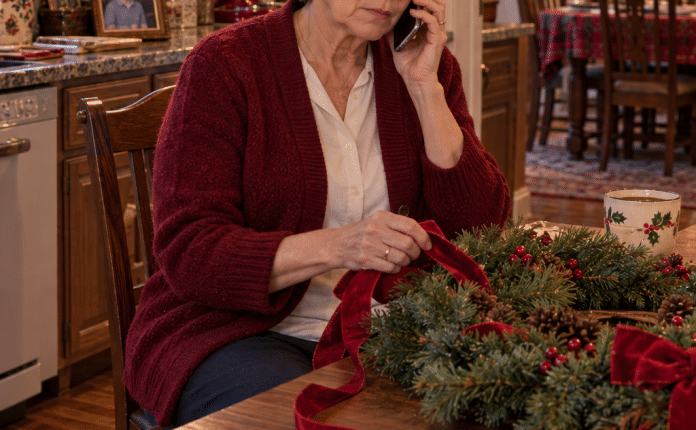
I made lunch when we got home.
Nothing elaborate.
Soup.
Sandwiches.
The kind of meal George would have called perfectly adequate before eating two servings.
Matthew set the table while I warmed the soup.
For a few minutes, we moved around the kitchen without discussing the bank.
That felt right.
The ring did not need to become another family ceremony.
It belonged on my hand.
That was enough.
When I carried the soup to the table, Matthew reached automatically for the chair at the head.
Then he stopped.
His hand remained on the chair back.
He looked at it.
Then at me.
“That’s yours.”
I smiled.
“It always was.”
He moved to the chair beside it.
Such a small thing.
No lawyer.
No deed.
No estate papers.
No returned key.
No confrontation on the porch.
Just my son noticing where I belonged.
And making room without being told.
I sat.
The ring caught the light when I lifted my spoon.
Matthew noticed again.
“I still can’t believe Dad hid that for thirty-three years.”
“He did love a delayed reveal.”
“He also forgot where he put things.”
“True.”
“What if he forgot about the ring?”
“He wrote instructions to Robert.”
“Right.”
Matthew shook his head.
“He planned even his procrastination.”
“That sounds exactly like your father.”
We ate.
George’s clock marked the minutes from the hallway.
At one point, Matthew looked toward the sound.
“I keep thinking about his note.”
“So do I.”
“The part about you not having to give everything up.”
I set down my spoon.
“What about it?”
“I think I expected you to.”
There was no defensiveness in his voice.
He continued.
“Not consciously.”
I waited.
“But if I needed something, you usually found a way.”
“That is what mothers do sometimes.”
“Sometimes.”
He looked at my hand.
“I think I started believing it was what mothers were supposed to do all the time.”
That stung because I knew I had helped teach him that.
Not deliberately.
Love had simply become a habit of stepping backward whenever someone else needed room.
George had noticed.
Apparently long before I did.
“I made choices too,” I said.
Matthew looked up.
“I should have learned to say no earlier.”
“That doesn’t make what we did okay.”
“I didn’t say it did.”
He nodded.
“I know.”
I leaned back.
“I spent years telling myself that protecting you from disappointment was part of loving you.”
“And Dad disagreed.”
“Often.”
Matthew smiled weakly.
“I bet he did.”
“He thought I rescued you too quickly.”
“Was he right?”
“Sometimes.”
That answer surprised him.
I continued.
“I thought consequences would make you feel unloved.”
Matthew looked toward the window.
“And what do you think now?”
“I think removing every consequence can teach someone that love means they never have to respect the person loving them.”
He absorbed that quietly.
Then he said, “That sounds like something Dad would say.”
“It is.”
“Of course.”
I laughed.
Matthew smiled.
The conversation shifted.
We talked about ordinary things.
His work.
A leaking faucet in the townhouse.
A restaurant near his office that had become too expensive.
He did not tell me what would happen with Jessica.
I did not ask.
That part of his life remained unresolved.
Maybe they would repair their marriage.
Maybe they would not.
The important difference was that I no longer believed I needed to control the outcome.
I could love my son without taking responsibility for decisions that belonged to him.
When we finished lunch, Matthew carried our bowls to the sink.
He washed them.
He dried the table.
Then he stood beside George’s old clock and listened for a moment.
“It sounds better.”
“It sounds exactly the same.”
“Maybe I’m listening differently.”
That was probably true.
I looked at the wedding photograph.
George and I were still young inside it.
Still smiling.
Still convinced we understood what our family would become.
We had been wrong about many things.
We had been right about others.
One of them, apparently, was that Matthew could do better when someone finally stopped protecting him from the need to do it.
He checked the time.
“I should go.”
I followed him toward the front door.
He put on his coat.
Then reached toward his pocket automatically.
His hand stopped.
I watched him realize what he was looking for.
The key.
He no longer had one.
Matthew looked at me.
“Mom?”
“Yes?”
“I don’t have a key anymore.”
“I know.”
He nodded.
There was no accusation in his face.
No hurt performance.
No expectation that I would reach into a drawer and replace it.
Then he smiled slightly.
“So I’ll knock.”
I looked at him.
“That would be a good place to start.”
He opened the door.
Cold afternoon air moved into the hallway.
Before stepping outside, he turned toward me.
“I meant what I said at the bank.”
“What?”
“I hope you keep the ring.”
I lifted my hand.
“I intend to.”
“Good.”
He stepped onto the porch.
I watched him walk toward his car.
Then I closed the door.
Gently.
Not to keep him out.
Not as punishment.
Not because love had disappeared.
I closed it because doors are allowed to close.
And when someone wants to enter again, even someone you love, there is dignity in waiting for them to knock.
END PART 11