“Where Did You Get My Proof Of Income?” I Was Furious When My Future Husband Opened My Financial File Before His Mother. My Future Mother-In-Law Told Him, “If You Want My Blessing, You Must Co-Own Her Large Farm!” But When She Turned To Me, Her Smile Vanished.
### Part 1
The first thing I noticed that morning was the smell of warm grain.
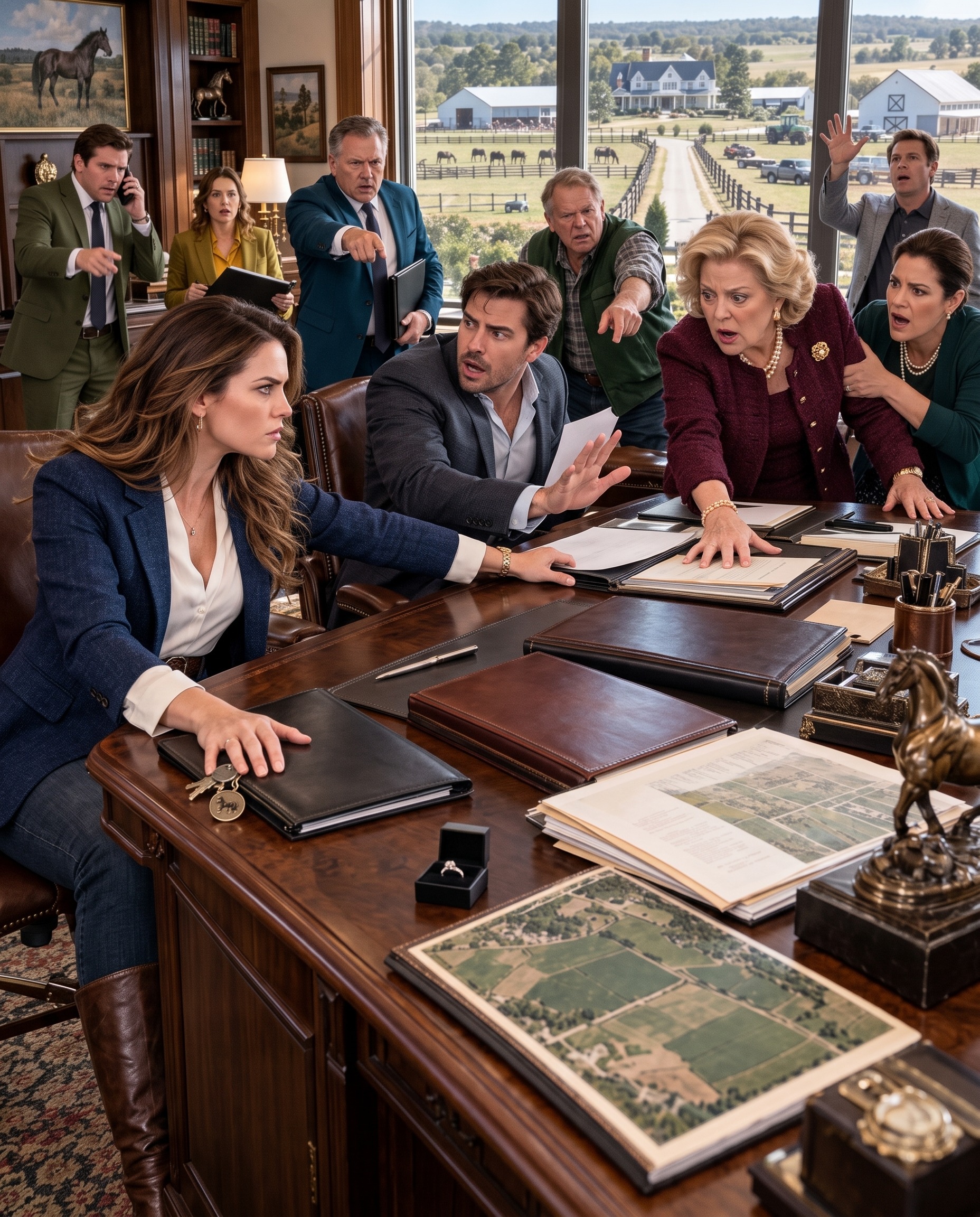
It drifted through the open side of the feed barn with the damp sweetness of hay and the sharper scent of machine oil, a combination that had clung to my clothes since I was old enough to reach the lower buttons on a control panel. By sunrise, I already had grease beneath two fingernails, mud on the heel of my right boot, and a radio clipped to my belt crackling with updates from the calf barn.
That was what owning a dairy farm looked like.
It did not look like sitting on a porch drinking coffee while money rolled in from cows grazing peacefully in a field.
Bennett Ridge Dairy covered hundreds of acres outside a midsized Midwestern town, and almost every useful piece of it had been paid for with somebody’s sore back, sleepless night, or carefully delayed purchase. My grandfather had started with forty cows and a red barn. My father, Daniel Bennett, had expanded the operation through two recessions and one devastating drought. I had spent most of my twenties modernizing it with automated feeding systems, upgraded cooling equipment, electronic herd records, and contracts that required us to meet production targets whether it was Christmas morning or a Tuesday during a thunderstorm.
At twenty-eight, I managed most of the operation.
And I loved it.
That morning, Dad stood beside the feed distribution console, squinting at the screen as grain rattled through the metal lines overhead.
“Barn Three is running heavy again,” he said.
“I noticed.”
“You call maintenance?”
“They’re coming after lunch.”
He gave me a sideways look.
“You already know what I’m going to ask next.”
“Yes, I checked the backup motor.”
He smiled.
“Then I did my job raising you.”
I was still laughing when a silver sedan came rolling down the service road.
The car was so clean it looked almost artificial against the mud-spattered trucks parked beside the barn.
I didn’t need to see the driver to know who it was.
Evan Caldwell stepped out wearing pale trousers, spotless leather shoes, and a navy sweater that probably cost more than some of the power tools in our maintenance room.
My fiancé had been to the farm plenty of times.
He had simply never become comfortable there.
The moment he crossed into the barn, his mouth tightened.
“How do you ever get used to that smell?”
“You stop insulting the cows and they eventually stop insulting you.”
He didn’t laugh.
That was unusual.
Evan normally laughed at my dry jokes even when they weren’t funny. He was good at that—good at making people feel heard, good at remembering birthdays, good at leaning toward you when you spoke as though whatever you were saying mattered more than anything else in the room.
It was one of the reasons I had fallen for him.
I pointed toward a wooden veterinary supply crate near the gate.
“Can you slide that over to the treatment pen?”
He glanced at it, then at his clothes.
“My back’s been bothering me.”
“Evan, it weighs maybe twenty pounds.”
“I said my back hurts.”
There was a sharpness in his voice that made me look at him properly.
Then he lowered it.
“Can we talk somewhere quieter?”
He led me toward the hay storage area where the machinery sounded distant and sunlight came through narrow gaps in the siding.
For several seconds, he didn’t speak.
He rubbed his palm against the back of his neck.
“My company hit a temporary funding issue.”
Evan had spent the last two years trying to build a small technology consulting company. Every few months there was another presentation, another investor, another opportunity that was supposedly about to change everything.
“What kind of issue?”
“Timing.”
“Meaning?”
“Meaning money that’s supposed to come in hasn’t come in yet.”
“How much are you short?”
He hesitated.
Enough to make me uncomfortable.
Then he said, “I was hoping you could authorize a temporary transfer from the farm.”
I stared at him.
“The farm doesn’t lend personal money.”
“It’s not personal. It’s business.”
“It’s your business.”
“Which will be our business after we’re married.”
That sentence landed harder than it should have.
I folded my arms.
“Our operating account covers payroll, feed, veterinary expenses, loan payments, fuel, maintenance, insurance, and about fifteen things that can go wrong before noon. I don’t pull money from it for anybody’s investment.”
“I’d put it back.”
“When?”
“As soon as the funding clears.”
“When is that?”
He looked away.
I already had my answer.
“No.”
His jaw tightened.
Instead of arguing about the loan, though, he surprised me by asking, “How much revenue did the farm do last year?”
I frowned.
“What?”
“I’m trying to understand our overall financial position.”
“Our?”
“We’re getting married in four months, Mara.”
“That doesn’t make Bennett Ridge your company.”
“I’m not saying it does.”
But he immediately asked another question.
“How much debt is still on the equipment?”
I didn’t answer.
“What is the acreage worth now?”
“Evan.”
“I’m just asking.”
“Why?”
He exhaled sharply.
“Because my mother wants to have dinner tonight and talk about some financial planning before the wedding.”
I almost laughed.
“Your mother wants to discuss my farm’s finances?”
“She thinks married couples should go into marriage with everything transparent.”
“Then she can start by showing me her bank statements.”
His face hardened again.
“Mara, can you please not turn everything into a confrontation?”
I looked at the man I was supposed to marry and realized he had come to my workplace dressed like a catalog model, refused to move a twenty-pound box, asked me to finance his struggling company, then interrogated me about land value.
And somehow I was creating the confrontation.
He walked away before I could say anything else.
Dad had been standing near the end of the feed line.
He waited until Evan’s car disappeared beyond the gate before approaching me.
“Don’t give him anything.”
I looked at him.
“I wasn’t planning to.”
“I’m serious.”
Dad lowered his voice.
“About three weeks ago, he left some papers on the kitchen counter when you two stayed here. I wasn’t snooping, but one of them had a red overdue stamp across the top. Another looked like a credit card statement.”
“How bad?”
“I didn’t read it.”
He paused.
“But I saw enough numbers to know I wouldn’t sleep well if they were mine.”
A cold feeling settled beneath my ribs.
Dad pointed toward the road.
“People in trouble do strange things when they can see somebody else’s lifeboat.”
I wanted to defend Evan.
The words actually rose into my throat.
Then I remembered the way he had asked what the acreage was worth.
Not how my morning was going.
Not whether I was excited about the wedding.
The land.
That evening, I changed into a dark green dress, pulled my hair back, and drove downtown.
The restaurant Evan’s mother had chosen was all polished glass, white tablecloths, low instrumental music, and servers who seemed trained to appear exactly three seconds before you needed them.
Gloria Caldwell was already sitting beside Evan when I arrived.
Two bottles of expensive wine were open.
They had ordered appetizers.
Neither one apologized for starting without me.
Gloria smiled as I sat down.
“Mara. Finally.”
“I’m exactly on time.”
“Of course.”
She waved to the server and began ordering the most expensive seafood platter on the menu, followed by steaks, sides, and another bottle of wine.
I interrupted politely.
“Separate checks, please.”
Gloria’s eyebrows lifted.
Evan looked embarrassed.
I ordered a salad and water.
When the server left, Gloria leaned back and studied me.
“So. The farm.”
There wasn’t even five minutes of small talk.
“How many acres do you own now?”
“Enough.”
“And your father still has an ownership interest?”
“Yes.”
“Any mortgages?”
“Why?”
“I’m trying to understand what Evan is marrying into.”
I set my water glass down.
“He is marrying me.”
“Naturally.”
Her smile never reached her eyes.
“But marriage is also a financial partnership.”
She asked about revenue.
I gave her nothing.
She asked about equipment debt.
Nothing.
Property value.
Nothing.
Expansion plans.
Nothing.
Each unanswered question made her mouth grow tighter.
Then Evan finally stopped pretending to study the menu.
He bent down, lifted a leather briefcase onto his lap, and removed a thick brown envelope.
The instant I saw my full legal name typed across the front, something inside me went still.
He placed it on the table.
Gloria leaned forward eagerly.
Evan opened the envelope.
And my private financial life spilled out between the dinner plates.
Credit information.
Property records.
Income documentation.
Loan information.
Pages I had never given him.
My heartbeat became so loud I could hear it over the restaurant music.
I looked up at the man I was supposed to marry.
“Where did you get my financial records?”
For the first time that evening, Evan smiled.
And the expression on his face told me he still believed he had done something clever.
### Part 2
Evan leaned back against the booth as though he had just won a negotiation.
“Relax.”
I stared at him.
“That is not an answer.”
Gloria picked up one of the pages before I could stop her.
“Your credit is excellent.”
I reached across the table and took it from her hand.
“Don’t touch that.”
She blinked at me.
Evan lowered his voice.
“A friend helped me get a clearer picture of everything.”
“What friend?”
“Someone who works in lending.”
The muscles along my shoulders tightened.
I carefully gathered the nearest pages away from the plates.
“Did I authorize this?”
“Mara, we’re getting married.”
“Did I authorize this?”
“No, but—”
“Then why do you have it?”
Evan’s smugness faded slightly.
He explained that a friend in a financial office had helped him obtain information about my credit and finances because he wanted to know what our “combined financial position” would look like after the wedding.
He said it casually.
That was almost worse.
“You had somebody access financial information connected to me without asking me.”
“I wasn’t stealing anything.”
“You didn’t have permission.”
“You’re making this sound criminal.”
“I’m making it sound exactly like what you just admitted.”
Gloria dropped her fork.
“Oh, for heaven’s sake. You are marrying my son. Why are you behaving like a stranger?”
“Because strangers generally don’t investigate my finances behind my back.”
Her eyes narrowed.
“What exactly are you hiding?”
I laughed once.
Not because anything was funny.
Because the question was unbelievable.
“You secretly pull my information, spread it across a restaurant table, and I’m the suspicious one?”
Evan leaned toward me.
“Nobody is attacking you.”
“Then what is this?”
He glanced at his mother.
That tiny movement told me everything I needed to know.
This had been planned.
Gloria smoothed the front of her blouse.
“Fine. Since you’re determined to be dramatic, let’s stop dancing around the issue.”
She tapped one manicured fingernail against the copy of the farm deed.
“If you want my approval for this wedding, you need to put Evan’s name on the farm.”
For a second, I thought I had misheard her.
“What?”
“Co-ownership.”
She said it like she was asking me to add him to a warehouse-club membership.
“Equal legal protection. Equal standing. Equal security.”
I looked at Evan.
He didn’t look surprised.
That hurt more than Gloria’s words.
“You knew she was going to ask me this.”
He sighed.
“It’s not unreasonable.”
My pulse slowed.
Strangely, that was when my anger became manageable.
I had spent my entire adult life negotiating feed prices, resolving employee disputes, handling equipment failures, and signing contracts where one careless sentence could cost us six figures.
Anger was dangerous when it moved faster than thought.
So I stopped moving.
Gloria mistook my silence for uncertainty.
She continued.
“You’ll schedule an appointment with your attorney tomorrow and add Evan as a co-owner. He should have voting authority over major purchases and future land transactions.”
“You’ve planned this in detail.”
“Someone had to.”
Evan reached for my hand.
I moved it away.
“Mara, listen.”
“No. You listen.”
But Gloria wasn’t finished.
“And since we’re discussing family obligations, there should also be a monthly family allowance.”
I actually stared at her.
“A what?”
“Four thousand dollars.”
This time I did laugh.
Her face became offended.
She explained that the payment would help maintain the lifestyle she was accustomed to and would represent my willingness to join their family “properly.”
I looked from her to Evan.
“Do you agree with this?”
He rubbed his forehead.
“I think four thousand might be a little high.”
That answer ended everything.
Not the farm.
Not the stolen financial information.
Not even the demand itself.
That sentence.
A little high.
As though the only problem was the amount.
Gloria leaned closer.
“If you refuse, the wedding is off.”
There it was.
The threat.
She continued, saying people in town would hear how selfish I had been, how I had humiliated Evan, how I valued money more than family.
Several diners were already glancing toward us.
I didn’t care.
I began gathering every document.
Slowly.
One page at a time.
Some had landed beside crab shells and streaks of sauce. I wiped the corners clean with a napkin and slid them into my handbag.
Evan watched me.
“What are you doing?”
“Protecting my information.”
“Mara, stop.”
I kept going.