Mom called seven times that night, but I didn’t answer. Dad left only one voicemail.
“You made your point.”
But he was wrong. I wasn’t trying to make a point; I was keeping a boundary.
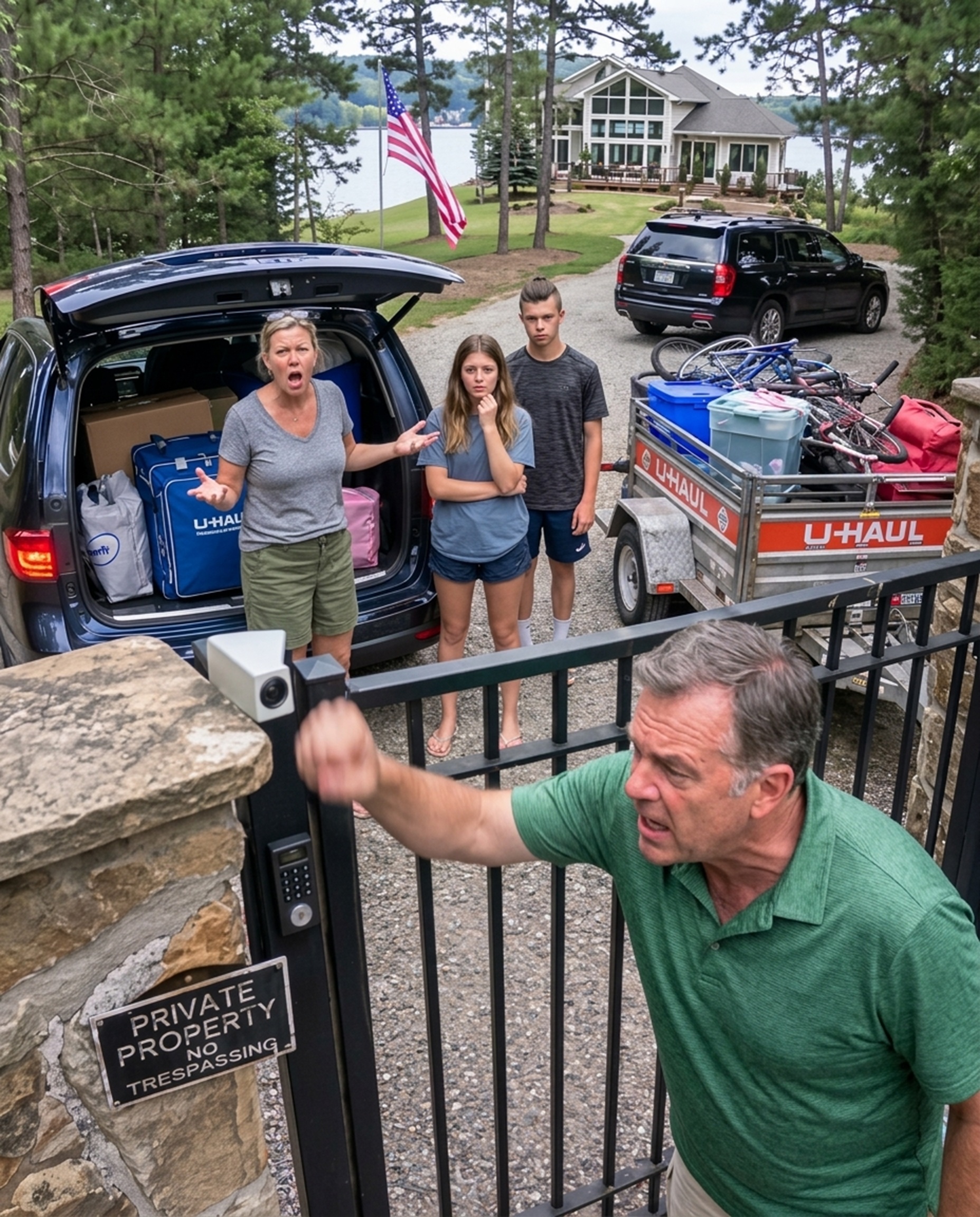
There was a difference I had spent most of my adult life failing to understand. A point was something you made because you wanted someone else to agree with you, but a boundary remained in place even when everyone around you thought you were unreasonable.
The following Saturday, I drove to Lake Norman alone. When I reached the entrance, I entered the new code and watched the gate swing open, and that small mechanical movement affected me more than I expected because, for once, access to something I owned depended on my permission.
I parked beside the house and walked inside. Everything was exactly where I had left it, with no bicycles against the porch, wet towels hanging over the railing, extra shoes crowding the doorway, or relatives inflating air mattresses across the living room.
Most importantly, nobody was sleeping in my bedroom because someone else had decided I hardly used it. I walked slowly through the house before making coffee and carrying it outside to the screened porch.
Beyond the dock, the lake moved quietly beneath the afternoon light, and the soft sound of water against the pilings reminded me why I had bought the property in the first place. For once, I allowed myself to sit there without feeling guilty.
I didn’t need to turn the house into a family vacation center to justify owning it, and I didn’t need to prove I deserved peace by first making myself useful to everyone else. My family had spent years teaching me that keeping something for myself was selfish.
Sitting there alone, I finally began to question whether they had ever believed that at all. Maybe they had simply needed me to believe it.
Part 4: The End of Their Assumption
My family didn’t forgive me quickly after what happened at the gate. Mom continued telling relatives that I had overreacted, Dad avoided discussing the lake house altogether, and Melissa spoke to me only when necessary.
At first, their distance bothered me more than I wanted to admit. I had spent so many years smoothing over disagreements that part of me still expected to fix everything, even when fixing it meant apologizing for a boundary I had every right to keep. But I resisted, and whenever guilt started creeping in, I remembered the U-Haul parked behind Melissa’s minivan, Mom holding the summer schedule with bedrooms already assigned, and Dad repeatedly entering an access code to property that had never belonged to him.
Those details mattered because my family’s version of events conveniently removed them. In their story, I was the successful daughter who had become selfish after buying an expensive vacation home, but in mine, I was the woman who had spent twelve years working hard enough to finally purchase one peaceful place for herself. The difference was permission.
I had never said my family could never visit. I had never forbidden my nephews from swimming in the lake or declared that my parents were unwelcome forever. I simply wanted invitations to come from me.
For years, my family had treated access as automatic. If I owned something useful, they assumed being related to me gave them a claim to it, and every time I surrendered, that assumption grew stronger. My apartment had once become free lodging, my car had become Melissa’s transportation, and my guest room had become Mom’s storage space. The lake house was simply the biggest version of the same pattern.
What changed after the gate incident wasn’t that my family suddenly understood me. There was no emotional meeting where everyone apologized, admitted they had taken advantage of me, and promised to respect my choices from then on. Something quieter happened instead: nobody asked for the new gate code, nobody announced another reunion at my house, Melissa never again told me her boys would be staying for weeks, and nobody referred to the lake house as “ours.”
I began to realize that sometimes respect doesn’t arrive wrapped in an apology. Sometimes it appears as the disappearance of an assumption.
My parents might never admit they were wrong, but they now understood that arriving at my property did not guarantee entry. Melissa might still think I embarrassed her, but she knew she could no longer make plans involving my home without speaking to me first. That knowledge was enough.
I started visiting Lake Norman more often after that summer. Sometimes I spent an entire weekend there without accomplishing anything productive, which initially felt almost rebellious. I would make coffee in the morning, sit on the porch, read for an hour, walk down to the dock, and watch the lake without wondering whether someone else could make better use of the property.
The house stopped feeling like something I needed to defend. It became mine again.
One afternoon, while sitting on the dock, I thought about something Dad had said through the gate.
“After everything we did for you?”
For years, that sentence would have destroyed my resolve because I loved my parents and was grateful for what they had given me growing up. But gratitude wasn’t ownership.
Being their daughter didn’t mean everything I built afterward belonged to the family by default. They could be angry, call me selfish, or even tell relatives that money had changed me. The gate still required my code, and for the first time in my life, I understood that I didn’t need their agreement for my boundary to be real.
Part 5: The One Place They Could No Longer Take Over
The months that followed were quieter than I expected. My relationship with my family never returned to what it had been before the lake house confrontation, but eventually I understood that what we had before wasn’t necessarily something worth restoring. Mom still told people I had overreacted, Dad preferred not to mention the incident at all, and Melissa contacted me when necessary without treating my time or belongings as automatically available to her.
At first, that distance felt like punishment, but eventually it began to feel like space. For most of my life, I had measured whether I was a good daughter or sister by how useful I could make myself. If someone needed money, transportation, somewhere to sleep, or a favor that disrupted my schedule, saying yes proved that I cared, while saying no felt like evidence that I didn’t.
The lake house forced me to reconsider that entire equation. I had worked for twelve years to build the life that allowed me to buy it, yet within nine months, my family had mentally converted my private retreat into communal property simply because they believed I wouldn’t stop them. They were almost right.
If they had arrived without the U-Haul, I might have opened the gate. If Mom hadn’t created a bedroom schedule, I might have convinced myself that I was overreacting. If Dad had apologized instead of ordering me to let them inside, I might have surrendered just to make the tension disappear.
But they had made their entitlement impossible to ignore. The U-Haul showed me how far they intended to go, and the locked gate showed me that I could stop them.
After that summer, I continued visiting Lake Norman whenever work allowed. I sometimes invited friends, and occasionally I even invited relatives, but every visit began with the same thing my family had previously ignored: an invitation.
That distinction changed everything. Sharing something because I wanted to felt completely different from surrendering it because someone else expected access. Generosity stopped feeling like an obligation and became a choice again.
One Saturday morning, I sat alone on the screened porch with a mug of cheap coffee while sunlight moved across the kitchen floor behind me. The lake was almost perfectly still, and water tapped gently against the dock pilings with the same steady rhythm that had convinced me to buy the property.
I thought about the woman I had been when Mom first called. She had heard an outrageous plan unfolding and still said:
“Sure.”
She had not said it because she wanted a house full of relatives for the summer, but because she already knew the accusations waiting for her if she refused: selfish, cold, ungrateful, and difficult. Those words no longer frightened me the way they once had.
My family might never understand why I needed that house to remain mine. They might never acknowledge how casually they had planned to take it over, and I had finally stopped waiting for an apology that might never come. What mattered was simpler: they stopped assuming.
Nobody called it the family lake house anymore. Nobody distributed my address, promised relatives bedrooms, or treated my gate code like shared information. Sometimes, in families that struggle to apologize, respect doesn’t arrive as warmth or understanding; sometimes it is simply the end of an assumption.
I had spent years believing that loving my family required keeping every door open to them. The lake house taught me something different: a closed door wasn’t always rejection. Sometimes it was ownership, and sometimes it was peace.
I had bought that house because I wanted one quiet place in my life that nobody could gradually take over and rename as theirs. That morning, I sat on the porch, listened to the water, and realized I finally had exactly that. The house was mine, the quiet was mine, and the gate stayed closed.
The END.