My prenatal care had been managed around me instead of with me.
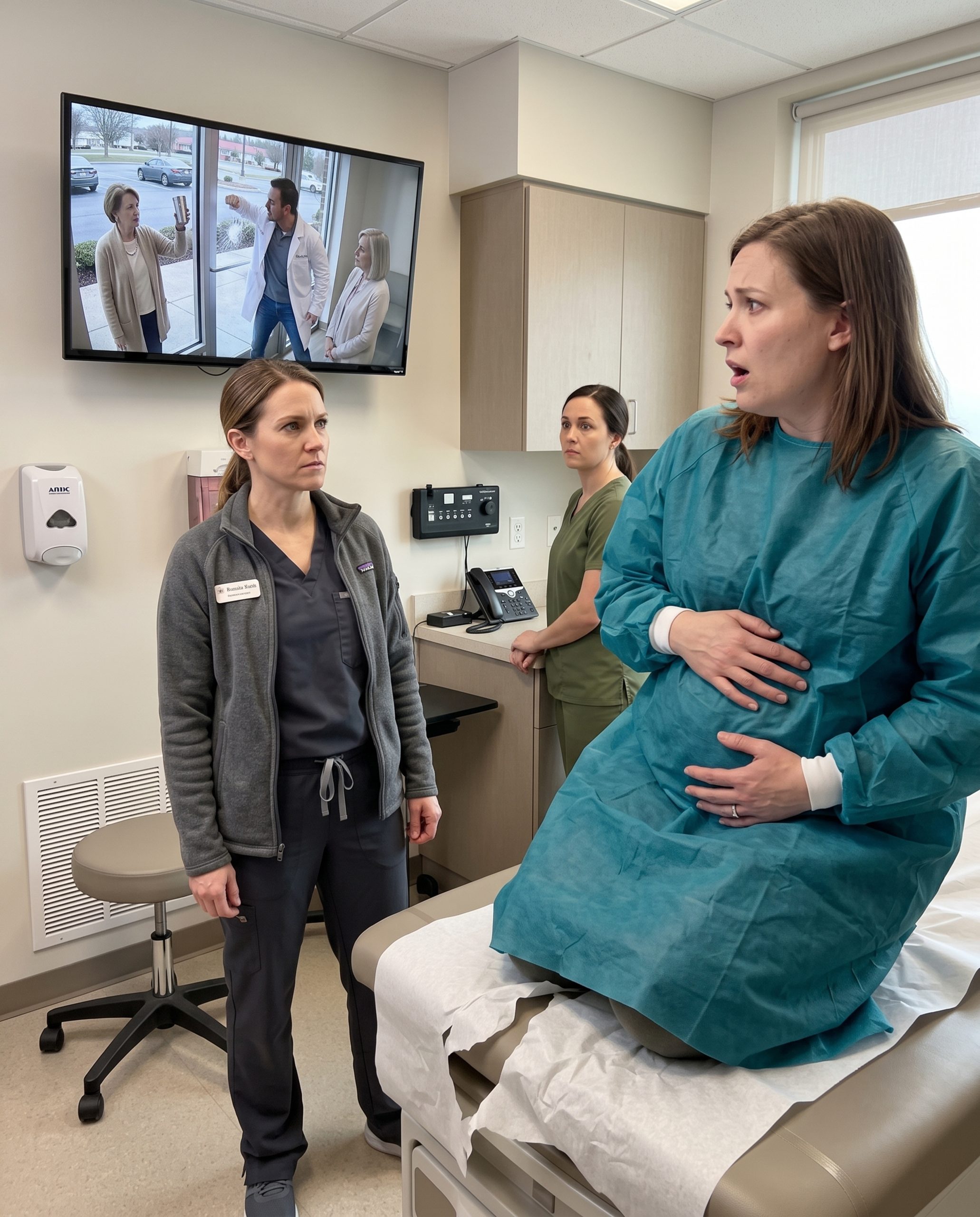
And when I tried to see another doctor, Aaron had followed me there demanding access.
That night he sent thirty-seven messages.
The first ones were angry.
The next ones were medical.
Then came apologies.
Then warnings.
Then love.
Then protection again.
I read none of them alone.
My mother sat beside me while I turned the phone over to the people documenting what had happened.
Sylvia called once more.
I almost refused the call.
Then I answered.
She was crying.
“I should have asked you,” she said.
“Yes.”
“I believed him because he’s a doctor.”
“So did I.”
That stopped both of us.
She told me Aaron had delivered the packets to her already portioned and instructed her to mix one into my morning drink.
When she asked what they were, he had called them supplements and said I became argumentative when I skipped them.
She admitted something else too.
She had noticed I was sleepier afterward.
She had noticed I stopped asking to leave the house as often.
And instead of questioning why, she had decided the routine must be working.
“I thought I was helping my son take care of you,” she whispered.
I looked down at my hands.
“That doesn’t make it okay.”
“I know.”
For once, she did not defend herself.
She also did not ask me to forgive her.
That was probably why I stayed on the phone.
Aaron’s version came through a written message the next morning.
He claimed everything had been intended to stabilize a difficult pregnancy.
He insisted he had acted because I was anxious, unpredictable, and unable to appreciate the risks.
He said Dr. Reed had frightened me unnecessarily.
He said my mother had manipulated me.
He said Sylvia had misunderstood his instructions.
He said he loved me.
The word that appeared most often, though, was still protection.
I read that message twice.
Then I finally understood why the word made my chest tighten.
Protection had never meant keeping me safe.
In our house, it had meant making Aaron the gatekeeper between me and everything else.
My family.
My car.
My appointments.
My records.
My own body.
Once I saw the pattern, I could not unsee it.
I did not go home with him.
My mother brought clothes from her house instead.
Nothing dramatic—soft sweatpants, one of my old T-shirts she had somehow kept, clean socks, a hairbrush, and the ridiculous oversized hoodie I used to wear in college.
She set the bag beside my chair and asked before touching anything else.
That became the shape of the weeks that followed.
People asking.
Me answering.
Sometimes yes.
Sometimes no.
Sometimes I don’t know yet.
Those three answers rebuilt more of me than any speech could have.
My prenatal care remained with physicians outside Aaron’s control.
The baby continued to be monitored closely.
There were frightening appointments and long stretches when I watched the monitor too carefully, waiting for someone to change expression.
But no one hid the screen from me unless there was a medical reason.
No one spoke to Aaron before speaking to me.
No one called consent an inconvenience.
Several weeks later, my son arrived safely.
When they placed him against me, he opened his mouth in a furious little cry and curled one hand against my gown.
My mother laughed through tears.
I laughed too.
It was not a perfect ending.
There were still records to review, professional questions surrounding Aaron’s conduct, and decisions I was not ready to make all at once.
Sylvia’s relationship with me remained complicated.
She had helped him, even if she claimed she had not understood what she was giving me.
I could hold both facts at the same time.
She had been deceived.
She had also chosen not to ask me.
So I set rules.
No unsupervised visits.
No food or drinks brought for me or the baby.
No passing messages from Aaron.
No conversations about reconciliation.
She accepted them.
Maybe because she finally understood that access to another person was not something you earned by calling control love.
The silver cup never came back to my bedroom.
For months, I thought about it whenever someone handed me coffee or water.
A simple cup had become the object my fear attached itself to.
Then one morning, long after the immediate crisis had passed, my mother set a plain ceramic mug on the kitchen table beside me.
She left the tea bag unopened next to it.
The kettle sat on the counter.
Milk was still in the refrigerator.
Honey was in the cabinet.
“You want tea?” she asked.
I looked at the mug.
Then at her.
“Yes.”
She nodded toward the kitchen.
“Make it however you like.”
So I did.
I opened the tea myself.
I poured the water myself.
I added honey, changed my mind, and added more.
No one measured anything for me.
No one watched to make sure I finished.
No one told me what was good for me before asking what I wanted.
My son slept nearby while morning light moved slowly across the table.
I wrapped both hands around the warm mug.
For years, Aaron had used the word protection whenever he wanted something from me.
By then I had learned a different meaning.
Real protection did not require taking away my keys.
It did not need secret medicine, canceled plans, controlled records, or permission to see my own family.
Sometimes it looked like a doctor turning a monitor off long enough to make sure I was safe enough to make my own decision.
Sometimes it looked like a nurse placing a pen in my hand and waiting.
Sometimes it looked like my mother asking one ordinary question and accepting the answer.
And sometimes it was nothing more dramatic than an untouched tea bag beside an empty cup, waiting for me to decide what went inside.