Part 1: The Morning That Changed Everything
The morning started with the simple comfort of coffee, but before the sun had fully crossed the sky, my entire world collapsed. A single moment of anger destroyed years of trust, revealed a painful truth about the person I loved, and forced me to choose between fear and my own survival.
I never imagined that a quiet Saturday breakfast would become the day I finally understood the difference between being loved and being controlled. The smell of fresh coffee, the familiar sound of dishes on the table, and the ordinary rhythm of our married life all disappeared within seconds.
Three years earlier, I had lost both of my parents. Their deaths left a hole inside me that I knew would never completely heal. They had been my strongest supporters, my safest place, and the people who taught me that love was something shown through actions, not just words.
After they passed away, I inherited approximately $9.7 million from the estate they had carefully built over decades. Many people assumed my parents must have lived an extravagant life because of the amount of money they left behind, but the truth was completely different.
They were not people who chased luxury or tried to impress others. They built several successful businesses slowly, invested wisely, saved consistently, and lived with discipline. They believed financial security came from patience, responsibility, and making decisions that protected the future.
My father had always been extremely careful about planning. Long before his health began declining, he created detailed legal arrangements to ensure the inheritance remained separate from my marital finances. At the time, I thought he was simply being practical.
I remember asking him why everything needed to be so formal. He smiled gently and told me, “Planning ahead is not about expecting something bad. It is about protecting what matters most.”
I did not fully understand those words then.
Years later, I realized my father had not been preparing for his death. He had been preparing for the possibility that someone might one day try to take advantage of my kindness.
When I married Brian, I believed I had found someone who respected my values. In the beginning, he never focused on my inheritance. He rarely mentioned the money, and I appreciated that because I wanted a marriage built on partnership, not financial expectations.
For years, Brian acted as though the inheritance did not matter. We managed our household together, made decisions together, and built what I thought was a normal married life.
Then everything changed when his younger sister, Amanda, started making risky business decisions.
Amanda had always dreamed of becoming an entrepreneur. I admired her ambition, but her choices became increasingly dangerous. She invested large amounts of money into businesses without proper planning, ignored advice from experienced people, and believed every problem could be solved by taking bigger risks.
The first business failed.
Everyone around her tried to comfort her and encouraged her to learn from the experience.
Then she started another venture.
That one failed too.
Soon, phone calls from creditors became part of Brian’s daily life. He became distracted, anxious, and increasingly desperate. At first, I tried to understand his concern because Amanda was his sister.
I told myself that family problems sometimes require support.
But support slowly turned into expectation.
One evening, Brian sat across from me and said, “It wouldn’t hurt to loan Amanda a little money.”
I immediately knew what he meant.
“No,” I replied calmly.
His expression changed slightly.
“She needs help. It’s not like she’s asking for a gift.”
“I understand she is struggling,” I said. “But my parents left that money for my future, not to rescue every bad investment.”
Brian looked disappointed.
“She will pay it back.”
“I cannot risk everything my parents worked for based on a promise.”
He became silent.
Then he said something I never expected.
“You’ve become selfish.”
The word hurt more than I wanted to admit.
Selfish.
After everything my parents had sacrificed, after everything they had built to protect me, I was suddenly being called selfish because I refused to hand over what they left behind.
I tried explaining that this was not about refusing to help family. It was about refusing to allow pressure and guilt to control my decisions.
But Brian no longer seemed interested in understanding.
His frustration grew.
The conversations became arguments.
The arguments became accusations.
And slowly, the person I loved began looking like someone I barely recognized.
I started noticing small changes.
He became irritated whenever I mentioned financial boundaries. He questioned my decisions more often. He acted as though my inheritance was something we both owned, even though legally and emotionally, it had never been part of our shared finances.
The most painful part was realizing that Brian was not angry because I had done something wrong.
He was angry because I had said no.
And he believed my no was something he had the right to change.
I still hoped things would improve.
I hoped the stress would pass.
I hoped the man I married would remember that love was not measured by obedience.
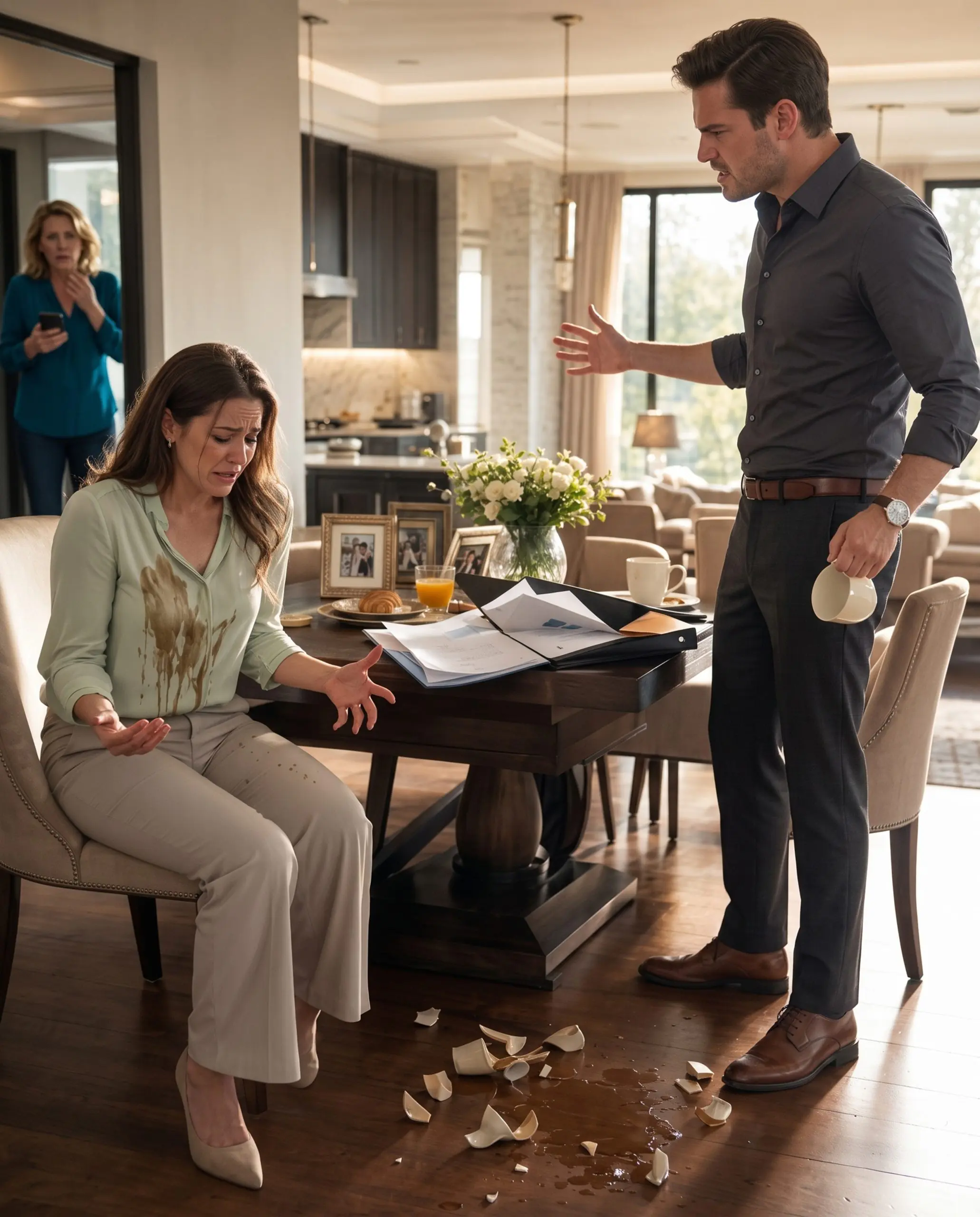
But one Saturday morning, while we sat across from each other at the breakfast table, Brian placed a folder in front of me.
At that moment, I had no idea that folder would become the final warning before everything fell apart.
Part 2: The Signature I Refused To Give
The folder sat between us like a silent threat. I stared at it for several seconds, already feeling a heaviness in my chest before I even opened it.
“Just sign,” Brian said.
His voice was calm, but something about it felt different. It was not a request. It was an expectation.
I slowly opened the folder.
Inside were documents that would give Amanda limited access to one of my investment accounts. The wording was carefully prepared, but I understood exactly what it meant.
Brian wanted me to give someone else control over something my parents had spent their entire lives protecting.
I closed the folder.
“No.”
The word came out quietly.
But it carried more strength than I expected.
Brian looked at me.
“You are really going to do this?”
“Yes.”
“You know how embarrassing this is for my family?”
I could not believe what I was hearing.
“Brian, this is not about embarrassment. This is about responsibility.”
He leaned back in his chair.
“You act like you are above everyone because you have money.”
“That is not true.”
“Then prove it.”
“I have helped people before. I have supported family before. But this is different.”
His eyes became colder.
“You won’t even help my sister?”
“I won’t destroy my parents’ legacy.”
For a moment, there was complete silence.
I remember hearing the clock on the wall.
Tick.
Tick.
Tick.
That small sound became strangely loud.
I looked at the person sitting across from me and wondered when exactly my husband stopped seeing me as his partner and started seeing me as an obstacle.
Brian slowly reached for his coffee cup.
I thought he was going to stand up and leave.
I thought maybe the conversation was over.
I was wrong.
Before I could react, he threw the coffee directly into my face.
The pain was immediate.
It felt like fire spreading across my skin.
I screamed.
The cup fell from his hand and shattered against the floor.
For a few seconds, everything became unreal.
The person who had promised to protect me was standing there silently while I struggled to understand what had just happened.
My hands shook.
My face burned.
My heart felt even more damaged than my skin.
Brian did not apologize.
He did not panic.
He simply looked at me and said,
“Either you obey this family…”
He paused.
“…or you leave with nothing.”
Those words hurt more than the burn.
Because in that moment, I finally understood.
This was never only about money.
The money was just the thing that exposed what had already changed.
A neighbor heard my screams and immediately called emergency services.
Within minutes, paramedics arrived. Their calm voices and professional actions were the first signs of kindness I had felt that morning.
They treated my injuries carefully and asked questions about what happened.
I was embarrassed.
I was confused.
Part of me still wanted to protect Brian.
That is the strange thing about loving someone who hurts you. Your mind searches for explanations before it accepts reality.
Maybe he was stressed.
Maybe he lost control.
Maybe he would apologize.
But deep inside, another voice was telling me something important.
Something had crossed a line.
At the hospital, doctors examined my injuries and explained that I had serious burns requiring treatment and follow-up care. Because of the circumstances, medical staff documented everything with my permission.
A social worker later came to speak with me privately.
She did not judge me.
She did not pressure me.
She simply asked questions that helped me face what I had been avoiding.
Then she asked one question that changed everything.
“Do you feel safe returning home?”
I opened my mouth.
For years, I had been trained to keep peace.
To forgive.
To avoid conflict.
But that question forced me to stop pretending.
I looked down at my hands.
Then I answered honestly.
“No.”
The moment I said it, something inside me shifted.
It was not weakness.
It was acceptance.
The hospital connected me with people who explained my options and helped me create a safety plan. For the first time that day, I understood that I did not have to solve everything alone.
While I remained there, Brian repeatedly called my phone.
I watched the screen light up again and again.
I did not answer.
Then Amanda left a voicemail.
Her voice sounded frustrated rather than concerned.
“You’ve made this much bigger than it needed to be.”
A second message arrived later.
“When you’re ready to apologize, call us.”
I stared at those words for a long time.
They were waiting for me to feel guilty.
They expected me to return.
They believed fear would bring me back.
But they did not understand something yet.
The woman who walked into that hospital was not the same woman who had sat at the breakfast table that morning.
And while they thought the story was ending…
I was finally beginning mine.