When Chloe reached one hundred thousand followers on social media, they hosted a dinner to celebrate her success.
There was always an excuse.
Always a logical explanation.
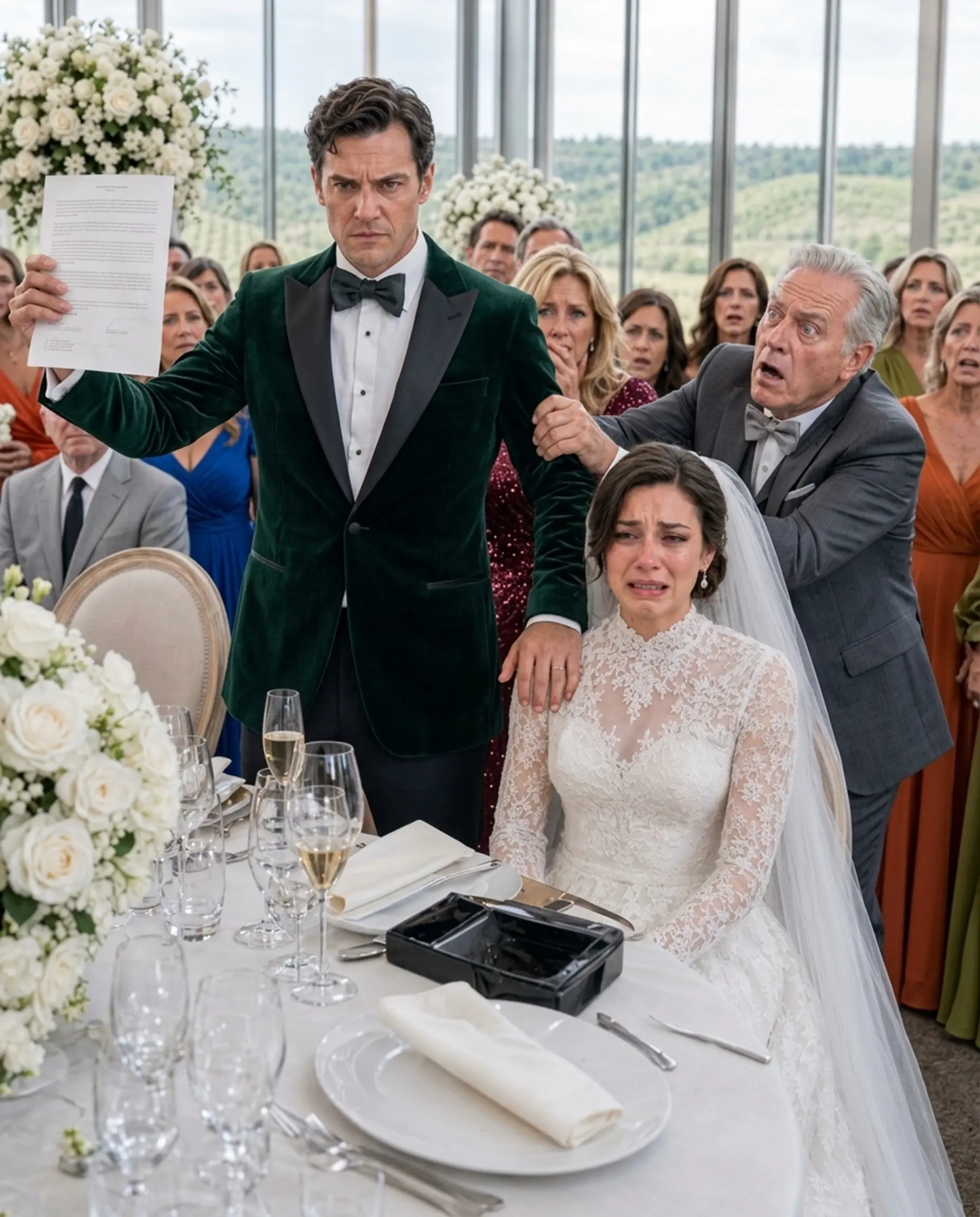
Always something that reduced my pain to “overreacting.”
Until tonight.
“No,” I said into the phone.
My mother went silent. “What did you say?”
“I said no.”
My voice was so calm that it surprised even me.
“I am not sweeping this under the rug. I am not asking Julian to apologize to you. And I am not going to pretend that you missed my wedding because I was being difficult.”
“Maya, stop being so dramatic!”
“I am not being dramatic, Mom. I am ending the drama.”
My father’s voice returned, sharp and threatening. “If you hang up this phone right now, Maya, there will be serious consequences for your relationship with this family.”
Throughout my childhood, that threat would have crushed me.
At thirty-one, wearing my wedding gown in front of two hundred people who had actually shown up for me, those words had lost all their power.
“There are already consequences, Dad,” I said quietly.
I looked at the empty chairs one last time.
“Only this time, they’re yours.”
Then I hung up.
The ballroom remained completely silent for a beat.
I handed the phone back to Julian.
I thought I might burst into tears, but instead I walked to the band’s microphone.
“I am so sorry for turning our reception into an unexpected family therapy session,” I said with a faint smile.
A few guests laughed warmly.
I took a deep breath. “For many years, I believed that trying to make my parents proud of me was the same thing as having a loving family. Tonight, I finally realized it isn’t.”
My voice faltered slightly, but I continued.
“Real family are the people who drove eight hours to be here tonight. The friends who took time off work. The relatives who booked flights across the country. My husband’s parents, who have treated me like a daughter long before tonight made it official.”
My mother-in-law wiped away a tear.
“So thank you,” I said, my voice carrying clearly through the room. “Thank you for filling this hall with love, even when a few people tried to make sure I would only look at empty chairs.”
Julian was first to stand.
Then his parents.
Then Sarah.
Then my aunts and uncles.
Table by table, until all two hundred guests were standing.
The applause was deafening.
And that was when I finally cried.
Not because my parents weren’t there.
But because I could finally see the people who were.
Later that night, while music played and guests filled the dance floor, my Aunt Evelyn found me standing alone near the patio garden.
“I need to apologize to you, Maya,” she said softly.
“For what, Aunt Evelyn?”
“Because we all saw it,” she admitted, looking down at her hands. “We all saw how they treated Chloe versus how they treated you.”
A knot formed in my throat.
She sighed. “Your father always had a logical excuse for everything, and your mother always backed him up. The rest of us just told ourselves it wasn’t our place to intervene in another household.”
“So… everyone noticed?” I asked quietly.
“Since you girls were little,” she confirmed.
It hurt to hear.
But it also unlocked something inside me.
For years, I had wondered whether I was too sensitive, jealous, or exaggerating the difference in my head.
I wasn’t.
It was real.
And everyone had seen it.
Before the night ended, three more relatives approached me with similar stories. One cousin even mentioned a Christmas years earlier when my parents redirected money promised for my college prep courses to buy Chloe an impromptu trip to New York.
At the time, I had pretended it didn’t bother me.
I always pretended.
Three weeks later, Chloe began posting photos from her Bali retreat on Instagram.
Infinity pools.
Floating breakfasts.
Sunsets over the ocean.
Photos of her doing yoga on the beach.
One caption read: Protect your energy from people who don’t respect your boundaries.
Normally, no one outside our immediate family would have connected those posts to my wedding.
But several relatives left pointed comments.
Then family friends joined in.
Eventually, Chloe disabled the comments entirely.
My parents called me eleven times over the next two days.
I didn’t answer.
Finally, they sent a four-page email.
According to them, Julian had manipulated me into turning a temporary family disagreement into an irreversible rift. They claimed the real issue was my deep-seated, long-standing resentment toward my sister.
I read the email once.
Then archived it.
I didn’t reply.
Months passed.
Julian and I celebrated our first Christmas as a married couple with his family in Lake Tahoe.
Nobody asked me to reschedule dinner for Chloe.
Nobody turned every family decision into a test of loyalty.
Nobody suggested that being a good daughter meant accepting less than everyone else.
It was remarkably simple.
And that simplicity brought a sting to my eyes, because I finally understood how much energy I had wasted trying to earn something that should have been freely given in a healthy family.
Six months after the wedding, Julian and I took our honeymoon to Hawaii.
Early one morning before sunrise, we walked down to a secluded beach. I wore a simple white sundress, and he wore a linen shirt.
There were no professional photographers.
No two hundred guests.
No elaborate flower arrangements.
Just the two of us.
Julian took my hands in his. “Want to do it again?”
“Marry you?” I smiled.
“Exchange our vows again. But this time, without looking at any chairs.”
So we renewed our vows there as the tide rolled in.
When I finished speaking, Julian kissed me, then pointed toward the horizon.
“Look,” he whispered.
The sun was rising over the ocean, casting brilliant golden light across the water.
And for the first time since my wedding night, I fully understood a truth I should have learned much earlier:
The people who truly love you don’t need to punish you to teach you humility.
They don’t use their absence as a weapon to force your obedience.
They don’t treat affection like a reward you have to beg for.
I still keep the seating chart from our wedding in a keepsake box beside our photographs.
For a long time, I considered throwing it away because it would always remind me where those two empty chairs had been.
I kept it anyway.
Not to remember who was missing.
I kept it because surrounding those two empty chairs were two hundred others that were filled.
And after spending a lifetime staring at the people who chose not to be there for me, I finally learned how to look at the ones who did.
The END.