Daniel leaned back in his chair and removed his glasses. For several seconds, he simply stared at the documents, almost as though he had been handed the answer to a question nobody else realized existed.
Then he looked at me.
“Mrs. Monroe, I think I’m going to enjoy this case.”
At the time, I thought Walter’s trust was already the biggest secret the Monroe family had failed to uncover.
Daniel was about to discover something even more important.
Because Patricia hadn’t simply misunderstood what she owned.
She had been borrowing against it, neglecting it, and quietly violating the exact conditions that allowed her to remain there …
Part 3: The Clause Patricia Violated
Grant’s attorney approached our divorce like a demolition project. Their goal was simple: leave me with as little as possible while allowing Grant to walk away believing eight years of marriage had cost him almost nothing.
Grant earned excellent money, but I didn’t. After we married, I had stopped working as a paralegal because Patricia strongly believed that “Monroe wives” didn’t need careers, so I spent eight years managing Grant’s household, social obligations, appointments, and the endless demands of his family.
During mediation, his attorney used that decision against me. Because I had contributed relatively little direct income during the marriage, they argued that I deserved very little afterward, conveniently ignoring the fact that I had sacrificed my career partly because the Monroe family had encouraged me to do exactly that.
Their settlement offer was insulting. They proposed a lump sum barely sufficient to cover two years of rent, almost no meaningful alimony, and no proper compensation for the retirement savings and career advancement I had sacrificed.
Daniel listened without interrupting. Then, to my complete shock, he accepted.
“My client accepts.”
I nearly jumped out of my chair. Once we were in the hallway, I immediately confronted him and demanded to know why he had agreed to an offer designed to leave me with almost nothing.
“Because they think they’re winning.”
Daniel explained that Grant’s legal team wanted both sides to keep their property separate while I surrendered any further claims against Grant’s assets. They believed Patricia’s house had nothing to do with our divorce and assumed I possessed nothing significant enough to make the arrangement dangerous.
“They have no idea the most valuable asset in the family already belongs to you.”
Then Daniel explained the part of Walter’s trust that I hadn’t fully understood. Patricia possessed a life estate, but Walter had attached specific conditions to her right to remain in the house.
She was required to maintain the property, keep the taxes current, maintain homeowners insurance, and avoid any action that could damage the interests of the remainder beneficiary. That beneficiary, of course, was me.
During discovery, Daniel’s team uncovered financial records that Patricia’s own attorney apparently hadn’t considered important. She had opened a substantial home-equity credit line against the Habersham Road property, despite the fact that she didn’t actually own it outright.
The borrowed money had helped finance the lifestyle Patricia refused to give up. Luxury vehicles, expensive restaurants, trips, charity galas, and other costs continued even as her finances deteriorated.
But the credit line was only the beginning. Patricia had also allowed the homeowners insurance to lapse for several months and had stopped paying the property taxes, leaving them delinquent while a lien accumulated against the house.
She had done all of it without notifying the trust or obtaining permission from the person who actually held the remainder interest. Walter’s trust documents were unusually precise about what happened if the life tenant endangered the property.
Daniel called Patricia’s conduct “waste.” More importantly, Walter had included a specific remedy allowing the remainder beneficiary to ask a court to terminate Patricia’s life estate if she materially violated its conditions.
That meant I could potentially end Patricia’s legal right to live there.
I asked Daniel whether pursuing it would make me cruel. After everything Grant and Patricia had done, I didn’t want bitterness to transform me into the kind of person they already claimed I was.
“No.”
Daniel leaned forward and explained that revenge would mean hurting them simply because I wanted them to suffer. What we were doing was enforcing Walter’s documented wishes while protecting a property Patricia was actively placing at financial risk.
“That isn’t revenge. It’s enforcement. And perhaps, in Walter’s own way, justice.”
So while the Monroe family celebrated my divorce over an expensive lunch in Buckhead, Daniel and I drove toward Habersham Road. What none of them knew was that another legal proceeding had already been moving quietly alongside the divorce.
Earlier that morning, almost immediately after my divorce became final, a judge had signed an order terminating Patricia’s life estate. Her attorney hadn’t been watching the case closely because the Monroes didn’t even know Walter’s trust existed.
By the time the ink dried on my divorce decree, Patricia’s legal right to occupy the house had ended. I was no longer merely the person who would inherit the property someday.
I had full possession.
The house was mine.
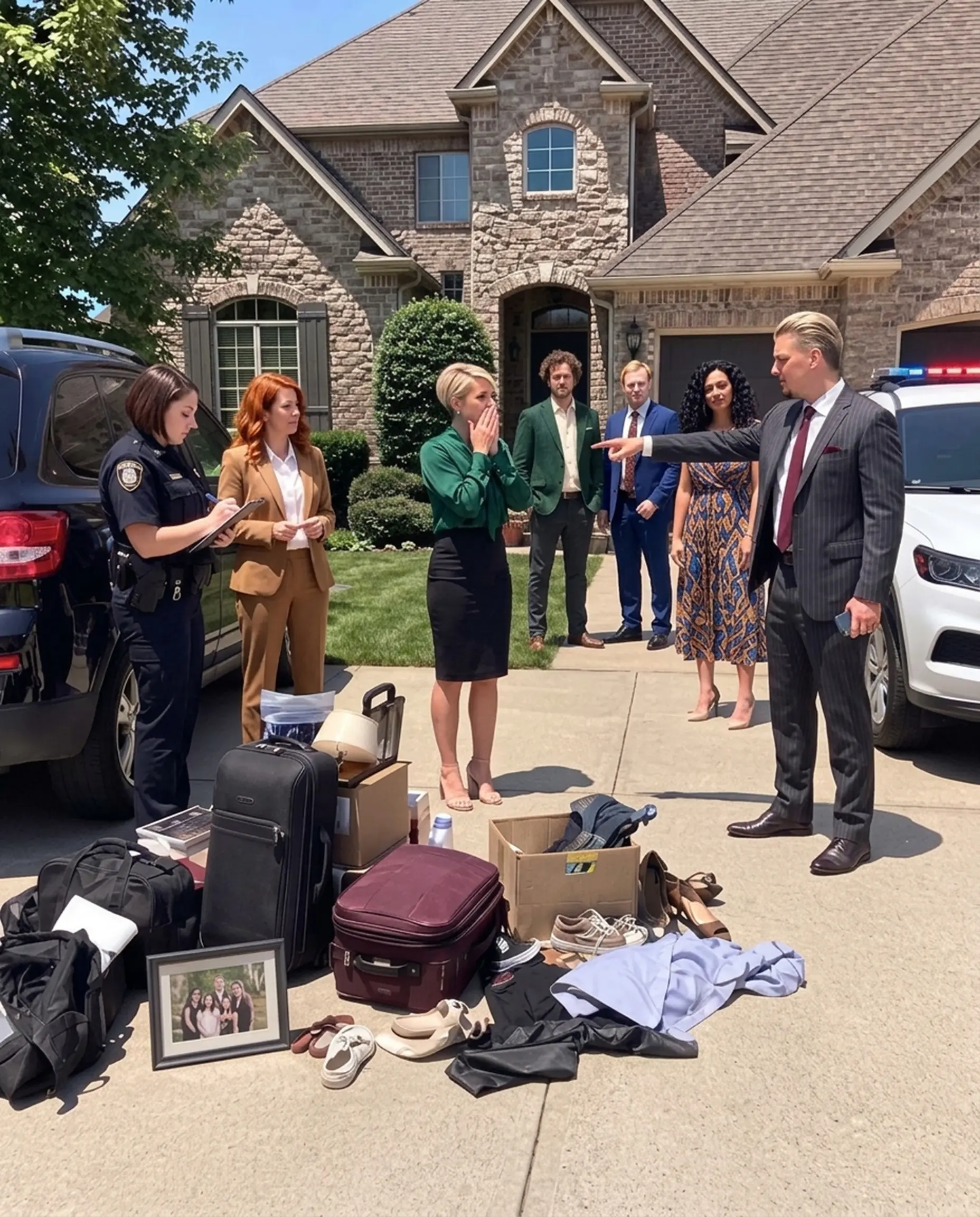
When Daniel and I turned onto Habersham Road, six professional movers were already waiting outside with a locksmith and a sheriff’s deputy. Daniel had arranged everything so carefully that nothing belonging to the Monroes could be lost, damaged, or later described as stolen.
Every piece of furniture would be photographed, inventoried, wrapped, and cataloged. Patricia’s antiques, Grant’s golf clubs, boxes, china, clothing, and personal belongings would all be protected.
“We give them nothing to complain about. When Patricia tells this story, and believe me, she will, she will never be able to say we stole or destroyed anything.”
I stood on the front lawn watching the movers begin their work, expecting to feel triumphant. Instead, I found myself looking at Walter’s neglected roses and remembering all the afternoons we had spent together on the back porch.
The garden had deteriorated, the lawn service had apparently been canceled, and the property Patricia treated as the sacred Monroe legacy was quietly falling apart under her care. Daniel stood beside me and assured me the taxes could be resolved, the insurance reinstated, and the damage repaired.
“It’s yours to save now.”
Those words meant more to me than being told the house was mine to own. Walter’s home wasn’t simply valuable property; it contained the porch, the treehouse, his roses, and memories of the only Monroe who had ever made me feel that I belonged.
By the time the movers finished arranging the last belongings, the afternoon had begun to settle over Habersham Road. Then two familiar black SUVs appeared at the end of the street.
Patricia’s vehicle slowed when she saw the furniture covering the lawn.
For a moment, it almost stopped.
Then it accelerated directly toward the driveway.
The doors opened, and Grant stepped out wearing the same gray suit he had worn while divorcing me only hours earlier. His eyes moved from the boxes to the furniture and finally toward the locksmith installing the new lock on the front door.
“What the hell is going on?”
Patricia climbed out behind him and stared across the lawn at everything she believed belonged inside her house.
Then she saw me.
For the first time in eight years, there was no superiority in Patricia’s expression. There was only disbelief. And fear.
“You.”
Her eyes locked onto mine.
“What did you do?” …
Part 4: The Truth Waiting on the Lawn
I didn’t answer Patricia. Daniel had warned me repeatedly not to get drawn into an argument, and after eight years of defending myself against people who had already decided I was beneath them, I was finally willing to let the documents speak for me.
The sheriff’s deputy stepped forward and asked Grant to remain calm. He explained that a valid court order had been issued regarding the property, that the removal of their belongings was lawful, and that every item had been carefully inventoried and protected.
“This is my mother’s house. What are you people doing?”
Patricia barely seemed to hear him. Her attention remained fixed on me until Daniel stepped forward holding the folder containing the documents the Monroe family had never known existed.
“Mrs. Monroe, I’m Daniel Reyes. I represent Ms. Reeves.”
Ms. Reeves. Hearing my own name again after eight years as Allison Monroe affected me more deeply than I expected.
Daniel calmly explained that my divorce from Grant had become final that morning, but the property dispute was separate. Patricia had never owned the Habersham Road house outright because Walter had granted her only a life estate, while ownership had been placed into a trust.
“The beneficiary of that trust is my client, Allison Reeves.”
Silence spread across the driveway. Even Vivian, who had been halfway out of the second SUV, stopped moving.
“That’s impossible. Walter left this house to me.”
“He left you the right to live here, subject to specific conditions.”