He was giving his mother permission to grieve however she needed to.
And he was giving me permission to honor his wishes without feeling guilty.
Then I turned the page.
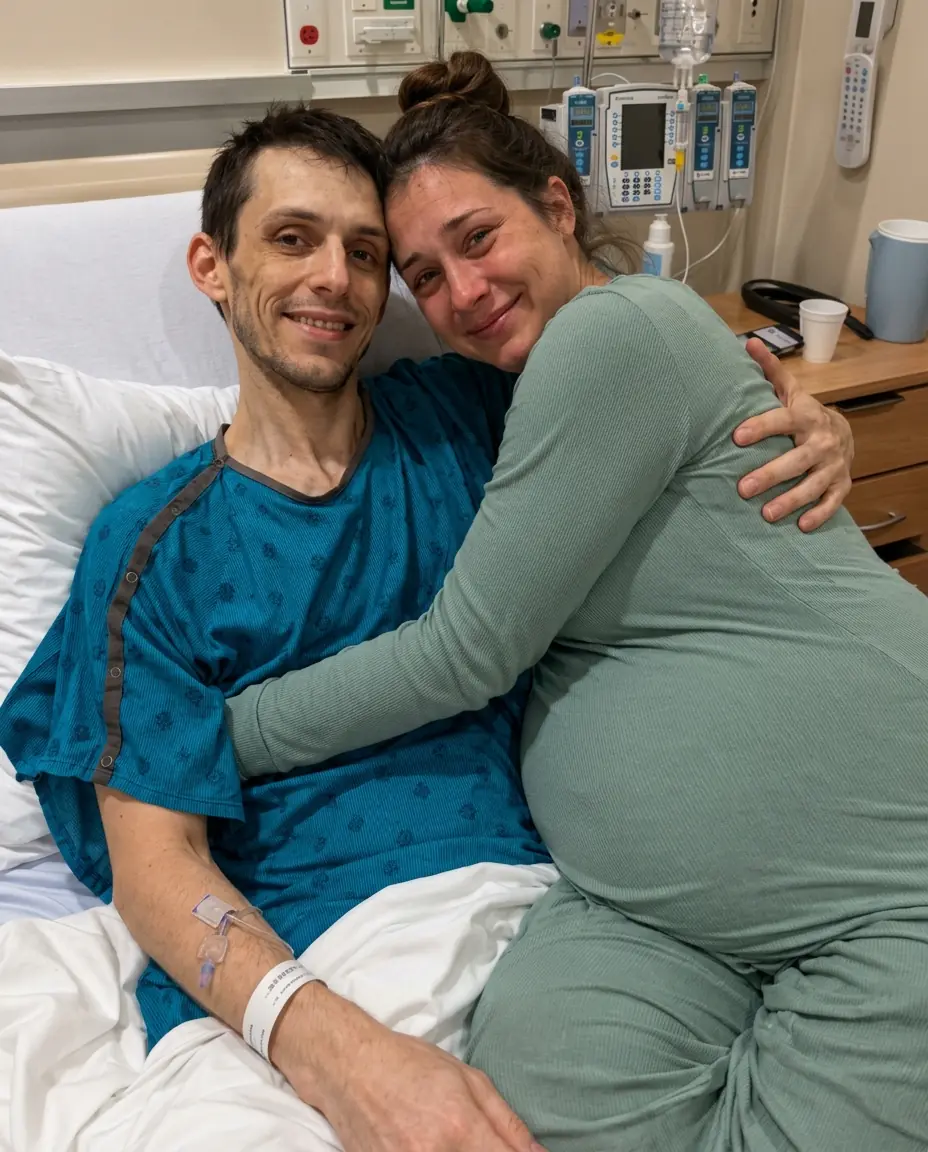
The final section was addressed to our unborn daughter.
Cecelia.
I couldn’t breathe for a moment.
I placed my hand over my stomach.
Then I began reading.
Mark described the afternoon when we chose her name.
He remembered how she had kicked beneath my hand while we were talking.
He wrote about how much he already loved her, even though he might never get the chance to hold her.
And then he explained why he had chosen organ donation.
He said that if he couldn’t watch her grow up, he wanted something good to come from the life he had been given.
Perhaps another parent would have more time with a child.
Perhaps another husband would have more mornings with his wife.
Perhaps another daughter would have more years with her father.
Perhaps another family would get one more birthday, one more Christmas, one more ordinary morning together.
That was what he wanted his death to give them.
More time.
I pressed the letter against my chest.
For the first time, I understood that Mark hadn’t simply been preparing for his death.
He had been preparing for the lives that would continue after it.
I found Violet waiting near the elevators.
She looked exhausted.
Neither of us spoke at first.
Then I quietly handed her Mark’s letter.
She looked at me.
“What is this?”
“Something he wanted you to read.”
She opened it.
Then she read every page.
Without speaking.
When she finished, she pressed the papers against her chest.
For a long time, she stood there with her eyes closed.
Finally, she admitted what Mark had already predicted.
She had been preparing to ask me to stop the donation.
She had wanted me to undo his decision.
She had been angry.
At Mark.
At the doctors.
At the situation.
And, perhaps, at me.
But after reading his words, something changed.
She understood that this wasn’t my decision.
It had always been his.
Mark had known both of us well enough to leave behind exactly what we needed.
He had given Violet permission to be angry.
And he had given me permission to move forward without guilt.
We stood together in that hospital hallway, two women grieving the same man in completely different ways.
And for the first time since Mark’s diagnosis, I didn’t feel like I was carrying his final wishes alone.
Cecelia was born several weeks later.
She was healthy.
Beautiful.
And she carried the name her father had chosen.
When I held her for the first time, I thought about the porch.
About Mark’s hand resting on my stomach.
About the way he had listened for every kick.
About the future he knew he wouldn’t see.
And about the strangers who might now have more time with the people they loved because of him.
One day, I will give Cecelia his letter.
I will let her read the words her father wrote before she was born.
I’ll tell her about the man who loved her before he ever saw her face.
I’ll tell her that he was frightened.
That he was human.
That he didn’t want to die.
But I’ll also tell her that when he realized he couldn’t control how much time he had left, he chose to control what he could give away.
His final gift wasn’t simply a medical decision.
It was an act of love.
He protected his family from blame.
He protected his own final choice.
He prepared our finances so his death wouldn’t become a legal battle.
He gave his mother permission to grieve.
And he made sure his daughter would someday understand the kind of man he had been.
Sometimes courage doesn’t look dramatic.
Sometimes it isn’t a speech or a grand gesture.
Sometimes courage is sitting on a porch with your pregnant wife, knowing you may never meet your child, and deciding that whatever time you have left should still mean something to someone else.
Mark couldn’t give Cecelia the years he had dreamed of giving her.
But he gave her something else.
A story.
A name.
A final letter.
And a lesson she wouldn’t fully understand until she was old enough to read his words:
That even when life takes away the future you planned, you can still choose what kind of legacy you leave behind.
And every time I look at Cecelia now, I think about that ordinary envelope.
The one Mark entrusted to his doctor.
The one he knew I would eventually open.
The one that arrived after he was gone and somehow made his presence feel closer than ever.
Because Mark’s life ended in that hospital.
But the love he put into that envelope did not.