I needed to see what they were hiding. I used my lunch pass to drive my old sedan thirty minutes south to Glen Burnie, where my sister Diane kept her shop.
The boutique was called Velvet and Vine. It sat in a strip mall between a vacuum repair shop and a dry cleaner. The front window displayed three mannequin torsos dressed in faded orange sweaters that had begun to sag at the shoulders.
The bell above the door jingled as I pushed my way inside, my crutches squeaking against the polished concrete floor.
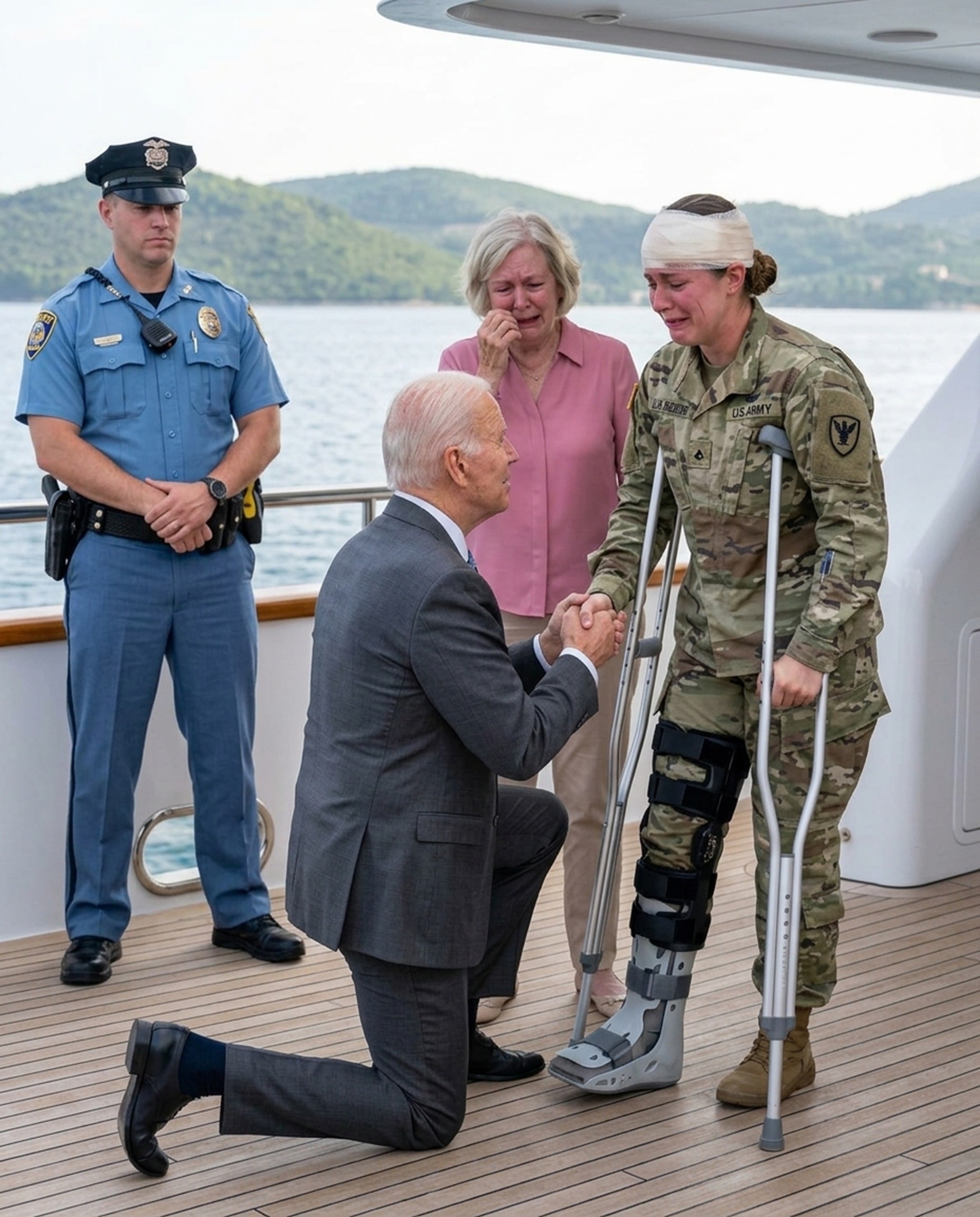
The shop was completely empty of customers, a silent expanse of expensive carpet and unused brass racks. A single rack of silk scarves stood near the register, under a spotlight that showed thick dust floating in the air. Diane sat behind the counter, her long, manicured nails tapping rapidly against the screen of her phone. She looked up, her eyes sliding down to my crutches with a look of mild distaste.
“Oh, Carla,” she said, her voice fast and breathless. “You look so official with those. Is that the army style?”
“I need a seat, Diane,” I said, leaning against a display table of handmade soaps that smelled like fake lavender.
“Sure, grab that velvet stool,” she said, pointing to a small seat near the dressing rooms. “Just don’t scratch the legs. I had to import those from a warehouse in Virginia.”
I sat down, resting my crutches against the wall. The silence in the boutique was heavy, broken only by the hum of the air conditioner and the occasional hiss of a steamer in the back room.
“How is business?” I asked, looking at the rows of untouched clothing.
“Amazing,” she said, tapping her phone again. “Just incredible. We are expanding the autumn line next week. Dad just finalized the expansion funds this morning.”
I looked at her. “Dad gave you money?”
“Well, it’s a commercial loan from his business account,” she said, spinning her phone on the glass counter. “Ten thousand dollars. He told me we have to invest where the potential is.”
The words sat between us like cold grease.
“Ten thousand,” I repeated. My voice sounded flat, even to my own ears.
“He came in yesterday with a giant coffee,” Diane said, laughing. “He was so excited about my new display concept. He said a real business needs to look successful to attract the high-end clients.”
“And Mom?” I asked.
“She helped me pick out the velvet hangers,” Diane said. “She says presentation is everything.”
I looked at the counter. The cash register was a modern iPad setup, but the screen was dark. There was no tape printing out receipts, no bags sitting ready for a customer.
“He knows my brand has real growth capacity,” she said, smoothing her hair and checking her reflection in the glass. “The boutique is going to be the premier spot in the county by winter. You should let me style you when your leg gets better.”
A delivery driver walked in, carrying a large cardboard box labeled with a designer logo. He set it on the floor without asking for a signature and walked out.
“See?” Diane said, gesturing to the box. “New stock. It’s all about keeping up appearances.”
“Dad told me he was entirely illiquid,” I said. “He said the boat took every dollar.”
Diane laughed, a high, thin sound. “The boat is his baby, Carla. But he always finds a way to take care of the family business. You know how he is.”
I looked around the empty store again. The price tag on a nearby wool coat read four hundred and fifty dollars. There was not a single person here to buy it.
“Right,” I said. “I know how he is.”
I grabbed my crutches and stood up, my knee throbbing as I adjusted my weight.
“Are you leaving already?” Diane asked. “You didn’t even look at the new scarves.”
“I have to get back to base,” I said. “Duty roster.”
I walked out of the shop, the bell jingling behind me. The sun was bright and hot against the asphalt parking lot, making my eyes water as I got into my car.
I drove the back roads to Fort Meade, my hands locked tight on the plastic steering wheel of my rusty sedan. The engine made a rough clicking sound every time I decelerated, but I barely heard it. The digital clock on the dashboard showed two forty-five.
That night, I sat on the edge of my bed in the barracks. The green wool blanket was tucked tight under the mattress, military style, with neat hospital corners.
I opened my laptop and logged into my old personal email account. I scrolled back through three years of correspondence until I found the folder marked Personal Finance.
Inside was the PDF document my mother had emailed me when I was eighteen, just before I left for basic training.
It was a Tuesday afternoon in July when we had signed it. We sat in the back office of the bank branch in Glen Burnie, surrounded by heavy fake oak furniture.
My mother sat next to me, smoothing her beige skirt and playing with her pearl necklace, her voice soft and patronizing as she explained why I needed to learn the value of a dollar.
My father adjusted his gold watch collar, his booming voice echoing off the wood-paneled walls as he told the loan officer that his daughter was going to be a soldier and needed to understand discipline.
They wouldn’t even let me leave the parking lot in the blue sedan until the notary had stamped the paper.
It was the notarized contract for the fifteen hundred dollar loan they gave me to buy my first used car. The terms were laid out in precise, rigid columns.
Eight percent interest, compounded monthly. A fifty-dollar late fee for any payment received after the fifth of the month.
And when I was ten days late on the third payment because my pay stub was delayed at Fort Jackson, my mother called me three times in one morning to remind me of the fifty-dollar penalty.
At the bottom of the page were three signatures. Mine, my father’s, and my mother’s, next to a raised gold seal from a notary public in Annapolis.
I had paid back every cent of that fifteen hundred dollars, plus interest, within fourteen months of entering active duty.
I stared at the screen, comparing that document to the image of Diane’s empty boutique and the ten thousand dollar cash infusion she had just received.
My parents had the money, but they had chosen to give it to a failing boutique while I faced a career-ending injury.
The notarized contract on my screen proved my signature was worth more to them than my health.
The drive from the Fort Meade base clinic to the Glen Burnie branch of First Maryland Bank took twenty minutes on Route 175. I stopped at a small diner near the highway to buy a cup of black coffee that cost two dollars and fifty cents, holding the cardboard cup between my teeth as I negotiated my crutches across the gravel lot. My left knee was locked in a thick black brace, the joint burning with a steady, deep ache.
Inside the bank, the lobby was quiet and smelled of damp carpet. I leaned my crutches against the high mahogany counter, my hands still damp from the morning mist.
The teller, a young woman with a silver name tag that read Sarah, looked at my military green jacket and then at my leg.
“Good morning,” she said. “How can I help you today?”
“I need to make a withdrawal from a savings account,” I said.
I reached into my pocket and pulled out the old blue passbook. It was a joint account my mother, Beatrice, had opened with me when I turned sixteen, funded by my summer landscaping jobs and my first army enlistment bonus.
Sarah took the book and tapped her keyboard, her eyes scanning the screen.
“The joint account ending in four eight two?” she asked.
“Yes,” I said, checking my watch. It was ten past nine. “There should be six thousand four hundred dollars in it.”
She clicked her mouse twice, then stopped. She looked up at me, her expression softening into that polite, blank mask bank employees wear when the news is bad.
“Is there an issue?” I asked.
“I can print the transaction history for you, Specialist,” she said.
“I do not need the history,” I said. “I just need the cash. Five thousand dollars for a medical deposit.”
“The balance on this account is twelve dollars and forty cents,” Sarah said.
The air in the lobby suddenly felt heavy. I held onto the edge of the wooden counter to keep my weight off my bad leg.
“That is impossible,” I said. “Only my mother and I have access to it. I have not touched it in six months.”
“The last withdrawal was made on the twelfth of October,” she said, turning the screen slightly toward me. “It was a counter withdrawal of six thousand three hundred dollars.”
“Who signed the slip?”
The laser printer behind the counter began to hum, spitting out a single sheet of paper with a sharp, rhythmic click. Sarah folded it neatly in half, matching the edges with professional precision, before sliding it across the wood.
At the bottom of the page, in elegant, looping cursive, was my mother’s signature.
“There is nothing left in that account to withdraw,” Sarah said.
I folded the paper and slipped it into my pocket. My mother had cleared out my savings two days after my father bought his new boat.
I needed to see my brother.
The auto shop where Edward worked was three miles north, situated behind a row of gravel yards. The bay doors were open to the cool autumn air, letting out the sharp smell of grease and motor oil.
Edward was standing by a raised hydraulic lift, wiping dark grease from his knuckles with a red shop rag. His brow was furrowed as he stared at his rolling tool cart.
“Hey, Carla,” he mumbled, his voice quiet. “You shouldn’t be walking on that leg.”
“The doctor gave me a brace,” I said, leaning on my crutches. “Edward, did Mom say anything to you about my joint savings account?”
He stopped rubbing his hands and looked at his cart. “No. She don’t talk to me about money. She only talks to Diane about that.”
He began sliding the drawers of his tool chest open and shut, his movements quick and frustrated.
“What are you looking for?” I asked.
“My professional socket wrench set,” Edward said, his voice dropping. “The half-inch drive. The whole metric set is gone from my station. I just had them yesterday.”
“Did someone borrow it?”
“Nobody touches my tools,” he said, staring into the empty drawer. “A mechanic doesn’t just lose eighty pieces of hardened steel. That set cost me eight hundred dollars, Carla.”
“Maybe the night shift moved them,” I said.
“The night shift has their own gear,” he said. “The case was grey plastic with heavy metal latches. I need them for the alternator job on the Chevy.”
The bay was dark, lit only by the fluorescent tubes hanging from the steel rafters. A picture of our grandfather’s old blue truck was taped to the inside of Edward’s metal locker, the edges curled and yellowed from the humidity.
He closed the drawer with a hard slam that rattled the empty metal trays inside.
“I will help you look,” I said.
“Don’t worry about it,” he muttered. “Go home, Carla. You look like you’re about to fall over.”