The sun was climbing higher now, casting a bright glare on the windshields of the cars parked in the driveway below. I knew the peace would not last.
My phone rang again almost immediately, the screen lighting up with Dean’s number for the second time. I pressed the button and held it to my ear.
“You took Dad’s truck,” Dean screamed, his voice completely raw. “We are standing in the driveway right now and Mom is crying.”
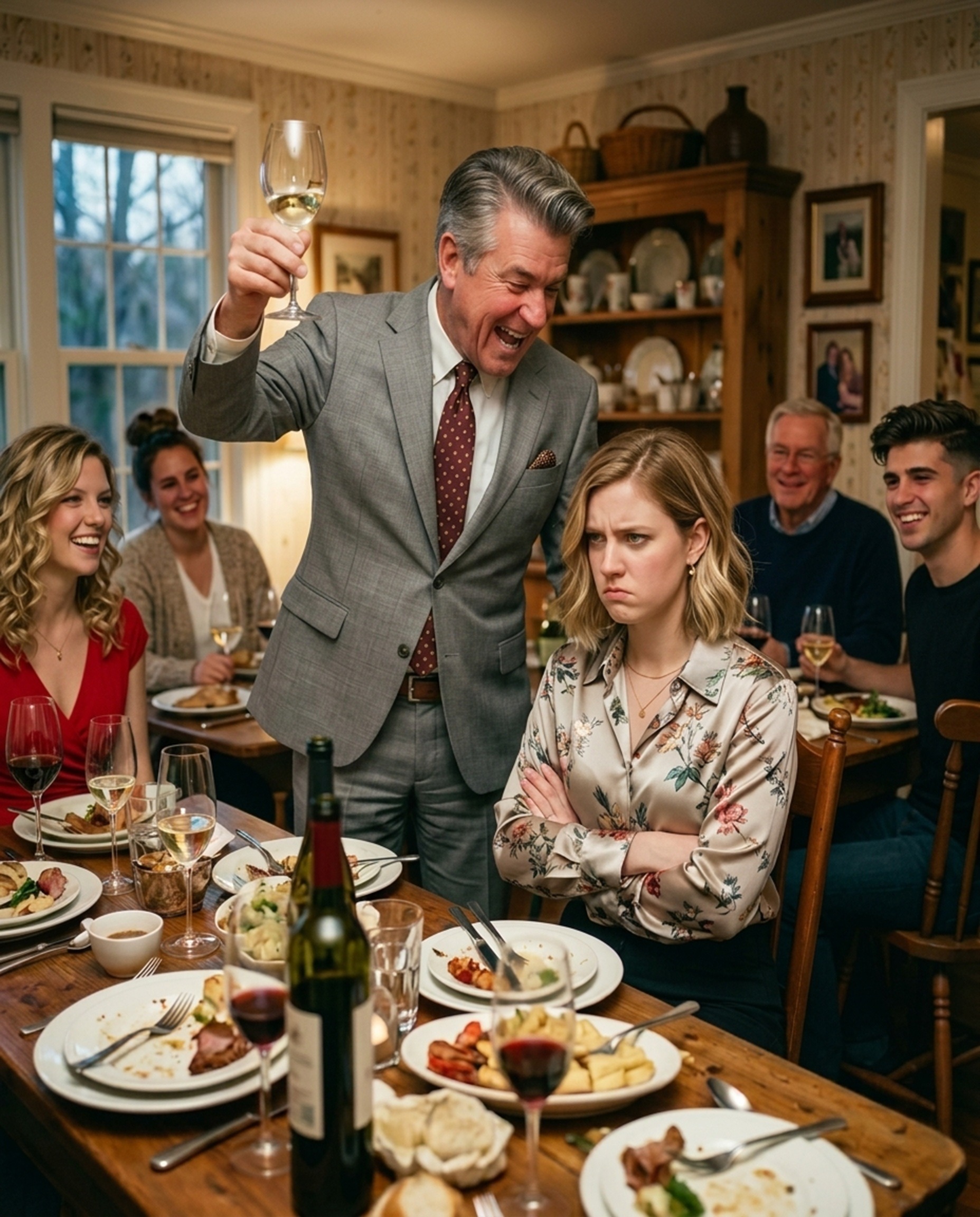
“I am not discussing this further, Dean,” I said.
“You are a selfish, spiteful woman,” he said. The line went dead with the sharp click of my brother hanging up on me.
After the sharp click of the line clearing, the silence of the townhouse returned, thick and immediate.
I sat at my desk for two minutes, watching the dust motes drift through the pale morning light. My hand remained on the receiver, feeling the cold plastic beneath my palm.
I picked up the phone again and dialed Harold’s direct line at the brokerage.
The broker answered on the second ring, his voice carrying the quiet, professional hum of his desk.
“Savannah,” Harold said. “I was just about to call you. The transport driver logged the King Ranch model back into our holding bay ten minutes ago. It is parked in the secured compound with the dealer tags still attached.”
“Thank you, Harold,” I said. “Are the cancellation documents ready?”
“They are,” he said. “I have the standard termination of sale form drafted. Because we caught it within the seventy-two hour window and the title was never registered with the state, we can treat this as an incomplete transaction.”
I leaned back in my chair, looking at the empty space on my desk where the dealer key box had sat yesterday.
“What are the final numbers on the refund?” I asked.
“There is a three hundred dollar transport recovery fee,” Harold said. “The driver had to be dispatched on an emergency rate at dawn. And the dealership charges a two hundred and fifty dollar administrative processing fee for restocking. The remaining fifty-seven thousand four hundred and fifty dollars will be wired back to your account.”
“That is perfectly acceptable,” I said. “Send the digital signature link to my work email.”
“It is already in your inbox,” Harold said. “Once you sign, the wire will initiate. It usually clears by three o’clock on a business day. But Savannah, I need to ask you one thing before I press submit.”
“Go ahead,” I said.
“Your father is going to be looking for that truck,” he said, his tone softening slightly. “He is a local supervisor. He knows half the people in the county office. If he tries to register it himself, he will find the serial number flagged as returned.”
“He cannot register a vehicle without the signed title transfer,” I said. “The document is sitting on my table right now, unsigned.”
“I understand,” Harold said. “I just wanted to make sure you were prepared for the fallout. We will hold the funds in escrow until your signature clears the system.”
“The delivery driver noted that the vehicle had exactly forty-two miles on the odometer,” Harold added. “That includes the drive from our lot to your parents’ house, and the tow back. It is still classified as a new vehicle.”
“I paid fifty-eight thousand dollars cash,” I said. “There should be no lien on the title.”
“There isn’t,” Harold confirmed. “The paperwork is completely clean. The only thing missing was your final signature on the state registration form. You kept the transaction in a pending state, which was a smart move, Savannah. Most buyers just sign everything at the desk.”
“I wanted to ensure everything was in order first,” I said.
“Well, it saved you a lot of legal trouble,” Harold said. “If you had signed that registration, the title would have been processed by the county clerk on Monday morning. Your father would have been the legal owner of record, and you would have had to sue him to get the vehicle back.”
“I knew the risk,” I said.
“I will have the cancellation receipt sent over as well,” Harold said. “Keep it for your tax records. A fifty-eight thousand dollar transaction doesn’t just disappear from the bank’s radar.”
“I will sign it before noon,” I said.
I hung up the phone and opened my laptop. The email from the auto brokerage was sitting at the top of my inbox, marked with a red high-importance flag.
I clicked the link, scrolled past the legal definitions of ownership, and stopped at the line that required my electronic signature. The blue cursor blinked, waiting for my input.
I did not sign it yet. I left the window open on my screen and walked into the kitchen to make a fresh pot of tea.
The clock on the microwave read nine-fifteen.
By ten o’clock, the sun had reached the small patio behind my kitchen, casting long, sharp shadows across the concrete.
My townhouse was smaller than my parents’ brick home, but it was mine, bought with my own salary and free of their expectations. The hardwood floors were clean, and there were no framed photos of family milestones on the walls, only quiet landscapes I had chosen myself.
I walked through the living room, adjusting the layout of the furniture. I moved the two heavy oak armchairs so they faced each other across the low coffee table, creating a formal space that felt more like a conference room than a home.
It was a small adjustment, but it changed the room from a place of relaxation into a space designed for a business meeting.
I went back to my office desk and retrieved the unsigned title transfer document from the top drawer.
The heavy white paper was crisp and uncreased, bearing the watermark of the Texas Department of Motor Vehicles. I carried it into the living room and laid it flat in the exact center of the dark wooden table.
Beside the document, I placed a black ballpoint pen, aligning it perfectly with the margin of the page.
Anyone sitting in the armchairs would have to look at the blank line where my signature belonged.
I wiped down the kitchen counters with a damp cloth, moving with a slow, deliberate rhythm that kept my hands busy.
The house was clean, the air was cool, and the quiet was absolute.
At eleven o’clock, my phone rang again on the kitchen counter. The screen showed Dean’s name.
I let it ring three times before I slid my thumb across the glass and put the phone to my ear.
“Savannah,” Dean said. His voice was lower than it had been an hour ago, the aggressive edge replaced by a hushed, hurried tone. “Are you alone?”
“I am,” I said.
“Look, we need to talk about this before Dad does something crazy,” he said. “He is sitting in the kitchen staring at the wall, and Mom is beside herself. This is getting out of hand.”
“The situation is quite simple, Dean,” I said. “The truck was returned to the dealership because the gift was rejected.”
“He did not reject it,” Dean said, his voice rising slightly before he checked himself. “He was just joking around. You know how he gets after a couple of drinks at dinner. He was just being Dad.”
“I know exactly how he gets,” I said.
“If you bring the truck back right now, we can tell everyone there was a scheduling issue with the registration,” Dean said. “I can drive over to the dealership with you. We can make it look like a mistake.”
“There was no mistake,” I said.
“Savannah, please,” Dean said, and for the first time in years, he sounded like my younger brother instead of a rival. “Think about how this looks to the neighbors. Brenda is already calling people. If you do this, Dad will never speak to you again.”
“That is his choice,” I said.
“You are being incredibly stubborn,” he said, the desperation creeping back into his voice. “I can help you pay for the transport fee. I have some of my sales bonus left. We can split the cost of a smaller gift. Maybe a used mid-size model.”
“Dean, how much was that sales bonus really?” I asked, keeping my voice level.
He hesitated. “It was enough. It was three thousand dollars before taxes.”
“And you spent it already?”
“I had some bills to pay, Savannah. Not everyone has a corporate expense account and a procurement manager salary.”
“I do not have an expense account for personal vehicles, Dean,” I said. “I bought that truck with my own savings.”
“He’s sixty,” Dean said. “This was supposed to be his big year. He’s been talking about a King Ranch since they built the new dealership on the interstate. Do you know how hard it is for him to look at that empty driveway today?”
“He should have thought about the driveway before he spoke,” I said.
“He’s our father,” Dean pleaded. “He’s always been this way. You’re taking it too personally.”
“I am taking it exactly as he delivered it,” I said.
“You’re going to ruin the whole family over a toast?”
“I am not negotiating with someone who calls me an idiot in front of my relatives,” I said.
The silence on the line lasted for five seconds.
“He is on his way to your house,” Dean said, his voice dropping to a whisper. “He left five minutes ago.”
“Thank you for the warning,” I said.
“Savannah, don’t do this,” he said.
I ended the call and laid the phone face down on the kitchen counter.
My wrist watch read eleven-thirty.
I walked into the bathroom, washed my face with cold water, and patted my skin dry with a hand towel.
My reflection in the mirror was pale, but my eyes were steady.
I went back into the living room and checked the position of the unsigned title document on the table. The black pen was still aligned with the edge of the paper.
I sat down in the armchair facing the front window.
The street outside was quiet. A neighbor’s dog barked once in the distance, a muffled sound that died out quickly in the midday heat.
The minutes passed with a slow, heavy tick.
I did not pick up my phone. I did not turn on the television. I simply sat with my hands folded in my lap, breathing in and out, letting the cold resolve settle into my chest.
At exactly eleven-forty-five, a low rumble sounded from the end of the block.
I did not stand up.
Through the glass pane of the front window, I watched the familiar silver shape of my father’s heavy SUV turn onto my street.
The vehicle slowed as it approached my driveway, its massive chrome grille catching the bright midday sun.
I watched the vehicle pull to a stop, the large tires crunching slightly against the gravel at the curb.
The engine cut out, and the street went quiet again.
Through the glass, the reflection of my father’s SUV filled the lower half of my front window.
My father did not turn off the engine of his SUV. He left the motor idling, a low rumble that vibrated through the glass of my front door as he stepped onto the concrete porch.
He wore a stiff, starched blue shirt, the collar pressed so tight it turned the skin of his throat a light pink. He did not knock. He stood there with his hands flat on his hips, waiting for me to turn the lock.
I opened the door six inches. The autumn air was cool, but the heat radiating from his idling engine smelled of hot rubber and exhaust.
“Savannah,” he said.
He did not use his loud, site-supervisor voice. He spoke in the low, gravelly register he reserved for sub-contractors who had laid a slab unevenly.
“I am standing on my porch, Dad,” I said.
He looked past my shoulder into the hallway, his eyes searching the small table where I usually kept my keys. His thumb began to rub against his belt buckle, polishing the brass with quick, repetitive strokes.
“Your mother is hysterical,” he said. “She has been crying since seven this morning.”
“I spoke to Martha,” I said. “She sounded angry, not hysterical.”
Frank took a slow breath, his chest expanding under the stiff cotton of his shirt. He looked down at his boots, then back up at my face, attempting a tight, familiar smile that did not reach his eyes.
“We had a few drinks last night,” he said. “I was tired. It was a joke, Savannah. You know how I get when I have had a long week.”
“You did not have a glass in your hand when we arrived, Dad,” I said. “And you had not started on the wine when you told Uncle Charles that my promotion was probably a clerical error.”
He wiped his palm against his trousers. The smile vanished, replaced by the hard, flat line of his mouth that I had watched at every dinner table of my childhood.
“A man is allowed to tease his own daughter on his birthday,” he said. “You always did take things too seriously. You get that from your mother’s side.”
“I took the paperwork seriously,” I said. “That was my job.”
He stepped closer to the screen door, his shadow falling across my shoes. The starched fabric of his sleeves rustled as he folded his arms.
“Where is the truck, Savannah?”
“It is back at the auto brokerage,” I said. “The transport driver picked it up five minutes after seven.”
His jaw muscles tightened, a sharp knot appearing at the corner of his cheek. He looked toward the empty driveway behind him as if he expected the black King Ranch to materialize under the noon sun.
“You cannot just take back a gift,” he said. “That is not how things work. The keys were in my hand.”
“The keys were in a dealer box,” I said. “The title transfer document was never signed. I kept the registration pending with Harold.”
He stared at me, his eyes narrowing as he processed the word. He knew enough about equipment leases to understand what a pending registration meant.
“You planned this,” he said.
“I prepared for the possibility,” I said. “Harold warned me on Tuesday that once the signature is on the line, the asset belongs to the buyer. I chose to leave the line blank until after the dinner.”
He pulled his phone from his pocket, his fingers tapping the screen with unnecessary force. He held it up, showing me a missed call from my brother.
“Dean is on his way over to the house right now,” Frank said. “He says you are violating a contract. He is going to call the sheriff.”
“Dean does not know the difference between a delivery receipt and a title,” I said. “Tell him to call whoever he likes. The dealership has already accepted the return of the vehicle.”
He lowered the phone. The wind blew a dry oak leaf across the porch, the scraping sound loud in the silence between us.
“Do you have any idea what this looks like?” he asked. “The neighbors saw the flatbed pull into my driveway. Brenda’s husband was out on his porch with his coffee, watching them winch it up.”
“I imagine it looked like a recovery,” I said.
“They think I defaulted on something,” he said, his voice rising, the gravelly tone turning sharp. “I have lived in that neighborhood for twenty-eight years. People know my name. They know my business.”
“You should have thought about public consequences when you raised your glass last night, Dad,” I said. “You wanted to make sure everyone at that table knew I could not buy your respect. Now they know I did not buy the truck, either.”
He took a step back, his boot heel coming down hard on the edge of the step. For a moment, he looked smaller, the stiff starch of his shirt failing to hold up his shoulders.
“It was a toast,” he muttered.
“It was a ledger,” I said. “And I am closing the account.”
He did not reply. He looked at the brass house numbers beside my door, then down at the concrete under his feet, his thumb resting still on his belt buckle.
“Your mother wanted to bring over some of the leftover cobbler,” he said.
The sudden shift in his tone was an old tactic, a soft detour designed to make me feel like the one who was keeping the argument alive. I did not move from the doorway.
“I do not want any cobbler, Dad,” I said.
He turned his head toward his SUV, the engine still humming its steady, expensive tune. He looked at the road, then back at me, his eyes vacant.