Carmen walked toward him, not looking back at the wide lawn or the empty pool behind the high walls.
The air was thick with the scent of damp pine needles from the neighbor’s yard, a familiar Florida smell that reminded her of thirty years ago.
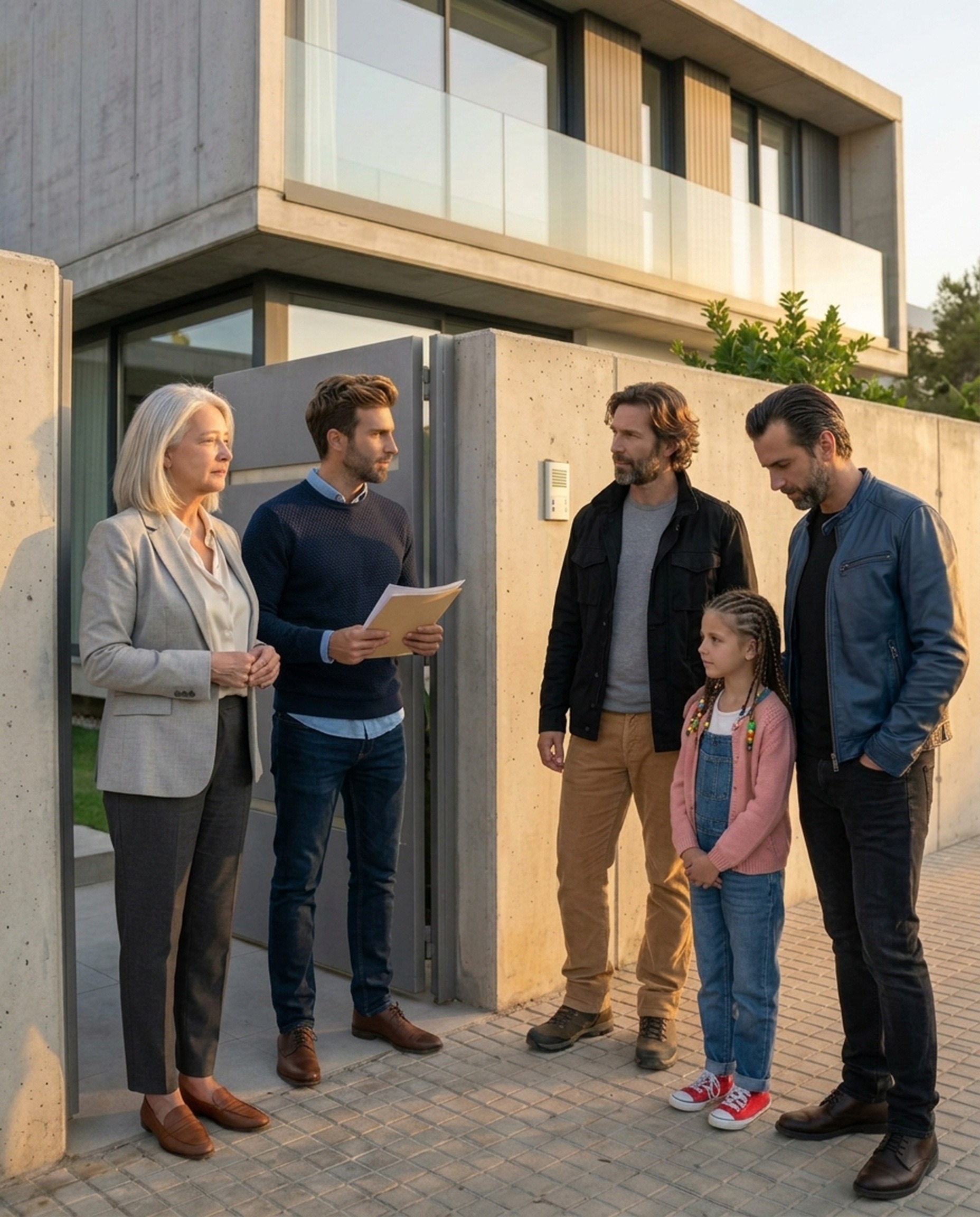
“Everything is recorded with the county,” Julian said as she reached the gate. “The trust is active.”
“Thank you, Julian,” she said.
“The driver will take you straight to the harbor,” he said, holding the rear door open.
“Your luggage is already in the trunk,” he added.
Carmen paused at the threshold of the car, her hand resting on the warm black metal of the doorframe.
She looked back one last time at the driveway, where Daniel had walked up to stand next to Laura on the porch, his arm hanging loose at his side.
Ines stood between them, holding her mother’s hand, her small figure looking tiny against the massive double doors of the villa.
None of them waved, and none of them called out her name.
The silence of the suburban street was absolute, broken only by the distant hum of a lawnmower three blocks away.
Carmen felt the quiet weight of her choice, the realization that her dream of a happy, undivided family under one roof was gone forever.
She stepped into the cool, air-conditioned interior of the car, the leather seat smelling of polish and clean carpets.
Julian nodded once to the driver before walking toward his own sedan parked further down the curb.
Carmen closed the car door, shutting out the sound of her daughter-in-law’s quiet crying.
The morning sun in the new bedroom was different from the filtered gray light of her old room in Daniel’s suburban house. Here, the light reflected off the salt water of the bay, sending bright, trembling patterns across the plaster ceiling and the clean white walls.
Carmen lifted her faded leather suitcase onto the center of the double bed. The worn brown leather was scuffed at the corners, showing the gray fiber beneath the dye, and the brass locks were stiff from years of storage in the back of a dark closet. She had purchased this suitcase thirty-eight years ago, just before she and Carlos took their only trip to the mountains of North Carolina.
She pressed her thumbs against the metal tabs, and they popped open with a dull, dry snap that echoed in the quiet room.
Inside, her clothes were packed in neat, tight rolls, a habit she had kept since her youth in Ybor City. She lifted out three cotton blouses, a pair of dark blue slacks, and two floral house dresses that had faded from dozens of washes in Daniel’s loud laundry machine.
She carried them to the built-in closet, where a dozen smooth cedar hangers hung waiting. The closet smelled of dry wood and fresh paint, a clean and neutral scent that belonged to no one but her, with no lingering trace of anyone else’s clutter.
She hung each piece carefully, smoothing the collars with her fingertips and aligning the sleeves so they faced the same direction. There was a quiet dignity in the empty spaces between the hangers, a physical proof that she no longer had to squeeze her entire life into a corner of someone else’s home.
At the bottom of the suitcase, wrapped in a soft flannel nightgown, was a small wooden box holding her private treasures.
She set the box on the nightstand and opened the lid to retrieve three framed photographs.
The first was a small black-and-white picture of her parents standing in front of their grocery store in Tampa, their faces solemn but proud as they stood beside a crate of fresh oranges.
The second showed Carlos, her late husband, sitting on a cooler at the pier with a silver tarpon held high, his wide smile showing the gap in his side teeth and his old straw hat tilted back on his head.
The last photo was Daniel at ten years old, wearing a baseball cap that was too large for his head, his small hand tucked into a leather glove as he grinned at the camera on a dusty field in Valrico.
She touched the glass over her son’s face, her finger tracing the curve of his cheek. The boy in the picture had not yet learned to calculate the cost of a zip code or the status of a luxury driveway, and she wanted to remember him exactly like this.
She set the frames in a neat row beside the bed, turning them slightly toward the window so they caught the morning light.
The suitcase was completely empty now, its fabric lining showing only the faint imprint of her old life. She closed the lid, tucked the leather straps into their loops, and slid it under the bed, out of sight.
The kitchen clock showed exactly ten as she walked into the small kitchen area, her slippers making no sound on the polished tile floor.
The countertops were made of a pale white stone that felt cool to the touch, even in the middle of a warm Florida autumn morning.
She reached into the cardboard box on the counter and retrieved her small silver coffee pot, the one she had purchased decades ago during a trip to Miami. Its metal sides were darkened by the heat of a thousand burners, but the handle was still solid and black, fitting perfectly into her palm.
She filled the bottom chamber with cold water from the tap, watching the stream rise to the brass safety valve before she shut off the faucet.
She scooped three level spoons of dark espresso grounds into the metal filter, not packing them too tightly, just as her mother had taught her in the kitchen of her childhood.
She screwed the top chamber onto the base, ensuring the rubber gasket was seated straight, and placed it on the small electric stove.
The burner hummed as it began to glow red.
Carmen stood by the counter, her hands resting flat on the clean stone, watching the steam begin to rise from the tiny spout.
In the old house, this hour was always filled with the rumble of the dishwasher, the television blaring financial news in the living room, and Laura pacing the tile floor while talking on her cell phone about boutique sales.
Here, there was only the low, steady hiss of the water beginning to boil deep inside the silver pot.
The first dark, rich drop bubbled up through the center column, filling the kitchen with the scent of roasted beans and warm sugar that reminded her of Sunday mornings long ago.
She poured the dark liquid into a small white ceramic cup, not adding milk or sugar, preferring the clean strength of the coffee on its own.
She carried the cup to the small dining table near the glass doors, sitting in a wooden chair that did not creak under her weight.
On the counter lay her old blue plastic keychain, its surface scratched and faded from years of utility. She had removed the key to Daniel’s front door two days ago, leaving only the key to her new mailbox and the brass key to this apartment.
She took a slow sip of the hot coffee, letting the bitterness settle on her tongue before she swallowed, watching a small sailboat move slowly across the bay.
There was no sound from the hallway, no heavy footsteps approaching to ask if she had finished the laundry or if she could watch the stove while they went out for lunch.
At eleven o’clock, the buzzer by the door gave a soft, polite chime that did not startle her.
Carmen walked down the long, carpeted hallway of the building and stepped out into the bright lobby, where the air was cool and smelled of sea salt.
Through the heavy glass doors, she saw Daniel’s silver sedan idling by the curb, the exhaust pipe sending small plumes of gray steam into the humid air.
Ines stood on the concrete walkway, holding her pink backpack by its straps, looking down at her white sneakers.
Daniel did not get out of the car, and his window remained closed, but he tapped his fingers on the steering wheel, his gold watch catching the sunlight through the glass.
Carmen opened the lobby door and stepped out, kneeling down on the warm concrete as Ines ran toward her.
The child’s arms wrapped tightly around her neck, smelling of strawberry shampoo and sweet cereal.
“I have your drawing paper upstairs,” Carmen whispered, kissing the top of the child’s head.
Ines let go and took Carmen’s hand, her small fingers wrapping securely around her grandmother’s palm as they turned toward the elevator.
Daniel put the car in gear the moment his daughter was safely inside the glass doors, the tires making a soft squeal as he turned onto the main road without looking back.
They rode the elevator to the fourth floor in quiet safety, Ines holding the pink backpack against her knees and looking up at the flashing floor numbers.
Inside the apartment, the child went straight to the sliding glass doors, her eyes wide as she looked out at the blue expanse of the bay.
“It is very big, Abuela,” Ines said, her voice a quiet whisper.
“Come see,” Carmen said, sliding the glass door open to let the warm sea breeze fill the room.
She had set up a small wooden table on the tiled terrace, complete with a fresh box of crayons and a stack of clean paper.
Ines sat down immediately, pulling a green crayon from the box and drawing a long, curved line across the top of the page.
Carmen sat in the chair beside her, gently stroking the child’s dark, soft hair as she watched the crayon move across the paper.
“We have a beautiful view of the water from here, don’t we, sweetheart?” Carmen said.
Ines looked up, her quiet eyes shining with a calm she had not shown in weeks.
“Can I come here every Saturday?” Ines asked, her fingers pausing on the paper.
“Every single one,” Carmen said, her voice steady and warm. “And we will paint the boats as they go by.”
Ines returned to her paper, adding a small yellow sailboat with a red flag at the top of the mast.
“Mom and Dad are packing boxes today,” Ines said quietly, her voice dropping lower as she selected a brown crayon. “They said we are moving to the big house on Oak Avenue next week, but they were yelling about credit cards again.”
Carmen kept her hand on the child’s shoulder, her thumb rubbing a soothing circle on the cotton of her shirt.
She knew the luxury villa was safe, held tightly in the trust Julian Ferrer had drafted with his silver fountain pen. Her son would have his dream home, but he would never be able to sell it, rent it, or use it to secure another mountain of debt.
“Your new house will be very beautiful,” Carmen said softly. “But this is our quiet place.”
By noon, the sailboat drawing was finished, and Ines had signed her name in neat, crooked letters at the bottom of the page.
The buzzer chimed again, and Carmen walked her granddaughter down to the lobby, where Daniel was waiting to take her to her afternoon swimming lesson.
He kept the car door open this time, but he did not step onto the sidewalk, his face still pale and distant as he nodded to his mother.
“Thank you, Mom,” he said, his voice flat, stripped of the impatient rush he usually carried.
“Have a safe drive, Daniel,” Carmen said.
She did not wait for him to reply. She turned and walked back into the lobby, the heavy glass door clicking shut behind her.
Upstairs, the apartment was warm and quiet, the scent of espresso still lingering in the air.
She walked out onto the terrace and stood by the white balcony railing, looking down at the small waves rolling onto the white sand below.
Carmen settled into her bright seafront apartment, having secured both her own future and a protected legacy for her granddaughter.
Her decision to place the luxury villa into an ironclad trust meant Daniel and Laura had to find their own way out of debt without relying on her fortune.
She refused to pay off her son’s credit cards or buy him a new car, choosing instead to let him learn the value of earning his own way.
Her weekends were now reserved for quiet visits with Ines on the sunny terrace.
She placed her hands flat on the warm railing and let the quiet sea breeze wash over her face.
She picked up her coffee cup and looked out at the calm horizon.
She was finally home, and the keys in her hand were entirely her own.
The END.