The silence that followed Dale’s roar was absolute. It was the sound of a family fundamentally breaking apart.
I reached down and closed the empty blue folder.
“I stopped the automated bank transfers on December 5th,” I said, my voice dropping back to a terrifying calm. “And I am never restarting them. If you need help keeping this house, Walt, I suggest you call the bank. If you want to know how I am doing, call my phone.”
I turned my back on the feast, walked into the foyer, and opened the front door, stepping out into the freezing Minnesota wind. I didn’t look back to see who would follow.
Chapter 7: The Thaw
We did not stay for the glazed ham or the expensive wine.
Within ninety seconds of my exit, Dale, Renee, and Junie burst through the front door, grabbing their coats. Uncle Ray followed right behind them, zipping up his parka and muttering curses about his brother-in-law.
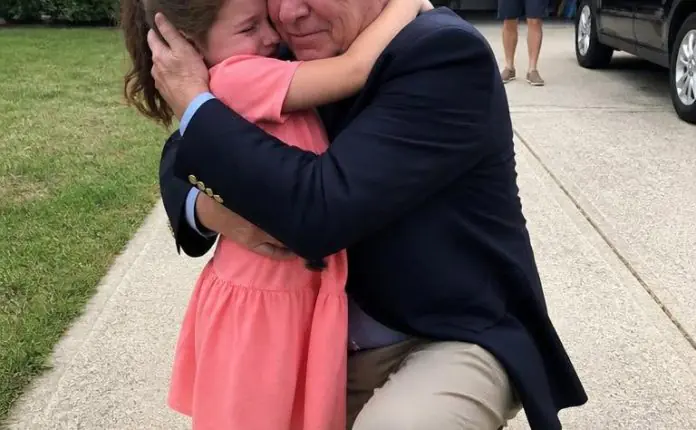
The five of us drove in a caravan down the icy hill to Superior Street, finding a neon-lit, 24-hour diner that stayed open for the holidays. We sat in a red vinyl booth, ordered five plates of buttermilk pancakes, and drank terrible diner coffee. Junie finished her entire stack and proudly demanded a second helping of whipped cream. I bought it for her. It was the best meal I had eaten in my entire life.
The fallout from the detonation was slow, grinding, and permanent.
Without my invisible financial scaffolding, the illusion of my parents’ wealth collapsed within weeks. My father was forced to sell his prized truck in late February to a dealership across town. By April, the bank threats became reality. He sold the four-bedroom Proctor house to avoid a catastrophic foreclosure.
They moved into a cramped, two-bedroom condominium near the highway. Walt took a part-time job stocking shelves at a local garden center to cover the modest HOA fees.
In late May, he showed up unannounced at my refrigeration shop. He stood awkwardly in the grease-stained doorway of the garage bay for ten excruciating minutes while I repaired a compressor. He shuffled his feet, looked at the concrete floor, and finally mumbled that he was sorry for how things went down. He delivered the apology terribly. It lacked depth and true accountability. I accepted it anyway, not to absolve him, but to finally release myself from the anger.
My mother didn’t apologize in person. In January, she mailed a Hallmark card to my home address. Inside, avoiding any mention of the money, the lies, or the Christmas dinner, she had written one single, cowardly sentence in black ink: I should have asked how you were.
I let the card sit on my counter for two months. In March, I finally called her. We now meet for a brief, supervised lunch on the second Tuesday of every month. I let her talk about the weather. And when the check comes, she pays for her own iced tea.
Dale proved to be a different kind of man than his father. He stubbornly insisted on paying back the $6,300 he had borrowed for the transmission, refusing my attempts to forgive the debt. On the 10th of every month, an auto-draft of $250 hits my account. I don’t keep it. I funnel every single dollar of Dale’s payments into a high-yield 529 college savings account I opened in Junie’s name. On New Year’s Day, I seeded that account with an additional $20,000 of my own capital. She will never have to beg for a future.
Uncle Ray showed up at the shop the first week of January. He complained that retirement was making him soft and asked if I needed any help. I hired him part-time. He sits at the front desk, drinking black coffee, answering the frantic 4:00 AM phone calls from desperate restaurant managers. He recently told one of the technicians that he likes working for a boss who actually stops to ask how his arthritis is feeling before demanding a task.
I used to believe that loyalty meant setting yourself on fire to keep your bloodline warm. I thought a family was a ledger where you deposited money and labor until you finally earned love.
I know better now. Love isn’t a debt you can pay off. It is an eleven-dollar jar of quarters, carried through a blizzard by a little girl in her socks. And sometimes, the most loving thing you can do for yourself is to close the checkbook, walk out the front door, and let the cold wind blow the leeches away.
Disclaimer: This fictional story was created with AI assistance for entertainment. Names, characters, dialogue, and events are fictional. Any resemblance to actual people or events is coincidental.