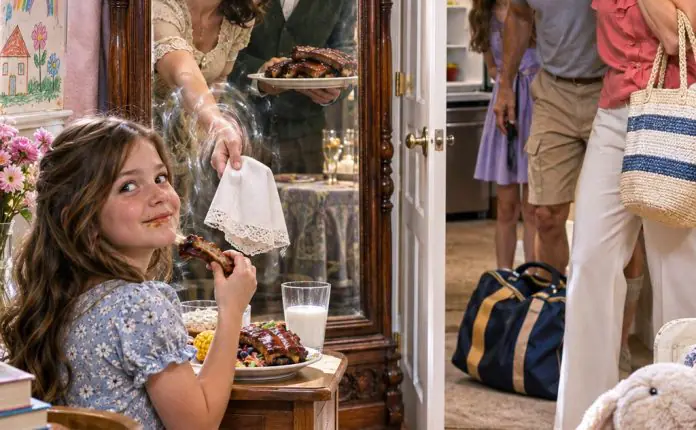
Cassandra called to tell me I would be responsible for Thanksgiving dinner before she even asked whether I planned to attend.
“I thought we could have everyone here this year,” she said. “Our place is bigger, and I've already started decorating. You'll still handle the food, right?”
I was standing in my kitchen with a basket of laundry against my hip. Outside, November rain was collecting on the birdbath.
“How many people are you inviting?”
“Twelve for certain. Maybe one more. But you're wonderful at making things stretch.”
I looked at the calendar hanging beside the refrigerator. Thanksgiving was less than two weeks away.
“Cassandra, that's quite a lot of cooking.”
“Oh, I know. But you always make it look effortless.”
She explained that the oven in their Charlotte house had been heating unevenly. Besides, her mother was coming, the neighbors had accepted, and she wanted everything to look beautiful.
I could hear the television playing behind her. Someone laughed in the background.
“Derek said you'd be happy to do it,” she added.
That settled the matter as far as she was concerned.
I was sixty-three years old, retired from a dental practice outside Raleigh, and apparently still employed as my family's unpaid holiday caterer.
At the time, I wouldn't have described myself that way.
I thought of myself as a helpful mother.
There is a difference, although it took me longer than I care to admit to recognize it.
My husband Leonard had been gone for twenty-six years. He died of a sudden heart attack when Derek was fourteen and Joanna was eleven.
For months afterward, I barely remembered getting from one day to the next.
There were school forms to sign, braces to pay for, shoes that suddenly became too small, and a mortgage that didn't care how exhausted I was.
I returned to my job at the dental practice three weeks after the funeral.
The office manager, Margaret, quietly rearranged my shifts so I could collect the children after school. I never forgot that kindness.
I also never forgot the first time Derek tried to make dinner while I worked late.
He was fifteen then, standing over a pot of spaghetti with a wooden spoon in one hand and the telephone in the other.
“Mom, how do you know when pasta's done?”
“You taste it.”
“Do I turn the stove off first?”
I laughed so hard I had to sit down.
Those were difficult years, but there was affection in the work. We were three people trying to keep a household together.
Somewhere over the following decades, the arrangement changed.
Derek became a grown man with a career, a wife, two children, and a handsome house in Charlotte.
Joanna became a physical therapist in Durham, where she bought a small townhouse and filled its windows with plants.
I continued being the person everyone contacted when something went wrong.
Derek needed help moving furniture. Cassandra wanted someone to supervise a delivery. Their dog required watching while they traveled.
Sometimes it was money.
Sometimes it was a favor that consumed an entire weekend.
Often it was simply an assumption that my calendar contained nothing important.
I said yes because I loved them.
That explanation was true, but it wasn't complete.
I also said yes because I had forgotten how to disappoint people without feeling ashamed.
After Cassandra's Thanksgiving call, I spent two evenings checking recipes.
I still used Leonard's mother's dressing recipe, written in faded blue ink on a card that smelled faintly of cinnamon.
There would be turkey, dressing, sweet potatoes, green beans, cranberry sauce, homemade rolls, pumpkin pie, and pecan pie.
For twelve people.
I made my shopping list on the back of an electricity bill because it was the closest piece of paper.
When I finished, the list ran down both sides.
My neighbor Ellen stopped by the following afternoon and found me polishing the old roasting pan.
“Are you hosting a convention?” she asked.
“Thanksgiving at Derek's.”
She examined the enormous pan.
“Does Derek own an oven?”
I laughed.
“He does. Apparently it has opinions about temperature.”
Ellen was seventy, practical, and gloriously uninterested in making excuses for other adults.
She had lived across the street for nineteen years, long enough to remember Leonard fixing her porch railing and Joanna learning to ride a bicycle in our driveway.
“Diane,” she said, “you retired from the dental office. Did somebody forget to tell your family?”
“They appreciate it.”
“Do they?”
I continued polishing the pan.
Ellen let the question remain unanswered.
On Wednesday, I prepared the pies and organized the cold dishes.
The pumpkin filling set beautifully, its surface smooth except for a tiny crack near the edge. The pecan pie came out glossy and fragrant.
I packed everything into containers, labeled them, and arranged the refrigerator shelves like a small warehouse.
That evening, Joanna called.
“Are you exhausted already?” she asked.
“Not yet. Give me another twenty-four hours.”
She had agreed to cover a holiday shift for a colleague with young children and would spend Thanksgiving evening with friends in Durham.
“I wish I could come help,” she said.
“You have your own plans.”
She was quiet for a moment.
“Mom, you're allowed to have plans too.”
I changed the subject.
Joanna had been saying things like that for several years.
She knew about my unfinished watercolor paintings, the travel books stacked beside my bed, and the small folder on my laptop marked Portugal.
She also knew I had made very little progress with any of them.
“Don't forget to eat something yourself tomorrow,” she said before hanging up.
At five the following morning, I turned on the oven.
By six, the kitchen smelled of butter, sage, and roasting turkey.
I worked in slippers and an old blue sweater that had belonged to Leonard.
The house was silent except for the refrigerator and the occasional clatter of cookware.
There was something peaceful about cooking before dawn.
I still loved it.
That was the part I wished my family understood later: I did not resent making a beautiful meal.
I resented the idea that enjoying something made me permanently responsible for doing it.
After the turkey rested, I wrapped the pan in thick towels and carried it to the car.
It was heavy enough to make my arms tremble.
The cooler went behind the passenger seat. The pies occupied a shallow box on the floor, where I hoped they would stay level.
I checked everything twice.
Then I locked the front door and began the nearly three-hour drive to Charlotte.
The sky was pale and overcast. Roadside trees had lost most of their leaves.
At a gas station outside Greensboro, I bought coffee and checked the cooler.
Everything was still cold.
I stood beside the car for a moment, stretching my back, and watched families traveling in vehicles packed with suitcases.
I wondered where they were going and whether anyone had spent the previous night baking for twelve people.
The thought amused me.
By the time I reached Derek's neighborhood, the sun had broken through the clouds.
Their house stood on a broad street lined with carefully maintained lawns.
Cassandra had hung an expensive-looking wreath on the front door. Small golden pumpkins stood along the walkway.
I parked behind a silver SUV and carried the first containers to the porch.
Cassandra opened the door wearing a cream-colored sweater, dark trousers, and little gold earrings shaped like leaves.
“Oh, wonderful! You're here.”
She looked past my shoulder toward the car.
“Did you bring everything?”
“Everything on the list.”
“Perfect. Derek!”
She turned toward the interior of the house.
“Your mother's here. Dinner's rescued.”
I waited while she kissed my cheek.
Then she stepped away to greet a woman emerging from the dining room.
Derek appeared a moment later.
“Hey, Mom.”
He gave me a quick hug and lifted the roasting pan.
“Good grief, that's heavy.”
“It is.”
“You're a lifesaver.”
He carried it inside.
I waited for him to return.
He didn't.
Through the doorway, I could hear someone asking about a football game.
I made three more trips to the car.
My grandson Oliver, who was nine, eventually noticed me carrying the cooler.
“Grandma, do you need help?”
He was wearing a green sweater with a crooked collar.
“Would you open the door, sweetheart?”
He held it with both hands.
“Dad said you made all the food.”
“Most of it.”
“Mom made the table pretty.”
I looked through the doorway at the dining room, where folded linen napkins stood upright beside expensive plates.
“She certainly did.”
Oliver grinned.
“I made the name cards.”
Those were the first decorations anyone mentioned that interested me.
He led me to the table and proudly showed me the cards, each written in blue marker with a little turkey drawn beside the name.
Mine had a crooked heart underneath it.
I put my hand on his shoulder.
“That's my favorite one.”
For a brief moment, the work waiting in the kitchen disappeared.
Then Cassandra called my name.
“Diane? Could you check the gravy before it gets too thick?”
I followed her voice.
The kitchen counters were crowded with serving bowls, unopened packages, decorative candles, and three different sets of wineglasses.
I had brought the food, but there was nowhere to put it.
Cassandra moved a basket of artificial autumn leaves aside.
“You can work here.”
She pointed to a narrow space beside the sink.
“The guests will be arriving soon. I want everything ready before we start drinks.”
I glanced at the clock.
We were eating at five.
It was shortly after two.
I asked whether I could sit for a little while before reheating everything.
“Of course,” she said. “Just as soon as the dishes are organized.”
The organization took forty minutes.
Then the gravy needed attention, and the rolls required warming.
The oven behaved perfectly.
I didn't mention it.
Around three, Cassandra's mother, Renee, entered the kitchen carrying a glass of white wine.
Renee was a stylish woman with silver hair and the kind of posture that made even casual conversation seem formal.
She inspected the counter.
“My goodness, Diane. You've been industrious.”
“There's quite a bit to finish.”
She smiled.
“You must be happiest when you're occupied.”
I looked at her.
For a moment, I considered telling her that I had wanted to spend the previous Wednesday in a watercolor class.
Instead, I said, “Would you mind bringing me the large serving spoon?”
She opened two drawers before finding it.
“I don't know how you have the patience for all this,” she remarked.
Neither, I thought, did I.
At four, guests began gathering in the living room.
I recognized Cassandra's aunt and uncle, a cousin, and a couple from the neighborhood.
Laughter traveled through the hallway.
Someone put on music.
From the kitchen, I could see the framed photographs arranged along the living-room shelves.
Family portraits, wedding pictures, vacation photographs.
Near the end stood a photograph of me on a windswept hillside in New Zealand.
I had taken that trip eighteen months earlier, traveling with a small tour group after a friend canceled at the last minute.
It was the first international journey I had made without Leonard.
I remembered arriving at Milford Sound, standing in the cold wind, and feeling both terribly lonely and unexpectedly alive.
A guide had taken the photograph.
When I sent it to Derek, he printed it for the children.
I had been pleased.
There was my life, I thought, displayed among theirs.
At four thirty, Derek wandered into the kitchen.
“Everything okay?”
“Almost.”
He opened the refrigerator, selected a drink, and leaned against the counter.
“Cassie's really excited about tonight.”
“She's worked hard on the decorations.”
He smiled.
“Yeah. She has a talent for that.”
I continued carving the turkey.
The knife slipped slightly against the joint.
“Derek, could you hold the platter steady?”
He glanced toward the living room.
“Sure. Just a second.”
Someone called his name.
He left before I could answer.
I held the platter myself.
Dinner began a little after five.
We gathered around the long dining table, Oliver beside me and his younger sister, Maisie, across from him.
Cassandra stood at the head and thanked everyone for coming.
She spoke about gratitude, family traditions, and the importance of making memories.
I listened while she described the planning involved in bringing everyone together.
Then we began passing the food.
The turkey was tender. The dressing tasted exactly as it had when Leonard's mother made it.
People complimented the sweet potatoes.
Cassandra accepted the praise with a gracious smile.
“I wanted everything to feel traditional,” she said.
I looked down at my plate.
I didn't need a speech.
But the absence of any acknowledgment caught me by surprise.
Oliver asked for more gravy.
I passed it to him.
Then a neighbor named Elaine pointed toward the photograph on the shelf.
“Diane, is that you in the landscape picture?”
“Yes. In New Zealand.”
“How wonderful! Did you go hiking?”
“A little. Mostly I explored the South Island.”
“Was it as beautiful as people say?”
“More beautiful in some places. There was this extraordinary wind coming off the water—”
I began describing the narrow road toward Milford Sound and the mountains rising sharply beyond the mist.
It felt lovely to be asked.
Elaine leaned forward.
“Did you travel alone?”
“With a tour group. Leonard and I always talked about going, but we never managed it together.”
“Leonard was your husband?”
“Yes. He died quite a few years ago.”
“I'm sorry.”
“Thank you. I think he would have loved it.”
I was about to tell her about the boat trip when Cassandra laughed.
“Oh, Elaine, you've found her one adventurous photograph.”
She looked around the table.
“Cooking and cleaning are really Diane's special talents. That's basically her entire personality.”
For a moment, nobody spoke.
Then Cassandra laughed again, evidently expecting the rest of us to join her.
Her cousin gave an uncomfortable chuckle.
Someone moved a fork against a plate.
I waited.
I thought Derek might smile and say that I had done plenty besides cook.
Perhaps he would mention New Zealand.
Perhaps he would tell Elaine how I used to draw elaborate pictures on his school lunch bags.
He knew those things.
But Derek kept his eyes on his food.
That was what hurt most.
Cassandra's joke was careless.
My son's silence felt practiced.
Elaine looked embarrassed.
“I think travel sounds wonderful,” she said softly.
“So do I.”
My voice surprised me. It was steadier than I felt.
I placed my napkin beside my plate.
Across from me, Maisie asked why Grandma wasn't eating her pie.
“Not yet, sweetheart.”
Cassandra moved on.
She began describing her plans for Christmas.
Her sister's family would be visiting, and Renee wanted to invite two old friends.
There might be sixteen people altogether.
“We'll need another folding table,” she told Derek.
Then she turned toward me.
“Diane, you'll probably want to start planning the menu early. Make extra of those potatoes. Everybody loves them.”
I stared at her.
She was already talking about the tablecloths.
Derek nodded.
Nobody asked what I wanted to do for Christmas.
Nobody even asked whether I would be home.
The rest of dinner passed in fragments.
I remember Oliver showing me a new drawing.
I remember Renee complimenting the gravy.
I remember the pecan pie disappearing faster than the pumpkin pie.
And I remember feeling strangely detached from the room, as though I were standing behind a window watching people I loved behave in ways I no longer understood.
After dessert, I carried plates to the kitchen.
Cassandra began discussing centerpieces with her aunt.
I filled the sink and washed the roasting pan.
Warm water ran over my hands.
A tiny smear of gravy resisted the sponge near one handle.
I scrubbed harder than necessary.
Then I stopped.
Why was I washing everything?
There was a dishwasher beside me.
There were eleven other adults in the house.
I rinsed the pan, dried it, and placed it beside the cooler.
For the first time that day, I left some of the work unfinished.
When I returned to the living room, Derek was explaining a football play.
He looked comfortable.
I told him I was leaving.
“So soon?”
“It's nearly eight. I have a long drive.”
“Right. Of course.”
He walked me outside.
The evening air was cold enough to make me pull my coat tighter.
As he put the cooler in the trunk, he said, “That meal was terrific, Mom. Cassie really appreciated it.”
I looked at him.
“Did she?”
He paused.
“Sure. Why?”
I could have asked about the joke.
I could have demanded to know why he had allowed his wife to describe me as though forty years of work, parenting, friendships, travel, and grief amounted to washing dishes.
But there were guests inside.
And Derek was standing there with his car keys in his hand, looking impatient to return to them.
“Never mind.”
He kissed my cheek.
“Oh, before I forget, could you send Cassie the pie recipes? She wants them for her holiday binder.”
I nodded.
He closed the trunk.
“Drive safely.”
I watched him return to the house.
The porch light caught the gold wreath on the door.
Then I got into my car.
For the first hour, I listened to the radio without hearing much of it.
The highway was crowded with families returning from Thanksgiving celebrations.
At a rest stop, I parked near a row of trucks and drank the last of my cold coffee.
My back ached.
My hands smelled faintly of dish soap.
I looked at the empty passenger seat, where a small roll of aluminum foil had fallen from the cooler.
Leonard used to insist that we stop after two hours of driving, regardless of whether we needed gasoline.
“Your legs aren't decorative,” he would say.
I smiled despite myself.
Then I remembered a conversation we'd had shortly before his death.
We were sitting at the kitchen table, looking through a travel brochure.
He had been fascinated by Portugal.
He wanted to photograph old streets and seaside towns.
I wanted to paint them.
We promised each other that once the children were grown, we would go.
Then life made a different arrangement.
I never stopped wanting to see Portugal.
I simply got used to putting that wish last.
Eleven months earlier, after retiring, I had opened a folder on my laptop and begun researching the country seriously.
I found photographs of Óbidos, with its medieval walls, white houses, flowerpots, and streets paved in uneven stone.
I read about small guesthouses and long-term rentals.
I priced flights and studied maps.
Whenever I considered booking, something happened.
Derek needed help cleaning his storage unit.
Cassandra had an appointment and wanted me to collect the children.
A holiday approached.
A birthday required planning.
One evening, after spending four hours comparing flights, I closed the laptop because Derek called about a plumbing problem.
I drove to Charlotte the following morning.
The trip never happened.
Sitting in that rest-stop parking lot, I realized how many times I had postponed a decision nobody had actually forbidden me to make.
I started the engine.
By the time I reached Raleigh, it was nearly midnight.
My house was dark.
I carried the empty containers inside, washed my hands, and stood in the kitchen looking at the leftover slice of pecan pie I had brought home.
Then I opened the laptop.
The Portugal folder was exactly where I had left it.
I clicked through photographs of the small house I had admired for months.
Blue shutters.
Terracotta pots.
A little courtyard.
A wooden desk near a window.
The owner had listed an eight-week opening beginning in December.
I checked the dates.
I checked the total price.
I checked the bank account where I had saved part of my retirement income specifically for travel.
There was enough.
More than enough.
I read the rental agreement twice.
Then I entered my payment details.
My hand hesitated above the final button.
Not because I couldn't afford it.
Because I could already hear the questions.
What about Christmas?
What about the grandchildren?
What about Derek and Cassandra?
Who would cook?
I looked toward the hallway where Leonard's old camera sat in a cabinet.
Then I made the reservation.
The confirmation appeared on the screen.
Eight weeks in Óbidos, Portugal.
For several minutes, I simply sat there.
I had not told anyone.
I had not asked permission.
I had made one decision that belonged entirely to me.
Then my phone vibrated.
Derek had sent a message.
“Mom, when should we start planning Christmas dinner?”
I looked from his question to the reservation confirmation.
For the first time in years, I knew exactly what I wanted to say.
END PART 1