“Give your sister half,” my parents demanded after I won three million dollars in the lottery. When I refused, they threatened to throw me out. The next morning, I walked downstairs and found Vanessa holding scissors over what they believed was my winning check, shredded into pieces across the dining table. “If you won’t share, nobody gets the money,” Mom said. I stared at the scraps—then started laughing. They thought they had destroyed my fortune. They had no idea the real ticket had already been processed, and the money was on its way.
PART 1: My Family Shredded My Lottery Check Before Learning What They Had Actually Destroyed
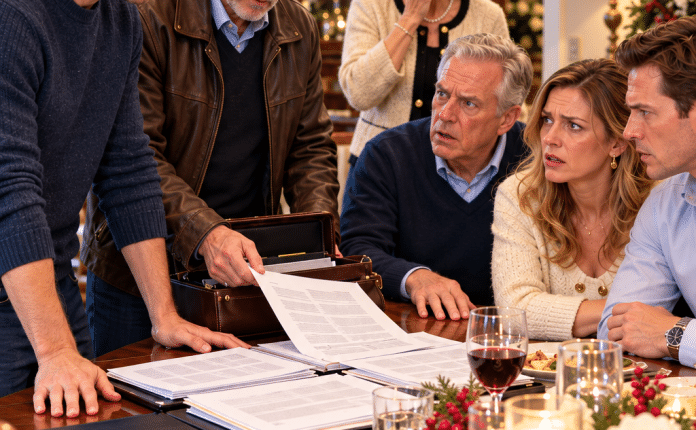
The morning after I refused to give Vanessa half my lottery winnings, I walked into the dining room and found a three-million-dollar check cut into strips.
Pieces of cardboard covered the oak table.
A corner showing part of the enormous number three lay beside my father’s coffee mug. Another piece had fallen onto the floor.
Vanessa stood at the table holding a pair of kitchen scissors.
She looked almost satisfied.
My father folded his arms.
“We are not going to let money tear this family apart.”
Mom sat beside him, pale and tense.
“If you won’t help your sister, Claire, then maybe nobody should benefit.”
Vanessa lifted her chin.
“You made this happen.”
I stared at the pieces.
For several seconds, the only sounds were the refrigerator humming and the kitchen clock ticking behind me.
Then I started laughing.
Vanessa’s expression changed first.
“Why are you laughing?”
I couldn’t answer yet.
Not because I was devastated.
Because the situation was so perfectly, painfully predictable.
My family had spent most of my life treating anything I earned as less important than whatever Vanessa wanted.
Destroying what they believed was my lottery fortune was simply the most expensive version of an old habit.
The pattern started long before there was money worth fighting over.
I noticed it clearly when I was seven.
Vanessa was ten then.
She brought home a report card full of A’s, and my parents reacted as though she had won a national award.
Dad stopped at a bakery on Cedar Avenue and brought home a chocolate cake.
Mom telephoned our grandparents.
Vanessa picked the restaurant for dinner.
Three days later, my own report card came home.
Four A’s.
Two B’s.
I placed it near the fruit bowl because Mom was on the phone.
Hours passed.
Finally, she picked it up.
“That’s fine, honey.”
She barely looked at me.
Fine.
That became my word.
Vanessa’s piano recitals meant flowers, photographs, and dinner afterward.
Mine meant reminding my parents three times about the date.
Her birthdays had themes.
Decorations.
Guest lists.
Mine generally involved a grocery-store cake after whatever dinner Mom had already planned.
When Vanessa entered an advanced academic program, my parents spent days discussing tutoring, transportation, and new clothes.
That same week, I won second place at a school science fair.
I had built a water-filtration system with gravel, charcoal, sand, tubing, and more confidence than skill.
At dinner, I mentioned the ribbon.
Mom smiled vaguely.
Then asked Vanessa which color dress she wanted for orientation.
I remember looking down at peas rolling through gravy and realizing disappointment could become routine.
Vanessa understood more than she admitted.
When I was thirteen, I found her sitting alone on the back porch after passing her driving test.
Dad had given her a used silver sedan with a red bow tied across the hood.
“You’re lucky,” she told me.
I almost laughed.
“Lucky?”
She shrugged.
“You get to do whatever you want. They don’t care.”
From inside came the smell of rosemary chicken.
Plates clicked as Mom set the table.
“They don’t care about me,” I said.
“That isn’t what I meant.”
“Must be nice to have them care enough to pressure you.”
For one brief second, Vanessa looked ashamed.
I thought maybe she understood.
Then Mom called her inside.
Vanessa stood and left me there.
That became our relationship.
In private, she sometimes admitted things were unfair.
In public, she accepted every advantage.
When Vanessa was accepted into an expensive private university, Dad framed the acceptance letter.
“We’ll handle everything,” he told her.
Tuition.
Housing.
Books.
Spending money.
She was told to concentrate on her future.
Three years later, I was accepted into a state university with an engineering program I desperately wanted.
My acceptance letter lived beneath a refrigerator magnet.
When I asked about tuition, Mom kept sorting bills.
“You’ll need scholarships.”
I stared at her.
“I thought you saved college money for both of us.”
“Vanessa’s program cost more than expected.”
“What am I supposed to do?”
Mom finally looked up.
“You’ve always been resourceful.”
In my family, resourceful meant nobody planned to help.
So I did what they expected.
I figured it out.
I worked restaurant shifts until ten at night.
Went to evening classes.
Studied until two in the morning.
My uniform always smelled faintly of onions and fryer oil.
Coffee became less of a drink and more of a survival tool.
Sometimes I slept between lectures with my backpack under my head.
Vanessa graduated owing nothing.
I graduated thirty-eight thousand dollars in debt.
My parents described that as proof of my independence.
I called it what it was.
Survival.
Still, I earned my engineering degree.
I found a junior position with a structural consulting firm downtown.
My desk faced a brick wall.
The office was cramped.
The salary was nothing extraordinary.
But the work made sense.
Numbers did not decide that one sister deserved more.
Loads either held or they didn’t.
Calculations either worked or they failed.
Four months after I started, I met Walter Hayes.
He was a property developer in his early sixties who wore wire-framed glasses and asked questions people usually avoided.
During a renovation meeting, we disagreed about whether a wall could safely be altered.
My supervisor gave Walter one recommendation.
I gave another.
Walter turned toward me.
“Show me the math.”
I did.
He studied my calculations.
Then adjusted his glasses.
“She’s right.”
Two words.
I remember them because nobody in my family ever said anything with that much certainty about me.
Walter began requesting me on his projects.
Eventually, he offered occasional independent consulting work.
I saved everything I could.
At home, my parents charged me four hundred dollars a month in rent.
Vanessa had already finished college and moved home again while she decided what she wanted to do next.
She paid nothing.
Nobody thought that was strange.
When my savings reached two thousand dollars, I built a formal plan for an engineering consultancy.
Twenty pages.
Market research.
Projected expenses.
A repayment schedule.
Letters of interest from potential clients.
I calculated that another three thousand dollars would let me launch without immediately drowning.
I showed Dad the folder.
He barely opened it.
“No.”
“You haven’t read it.”
“I don’t need to.”
“It’s three thousand dollars.”
“Starting a company is risky.”
“I already have interested clients.”
Mom folded her arms.
“We’re trying to protect you.”
“From what?”
“Making an expensive mistake.”
Dad slid the folder toward me.
“Vanessa’s education was an investment. This is an entrepreneurial fantasy.”
I took the folder back.
I did not argue further.
I had learned that evidence rarely mattered once my parents decided which daughter deserved belief.
Three months later, Vanessa arrived at dinner glowing with excitement.
She wanted to open a clothing boutique.
She had no financial projections.
No supplier agreements.
No confirmed customer base.
No serious experience managing a store.
Dad leaned toward her as though she had announced the next great American company.
“That sounds wonderful.”
Vanessa smiled.
Mom immediately started asking where she wanted the shop.
I stared at them.
Then Dad asked the question he had never asked me.
“How much do you need?”
END PART 1