My name is Maya Sterling, and I was thirty-one years old when I realized that some families don’t need to throw you out on the street to make you feel like you never truly belonged.
Sometimes, two empty chairs are enough.
My parents’ chairs.
They sat directly in the front row at an estate wedding venue in Napa Valley, decorated with small olive branches and place cards bearing their names:
Patricia Sterling.
Robert Sterling.
Nobody sat there.
When the ceremony music began, I drew a steady breath, held my bouquet tightly in both hands, and walked down the aisle completely alone.
My fiancé, Julian Vance, waited for me at the altar in a dark suit. Even from a distance, I could see his jaw tighten.
He knew how much it hurt.
Everyone there knew.
The conflict had started three months earlier.
My younger sister, Chloe, was twenty-seven, and she had always been the center around which my parents arranged our entire family.
If Chloe was upset, everyone changed their plans.
If Chloe needed money, it somehow appeared.
If Chloe made a huge mistake, everyone was expected to understand and forgive her.
And whenever I dared to object, my father always had the same response:
“You’re the older sister, Maya. Be the adult.”
So I shouldn’t have been shocked when Chloe announced in our family group chat that she had booked a luxury retreat to Bali with four friends.
The problem was the timing.
It was scheduled for the exact week of my wedding.
At first, I honestly thought she was joking.
Our wedding date had been set for more than a year. We had paid non-refundable deposits, hired photographers, booked the band, chosen the caterer, and reserved hotel blocks for guests flying in from across the country.
Chloe had known the date from the beginning.
Even so, that same evening, my mother called me.
“We need to talk about the wedding,” she began, immediately putting me on edge.
“What happened, Mom?”
“Chloe already paid for her Bali trip.”
I waited for her to continue.
My mother sighed. “We need you to change the date.”
I actually laughed because I thought it had to be an absurd joke. “Mom, the wedding is three months away.”
“Precisely,” she replied smoothly. “There’s still time to move it.”
“No, Mom. Contracts are signed. Deposits are paid.”
“Money can be earned back, Maya.”
“Not all of it. And it’s not just about money.”
Then I heard my father’s stern voice in the background. “Put me on speaker.”
A moment later, his voice came through with that cold, unwavering composure he used whenever he had already decided my perspective didn’t matter.
“Maya, a real family learns how to make sacrifices for one another.”
“Fine,” I countered. “Then Chloe can reschedule her vacation.”
Silence filled the line.
“Don’t be childish,” he snapped.
My chest tightened. “My wedding has been planned for over a year, Dad.”
“And your sister’s trip is important, too.”
“It’s a beach getaway with her friends!”
“It has major professional implications for her,” my father insisted.
Chloe worked as a social media content creator. According to my father, one of the women going on the trip had connections to international hotel chains, making the getaway an important networking opportunity.
“And me getting married isn’t important?” I asked, my voice cracking slightly.
“Don’t twist my words,” he replied coldly.
My mother cut back in. “We’re just asking for a little flexibility, Maya.”
I looked across the kitchen table at Julian, who was hearing every word over speakerphone.
“I am not changing my wedding date,” I said firmly.
My father responded almost immediately.
“Then we will not be attending.”
I went rigid. “What?”
“Perhaps you need to learn that your stubborn decisions carry real consequences.”
“Are you telling me that you’re skipping your eldest daughter’s wedding because Chloe wants to go to Bali?”
“I am telling you that you need a lesson in respect and humility.”
I waited for my mother to step in and tell him he had gone too far.
She didn’t.
She simply added, “Think carefully about this, Maya.”
Then they hung up.
For the next twelve weeks, I held onto a pathetic sliver of hope that they would change their minds.
When I finalized the reception seating chart, I kept their places.
When I submitted the venue’s final head count, I included them.
When the wedding planner asked whether she should remove the two empty chairs from the front row, I told her to leave them exactly where they were.
Even on the morning of the wedding, I kept checking my phone every few minutes.
Nothing.
No text.
No call.
Not even a brief, obligatory message.
My maid of honor, Sarah, helped zip my gown. “You’re allowed to cry, Maya.”
“Later,” I whispered.
“Maya…”
“Later.”
I refused to give my parents another victory.
So I walked down that aisle toward Julian alone.
I said my vows.
I smiled for the photographer.
I hugged my aunts and uncles.
I cut the cake.
I danced.
And whenever a guest discreetly glanced toward those two empty chairs, I pretended not to notice.
Until dinner.
Julian stood from his seat at the head table and gently tapped his water glass with a fork.
The chatter around the ballroom slowly faded.
I assumed he was about to give the usual groom’s toast and thank everyone for coming.
Instead, I watched his eyes move toward those two empty chairs.
Then he looked at me.
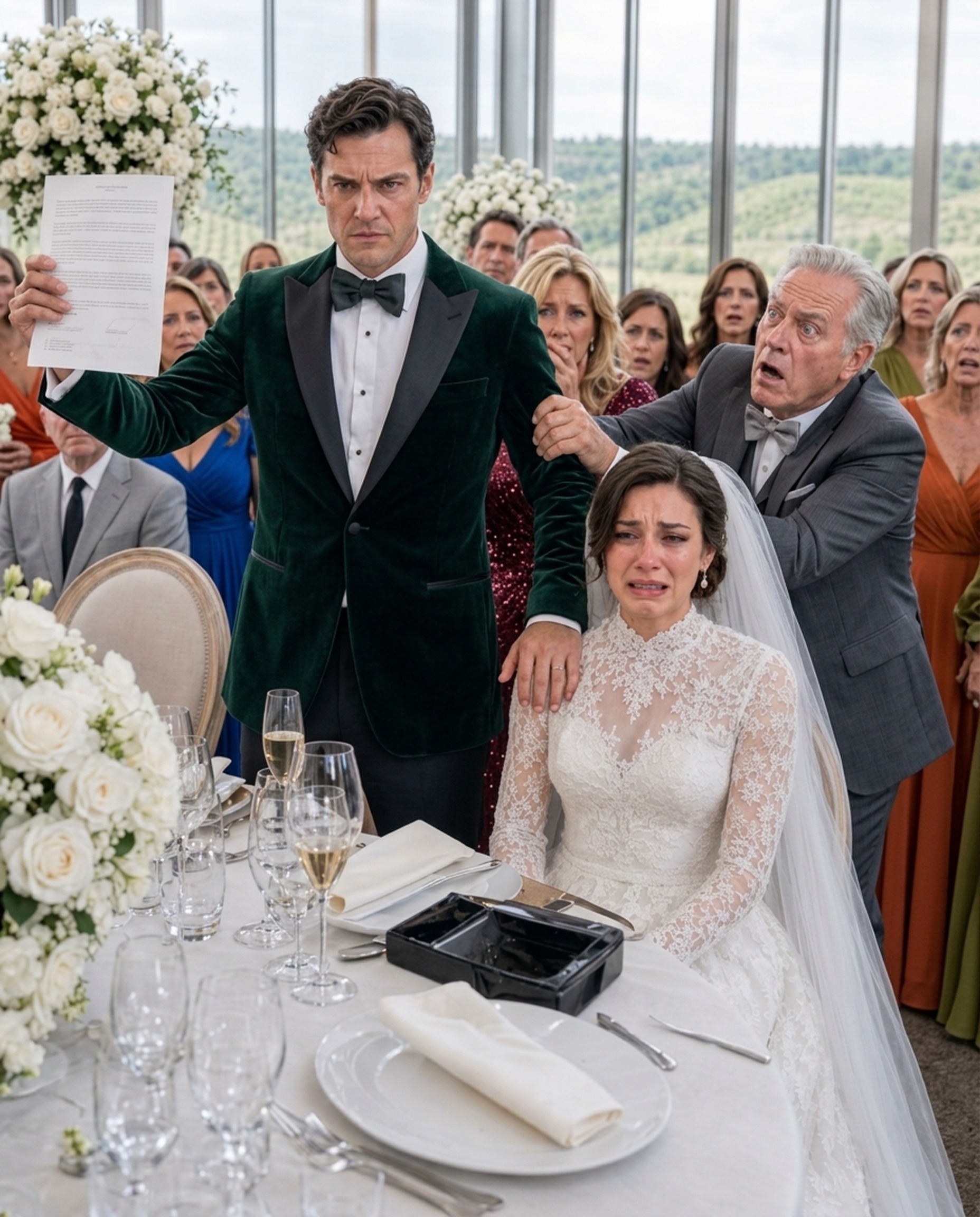
“Since the people who were supposed to be standing by Maya’s side tonight chose not to show up,” Julian announced, his voice echoing clearly through the microphone, “I think everyone in this room deserves to know the real reason why.”
My heart stopped.
Julian reached into the inner pocket of his suit jacket.
And pulled out a folded piece of paper.
Julian was not an impulsive man.
As a senior corporate litigation attorney in San Francisco, he was trained to sit calmly across from hostile opponents for hours without raising his voice.
So when he unfolded that paper in front of two hundred wedding guests, I knew this wasn’t a spur-of-the-moment decision.
A week before the wedding, he had asked me, “Are you sure you want to just let your parents walk away like this?”
I had told him yes.
I was exhausted.
Exhausted from competing for conditional, transactional love.
Exhausted from always being forced into the role of the understanding, compliant daughter.
I had specifically asked him not to get involved.
He had nodded then, but I realized now that he had never promised to stay silent.
“Five days ago, I received an email from Robert Sterling,” Julian said into the microphone.
Dozens of heads turned toward the empty seats.
Julian began reading aloud.