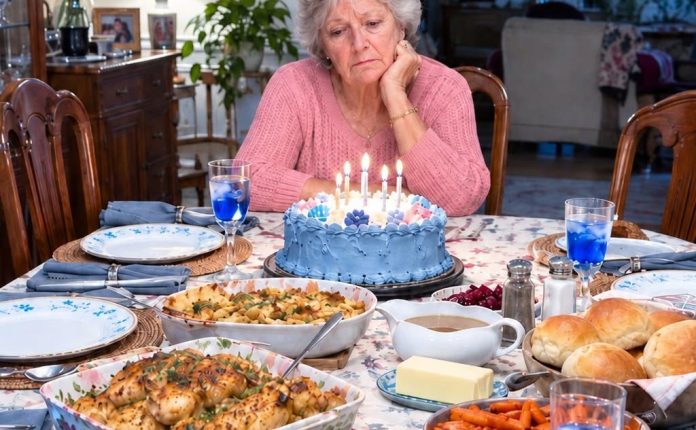
The afternoon light was fading.
"Patricia, I want to be clear about what happens next."
She stiffened.
"I am not withdrawing the factual information I gave the bank or police. I won't tell anyone I authorized your use of the card. I won't invent a misunderstanding."
She swallowed.
"But I will acknowledge any truthful steps you take to resolve the matter."
"What does that mean?"
"If you return the card, provide an accurate account, and make a repayment arrangement, I'll confirm that those things happened."
Her voice shook.
"And if I can't repay everything?"
"Then you need to say so honestly and work through the available process."
Patricia covered her face.
For a moment, nobody spoke.
Then Diane moved toward her mother.
She didn't embrace her.
She sat beside her.
"Mom, you need to stop asking us to fix this by saying something untrue."
Patricia lowered her hands.
"I've lost everything."
Diane's eyes filled.
"You haven't lost everything."
"Margaret won't speak to me."
Margaret shifted in her chair.
"I'm speaking to you now, Patricia."
"You know what I mean."
"I do. And I need some distance. That doesn't mean I want you harmed."
Elaine nodded.
"We've been friends a long time. But friendship doesn't mean pretending this didn't happen."
Patricia looked between them.
For the first time, I saw genuine confusion beneath her anger.
She had always treated loyalty as an obligation to agree.
Now everyone in the room was telling her that a relationship could continue only if she stopped demanding that kind of agreement.
Carol reached for the coffee pot.
"Would anyone like more?"
The question was so ordinary that I nearly laughed.
Nobody answered.
Carol poured another cup for herself.
Then Patricia spoke in a voice barely above a whisper.
"I don't have the money."
I turned toward her.
"How much can you repay?"
She looked at me.
"I don't know yet."
"Do you have savings?"
"Some."
"Have you spoken to your bank?"
She nodded.
"Yesterday."
"Have you given the hotel a payment method in your own name?"
"Yes."
That was new information.
I waited.
Patricia looked toward Diane.
"I used my savings to settle part of what the hotel said I owed. I arranged the rest through my own credit account."
She rubbed her hands together.
"I thought I could get Andrew to change his mind before it came to that."
I didn't interrupt.
"They said the original card transaction was being disputed. I had to make arrangements for the expenses that weren't covered."
Margaret looked down.
Patricia continued.
"I spent more than I should have. There were fees. I changed the flight. I had to borrow money from my bank."
Her voice cracked.
"I'm going to have to sell things."
I thought about her expensive handbags, her jewelry, and the dining room furniture she had insisted was essential to respectable entertaining.
I felt no desire to see her lose them.
But she had chosen them over financial security long before this incident.
Carol asked gently, "Have you written down what you owe?"
Patricia shook her head.
"Then that's where you start," Carol said.
Not with blame.
Not with an elaborate defense.
With a list of obligations and an honest assessment of what could be paid.
Diane looked at her mother.
"I'll help you organize your paperwork."
Patricia brightened.
"But I'm not paying the bills for you," Diane added.
Her mother's expression fell.
"I can't."
Diane spoke carefully.
"I have my own expenses. I can't sacrifice my financial stability because you made a decision you couldn't afford."
I watched Patricia absorb the sentence.
She looked at me, perhaps expecting an objection.
I said nothing.
At last, she nodded.
"All right."
It was a small answer.
But it was the first time I had heard Patricia accept a boundary without immediately turning it into an argument.
The meeting ended shortly afterward.
Carol packed sandwiches into containers nobody had asked for.
Margaret and Elaine said goodbye politely.
Neither embraced Patricia.
Diane remained beside her mother.
As I put on my coat, Patricia approached me.
"Andrew."
I turned.
She looked down at the floor.
"I suppose I owe you an apology."
I waited.
She took a breath.
"I shouldn't have taken the card."
It was not an eloquent apology.
It was not complete.
But it was different from everything she had said before.
"Thank you for saying that."
She raised her head.
"Can we put this behind us now?"
I considered the question.
"Not yet."
Her mouth tightened.
I continued.
"The charge is still being investigated. The financial arrangements need to be resolved. And you've told several people things about me that weren't true."
Patricia looked away.
"I was upset."
"I understand that."
"Doesn't that count for anything?"
"It explains how you felt. It doesn't make the statements accurate."
For a moment, I thought she would begin arguing again.
Instead, she nodded reluctantly.
"I'll think about it."
"Please do."
I stepped onto the porch.
The air smelled of wet leaves and distant chimney smoke.
As I walked toward my car, Diane came outside.
"Andrew."
I stopped.
She wrapped her arms around herself against the cold.
"Thank you for coming."
"I'm glad you told the truth."
She smiled sadly.
"I should have started doing that years ago."
I didn't know what to say.
After a moment, she stepped closer.
"Do you think Mom will change?"
I looked back at the house.
Through the living room window, Patricia was sitting alone on the sofa while Carol cleared the coffee cups.
"I don't know."
Diane nodded.
"Neither do I."
Then she said, "I used to think if I could just find the right words, she'd understand."
I smiled faintly.
"I spent years thinking the same thing."
Diane looked toward the street.
"Maybe understanding is something she has to decide to do."
"Maybe."
We stood quietly for a moment.
Then she returned inside.
I drove home without turning on the radio.
For the first time since the divorce, I didn't feel compelled to replay every argument in search of something I could have said differently.
There were things I regretted.
I could have established boundaries earlier.
I could have been more direct with Diane about how her silence affected me.
I could have stopped paying for Patricia's demands long before resentment hardened into distance.
But those regrets did not make me responsible for her theft.
That was an important distinction.
And I intended to remember it.
The following week brought several practical developments.
The card issuer confirmed that the disputed $35,000 hotel transaction had been reviewed and that the unauthorized charge would be removed from my responsibility under the outcome of its investigation.
I read the written confirmation twice before calling Rebecca.
"Does this mean the dispute is resolved on my account?"
"Yes, regarding this transaction. The card will remain closed, and the replacement process is already underway."
I thanked her.
"Will I be told what happens to Patricia?"
"The account determination doesn't establish or disclose the outcome of any separate criminal or merchant recovery process."
I understood.
The bank's decision was not a criminal judgment.
It did not answer every question about what happened in Paris.
But it meant the charge would not remain my debt.
That was the financial resolution I had sought from the beginning.
I forwarded the letter to Sarah.
She called a few minutes later.
"Good news," she said.
"Very good news."
"Keep the documentation."
"I will."
"Have you heard from Patricia?"
"Not directly."
"That's probably for the best."
Sarah explained that the police report remained a separate matter. Whether authorities pursued it would depend on their investigation and decisions, not on my private feelings about the family.
I told her I understood.
We also discussed the hotel.
It had apparently been working directly with Patricia on her payment obligations and with the bank regarding the disputed transaction. I did not seek the hotel's private records beyond what was relevant to my own account.
The important thing was that I was no longer being asked to fund the trip.
Two weeks later, Diane called.
"Mom sold her jewelry."
I sat down.
"All of it?"
"Not all. Some pieces she rarely wore. And a designer handbag she bought last year."
"Was that necessary?"
"She's trying to reduce the debt from Paris."
I looked at the letter from American Express on my desk.
"That's her decision."
Diane sighed.
"She's finally making a budget."
I almost laughed.
"Your mother?"
"I know."
"How is she handling it?"
"Badly."
That made me laugh for real.
Diane joined me.
Then her voice softened.
"But she's doing it."
She explained that Patricia had met with a financial counselor recommended by her bank. She was reviewing her income, credit obligations, and expenses.
The Paris vacation had exposed something larger than a single unauthorized transaction.
Patricia had been living as though appearance mattered more than affordability.
She had used credit to maintain a lifestyle that looked considerably more comfortable from the outside than it felt from within.
Diane said her mother had been shocked by the total of her obligations.
I wasn't.
For years, Patricia had filled the difference between what she wanted and what she could afford by persuading other people to pay.
Now that several of those people had refused, the numbers were visible.
"Carol is helping her organize the paperwork," Diane said.
"That's kind of her."
"Carol is also asking for repayment of the old loan."
"Good."
Diane was quiet.
"Mom cried when Carol brought it up."
"That doesn't mean Carol is wrong."
"I know."
There was a long pause.
Then Diane said, "I think I'm finally learning the difference between helping someone and making it possible for them not to change."
I looked out the window.
"That's a difficult lesson."
"It is."
Before we hung up, she mentioned that Margaret and Elaine had agreed to meet Patricia for coffee the following month.
"They're not ready to plan another trip," Diane said.
"I imagine not."
"But they haven't completely shut her out."
I was glad.
I had never wanted Patricia isolated.
I wanted her to stop mistaking other people's patience for permission.
That was something only she could work on.
Three weeks after the family meeting, Patricia sent me a letter.
Not an email.
An actual envelope, addressed in her careful handwriting.
I found it in the mailbox on a Saturday morning.
For several minutes, I left it unopened on the kitchen counter.
Then I made coffee, sat down, and read it.
Patricia wrote that she had behaved badly.
She acknowledged taking the card without asking and telling her friends I had arranged the trip.
She admitted she had expected me to pay because I had paid for similar things before.
She also acknowledged making statements about Diane that were not true.
The letter was not free of excuses.
There were references to grief, loneliness, the divorce, and how frightening it had been to feel that her daughter's marriage had ended.
But near the bottom, she had written something that surprised me.
I convinced myself that because I was hurt, I was entitled to make you hurt too. I did not want to admit that was what I was doing.
I read that sentence several times.
It was the closest Patricia had come to recognizing the choice beneath her behavior.
She continued:
I understand that my apology does not undo the expense or the trouble I caused. I am working with the people involved to settle my obligations. I have told Margaret and Elaine that you did not offer to pay for our trip. I have also corrected what I said to our relatives.
I put the letter down.
I hadn't expected it.
I had expected another demand.
Another explanation of why I had misunderstood her.
Another argument that family loyalty required me to forget what happened.
Instead, she had written something that acknowledged responsibility without requiring me to agree that everything was resolved.
I called Diane.
"Did you tell your mother to write me a letter?"
"No."
"Did you help her?"
"No. Why?"
"She apologized."
Diane was silent.
"Really?"
"Yes."
"Andrew, I didn't know."
I looked at the handwriting again.
"It sounds like she's beginning to understand."
Diane exhaled.
"I hope so."
"Has she corrected the public post?"
"She removed it. Then she posted a clarification that the trip was not paid for by you and that she had made inaccurate statements."
I hadn't seen it.
I wasn't checking Patricia's social media anymore.
That was another change I appreciated.
"Are you going to answer her?" Diane asked.
"Probably."
"What will you say?"
I thought for a moment.
"I'll thank her for being truthful. And I'll tell her I need some distance."
Diane was quiet.
Then she said, "That sounds fair."
I wrote my reply that afternoon.
I kept it brief.
I acknowledged receiving the letter.
I thanked Patricia for correcting the record.
I told her I hoped she would continue meeting her obligations and rebuilding the relationships damaged by the trip.
I also made clear that I was not interested in returning to the old pattern of financial demands and accusations.
I wished her well.
Then I mailed it.
I did not invite her to dinner.
I did not offer another line of credit.
I did not suggest that the entire affair could now be forgotten.
An apology could mark a beginning.
It could not replace the work that followed.
Over the next several months, life became quieter.
My replacement credit card arrived.
I reviewed the security arrangements at the house and removed the additional-card arrangement I no longer needed.
I changed the guest room into a small study.
Diane and I finished the remaining administrative matters related to our divorce.
We remained courteous.
Sometimes we spoke about practical things.
Other times weeks passed without contact.
That was not an act of punishment.
It was simply the shape our relationship had taken.
We had loved each other.
We had also hurt each other.
Neither fact erased the other.
One afternoon in early spring, Diane called with news.
"Mom and Carol had lunch together."
"How did it go?"
"Pretty well, actually."
"Did they talk about the loan?"
"Yes. Mom has started making regular payments."
"That's good."
Diane laughed.
"Carol says Mom complained about the price of parking."
I smiled.
"Some things never change."
"No."
Then Diane added, "But she paid for her own lunch."
I looked up from my desk.
"Now that is news."
We both laughed.
It was a small story, almost absurdly small compared with the events in Paris.
But I found it more encouraging than any grand declaration Patricia could have made.
She had sat across from her sister, discussed an uncomfortable obligation, and paid her own bill.
Perhaps that was where change actually began.
Not in speeches.
Not in dramatic apologies.
But in ordinary moments when the old temptation appeared and a person chose differently.
Months later, on a warm Sunday in June, I drove to my parents' house for dinner.
Dad was outside working on a flower bed.
Mom stood at the kitchen counter peeling potatoes.
Nothing about the afternoon was remarkable.
Dad complained about the price of mulch.
Mom told him he had bought too much.
He insisted the garden needed it.
She pointed out that half the bags were still sitting beside the garage.
I listened to them argue gently and felt something loosen inside me.
For years, Patricia had treated wealth as evidence of character.
She admired expensive hotels, designer clothes, and the ability to spend money without hesitation.
My parents had never possessed those things.
Their house was small.
Their furniture had been repaired more than once.
The plates on the dinner table didn't match perfectly because one set had been a wedding gift and another had belonged to my grandmother.
But nobody at that table had ever taken something that wasn't theirs and called it family privilege.
After dinner, Dad and I sat on the porch.
He looked at me over his glasses.
"Any more trouble from Paris?"
"No."
"Good."
He rocked his chair slightly.
"Did the money get sorted out?"
"Yes. The bank resolved the disputed charge on my account."
He nodded.
"That's a relief."
We watched a neighbor walk past with a golden retriever.
After a while, Dad spoke again.
"You know, I was thinking about something."
"What?"
"When you were young, you used to let your friends borrow your baseball glove."
I smiled.
"I remember."
"You'd get upset when they didn't bring it back."
"Because they left it outside."
"Exactly."
He looked at me.
"Your mother used to tell you that you should share."
"She still does."
Dad chuckled.
"But I told you something different."
I thought for a moment.
"That sharing doesn't mean letting people take whatever they want."
He smiled.
"Good memory."
I looked across the yard.
Dad leaned back in his chair.
"There's nothing wrong with helping family. But the helping has to be your choice."
I nodded.
It sounded simple when he said it.
Perhaps it always had been.
I had spent years confusing generosity with surrender.
I had believed that refusing unreasonable demands made me selfish.
Patricia had encouraged that belief because it benefited her.
Diane had accepted it because challenging her mother frightened her.
And I had continued participating because I wanted my marriage to survive.
The result had been a household where one person's comfort depended on another person's silence.
I didn't want to live that way again.
Dad glanced at me.
"You seem lighter."
"I feel lighter."
"Good."
He stood to check whether Mom needed help in the kitchen.
She called through the screen door that he could start by carrying the empty dishes inside.
He gave me a resigned look.
I laughed.
Then I followed him.
That evening, when I returned home, the house felt peaceful rather than empty.
I opened the windows.
A warm breeze moved through the living room.
The city hummed somewhere beyond the garden fence.
On my desk lay the final bank correspondence, filed neatly beside the documents from the divorce.
I had kept Patricia's apology in a separate folder.
Not because I expected to read it often.
Because it reminded me that accountability and forgiveness were different things.
I could accept an apology without offering another opportunity to be used.
I could wish Patricia well without agreeing to pay her debts.
I could care about Diane without rebuilding a marriage that had been damaged beyond repair.
And I could insist on the truth without taking pleasure in another person's humiliation.
I thought about the moment that had started it all.
A Tuesday afternoon.
A notification on my phone.
Thirty-five thousand dollars at a Paris hotel.
Patricia had been surrounded by friends, champagne, and beautiful furniture when she called to announce that she intended to spend my money.
She had expected me to argue.
She had expected me to become emotional.
Above all, she had expected me to surrender, as I had done so many times before.
Instead, I had said two words.
Card frozen.
Those words had not magically solved anything.
There were investigators, documents, difficult conversations, and weeks of uncertainty afterward.
The financial result required evidence.
The family consequences required honesty.
And whatever change Patricia eventually made would require choices she alone could make.
Her world had not ended.
But the world in which she could take other people's money, demand their silence, and expect them to protect her reputation had been broken.
In its place, she was having to build something more ordinary and far less glamorous.
A life where bills belonged to the person who incurred them.
Where friendship required honesty.
Where family members were allowed to say no.
And where an apology meant something only when behavior changed.
I switched off the desk lamp and went into the kitchen.
Tomorrow would be Monday.
There were client meetings to prepare for, groceries to buy, and a repairman coming to inspect the aging water heater.
Ordinary responsibilities.
Ordinary expenses.
All belonging to me.
I poured a glass of water and looked out at the quiet street.
For the first time in years, I wasn't waiting for Patricia Harmon to decide whether my choices were acceptable.
I had already made the one decision that mattered.
My money, my home, and my peace were no longer hers to claim.
And I intended to keep them that way.
THE END
Disclaimer: This is a fictional story created for entertainment and reflection. All characters, dialogue, events, and circumstances are fictional. Any resemblance to actual people or events is coincidental.
Lenora had sent the message eleven weeks before Nora was born.
I read it twice before I could make myself understand what it meant.
The email was addressed to a financing representative who had been assisting Vale Property Services.
Lenora identified herself as the company's bookkeeper.
She explained that Damon was arranging additional funding and that the Hawthorne Drive residence could potentially be offered as collateral.
Then came the sentence that made me sit back.
Meredith is very busy with military and medical appointments, so Damon is handling the paperwork for her.
I stared at those words.
She had used my pregnancy and professional obligations to explain why I wasn't participating in a financial transaction involving my own home.
The lender's representative had replied that confirmation from the recorded owner would be required.
Lenora responded that the authorization would be provided.
A scanned page followed several days later.
It carried the signature I had already questioned.
My throat tightened.
I forwarded the email to Alina with one sentence.
I never gave Lenora or Damon permission to approve this financing for me.
Then I closed the computer.
Nora was asleep in her bassinet.
The kitchen clock made a faint ticking sound.
I could hear Dad moving a chair in the next room.
It was an ordinary evening inside an ordinary home.
And somewhere inside that home, for months, the people I trusted had been making plans about money and property without my knowledge.
The next morning, Alina called.
“We have the email chain,” she said. “Now we need to determine precisely how the authorization was created and submitted.”
“What does that involve?”
“Reviewing the original files, communications, and any available metadata. We may also need handwriting or document analysis.”
“Could Lenora have signed it?”
“We cannot conclude that from the email alone.”
I knew she was right.
But I wanted an answer.
More than that, I wanted to understand why my mother-in-law had been so confident when she told me to leave.
Had she believed she could simply take over the house once I was gone?
Had she known the financing application was incomplete?
Or had she persuaded Damon that my illness would somehow make it easier to control my property?
The questions followed me through the day.
I fed Nora.
I took my medication.
I rested when the doctor instructed.
I walked slowly through the downstairs rooms.
And every time I passed the filing cabinet in the study, I remembered Damon asking for its key.
A week later, the document review produced an important result.
The scanned owner authorization had been assembled from an older document bearing my signature.
A document specialist retained during the legal proceedings identified strong indications that the signature image had been copied rather than written directly onto the authorization.
The analysis did not, by itself, establish who performed the copying.
But it provided a factual basis for challenging the document.
Alina explained that the original lender records showed the financing had stopped before funds were advanced.
The bank had requested independent owner verification.
That verification was never completed.
No new mortgage or other security interest from the proposed transaction had been recorded against my house.
I listened to every word.
Then I asked, “So the house is safe?”
“From that particular financing application, based on what we've confirmed, yes. We'll continue monitoring the title and address the other financial issues.”
I closed my eyes.
For the first time in weeks, I felt the tension in my shoulders loosen.
I hadn't realized how much I had been afraid of losing the place where Nora was supposed to grow up.
The relief did not erase what happened.
But it allowed me to think beyond immediate disaster.
The divorce continued.
Our attorneys exchanged financial information.
An accountant reviewed the household transfers and business-related payments.
We learned that Vale Property Services had been in difficulty longer than Damon originally admitted.
Lenora had been involved in preparing financial summaries and communicating with lenders.
She was also aware that the business needed money quickly.
Damon eventually acknowledged that he had allowed the financing application to proceed even though he knew I had not agreed to pledge my home.
He disputed some details about how the authorization was created.
Lenora denied intentionally falsifying any document.
Those issues remained subject to further legal review.
But the central fact was no longer in doubt.
My consent had never been given.
And Damon knew it.
When the next formal meeting took place, I entered the conference room without my father beside me.
Dad drove me there, but I asked him to wait outside.
I wanted Damon to understand that this was my decision.
Not my father's.
Not my attorney's.
Mine.
Damon stood when I entered.
He looked thinner.
His business had reduced operations, and he had begun negotiating repayment arrangements with creditors.
I didn't feel pleased about that.
I knew employees and customers could be affected by the company's problems.
But I no longer felt responsible for rescuing Damon from every consequence of his choices.
Alina placed the relevant correspondence on the table.
Richard reviewed it.
Then Damon spoke.
“I want you to know I never intended for you to lose the house.”
I looked at him.
“You tried to use it as collateral without asking me.”
“I thought the business would recover.”
“That wasn't your decision to make.”
“I know.”
I waited.
He rubbed his hands together.
“I was desperate.”
“Then you should have told me.”
He looked toward Richard.
Then back at me.
“I thought you'd leave me if you knew how bad things were.”
The sentence hurt.
Not because he had feared losing me.
But because he had responded to that fear by doing the very things most likely to destroy our marriage.
“Damon,” I said, “you had a wife who would have sat at the kitchen table and helped you understand the bills.”
He lowered his eyes.
“You had someone who could have helped you find legitimate options. We could have reduced expenses. We could have changed plans.”
“I know.”
“But you didn't trust me with the truth.”
“No.”
I paused.
“And when I became ill, you didn't stay to help me.”
His face tightened.
“My mother—”
“Don't.”
He stopped.
I leaned forward slightly.
“Your mother didn't marry me. You did.”
He stared at me.
“You were the one standing beside my hospital bed.”
“I panicked.”
“You handed me divorce papers while I was frightened I might die.”
His mouth opened.
Nothing came out.
“You told me to take our newborn daughter and leave.”
His expression changed.
For a moment, I thought he might cry.
“I was afraid,” he whispered.
“So was I.”
The room remained quiet.
I let that sentence stand.
I didn't need to explain what it was like to wake in a hospital room and wonder whether my heart would recover.
I didn't need to remind him that Nora had been only three days old.
He knew.
He had been there.
That was what made the memory unbearable.
Eventually, Richard returned the conversation to the divorce terms.
There were property questions to resolve.
There were contributions to account for.
There were business debts that required examination.
There were decisions about Nora's care and future parenting arrangements.
Those matters would take time.
I knew better than to expect a single meeting to resolve nine years of marriage.
But something important happened that afternoon.
Damon stopped insisting that I had to leave Hawthorne Drive.
He acknowledged that the house was titled to me and that he could not treat it as property he alone controlled.
His attorney agreed to address any legitimate marital financial claims through the proper process rather than threats.
There was no dramatic applause.
No sudden judgment.
No instant transformation.
There was simply a man being required to recognize limits he had refused to acknowledge.
When the meeting ended, Damon approached me.
“Can I ask you something?”
I nodded.
“Do you think there's any chance for us?”
I looked at him for a long moment.
I remembered our wedding.
The quiet mornings.
The trips we had taken.
The day we learned I was pregnant.
I remembered him assembling Nora's crib.
I also remembered his face when he told me he would not pay to keep me alive.
“I don't know how to trust you again,” I said.
He looked away.
“I understand.”
“I'm not saying that to punish you.”
“I know.”
“I'm saying it because trust mattered, and you made choices that destroyed it.”
He nodded slowly.
Then he asked about Nora.
I answered honestly.
She was gaining weight.
She had begun turning her head toward familiar voices.
She made a small squeaking noise whenever Mom changed her clothes.
Damon smiled faintly.
“I'd like to see her.”
“We can work out an arrangement through the attorneys.”
He nodded.
For the first time, I saw the possibility that he might eventually learn to separate being a father from being my husband.
But I knew it would require more than words.
When I returned home, Dad was sitting on the porch.
He stood as I approached.
“How did it go?”
“It was difficult.”
“Did you say what you needed to say?”
“Yes.”
He opened the door for me.
Inside, Mom was holding Nora.
Our daughter was awake, looking around the room with the serious expression she sometimes wore before falling asleep.
Mom passed her carefully into my arms.
I sat down.
Nora rested against me.
And I understood something I had resisted for weeks.
My life might not return to what it had been.
But that did not mean it was finished.
Six months after Nora was born, I stood in her nursery holding a small yellow sweater.
It was the first piece of clothing Damon and I had bought for her.
We found it in a shop after my pregnancy was confirmed.
He insisted it was too early to buy baby clothes.
Then he spent fifteen minutes choosing between the yellow sweater and a pink one.
I remembered laughing.
He chose yellow because he said it looked cheerful.
Now Nora had outgrown it.
I folded it carefully and placed it in a keepsake box.
Some memories deserved to be preserved even when the people inside them changed.
Others had to be understood differently.
My recovery had not followed a straight line.
There were encouraging appointments and difficult days.
Dr. Menon monitored my heart function and adjusted treatment as needed.
I continued following the medical recommendations and avoided assuming that feeling better on a particular morning meant I could ignore my limitations.
I had learned to measure progress differently.
Sometimes progress meant walking a little farther without becoming exhausted.
Sometimes it meant completing an ordinary day without needing additional help.
And sometimes it meant asking Mom to take Nora while I rested instead of pretending I could manage everything alone.
My parents had gradually returned to their own routine.
They still visited often.
Dad came over on Saturday mornings to work in the garden.
Mom helped when I had appointments.
But they no longer needed to be present every hour.
I was building a life that accommodated both my responsibilities and my health.
The Army had supported the appropriate medical and administrative processes while my recovery and future duties were assessed.
I didn't know exactly how my career would change.
That uncertainty had once frightened me more than I admitted.
Now I understood that my value did not depend on being able to return immediately to every responsibility I held before Nora's birth.
I was still Meredith.
Still a mother.
Still a person whose judgment, experience, and relationships mattered.
The divorce required months of negotiation and legal work.
There were difficult discussions about marital contributions to the house, shared accounts, and the financial consequences of Damon's business decisions.
An accountant reconstructed transactions where records were incomplete.
The attorneys helped separate legitimate marital issues from unsupported claims.
Eventually, the property settlement confirmed that I would retain Hawthorne Drive, subject to the terms of our negotiated agreement.
Financial adjustments addressed the marital contributions and other obligations identified during the process.
Damon relinquished any claim to occupy the property as his home.
I did not receive a magical financial windfall.
I did not become wealthy overnight.
I retained the home I had purchased before our marriage, with obligations I understood and could plan around.
For me, that was enough.
The investigation into the financing documents had also reached a clearer point.
The lender confirmed that no funds had been advanced under the disputed application.
The suspicious authorization was preserved and referred for appropriate review.
The evidence supported that my approval had been represented without my actual consent.
Questions about individual responsibility were handled through the relevant legal processes rather than decided by accusation alone.
I was relieved that the attempted financing had not resulted in a lien against the house.
More importantly, I made certain the accounts and records associated with my property were secured.
I changed access credentials.
I reviewed financial authorizations.
I separated accounts where necessary.
I arranged independent monitoring of the property records.
These were not dramatic acts.
They were ordinary precautions I wished I had taken earlier.
But I refused to blame myself for believing that my husband would respect my ownership and consent.
Trust had not been an invitation to take advantage of me.
Damon's business continued restructuring.
He sold equipment, reduced operations, and negotiated with creditors.
He could no longer treat our household finances as a reserve he could use whenever business became difficult.
Lenora's relationship with me remained strained.
She never offered the apology I had once imagined she might.
Through an attorney, she expressed regret that the situation had become contentious.
I read the statement and put it away.
I did not need to argue about its sincerity.
I had already established the boundaries that mattered.
She would not make decisions about my home.
She would not speak for me in financial matters.
And contact involving Nora would take place according to the parenting arrangements and the adults' ability to respect them.
For years, I had tried to make Lenora like me.
Now I wanted something simpler.
A peaceful life in which her approval was unnecessary.
Damon and I worked through parenting arrangements separately from the property dispute.
At first, contact was structured carefully.
Given Nora's age, my recovery, and the conflict between us, we began with short visits and clear schedules.
As time passed, Damon became more consistent.
He attended parenting sessions.
He learned how to prepare bottles, change diapers, and recognize Nora's cues when she was tired or hungry.
He began asking useful questions instead of offering vague assurances.
I watched his effort without confusing it with reconciliation.
Nora deserved a father who cared for her.
But she did not need her parents to remain married for appearances.
One afternoon, Damon came to the house for a scheduled visit.
I was sitting in the living room while Nora played on a blanket.
She had recently discovered that she could grab a soft fabric toy and wave it in the air.
Damon knelt beside her.
“Hello, little one.”
Nora looked at him.
Then she smiled.
He smiled back.
For a moment, I saw the man who had held her in the hospital when she was born.
I felt a familiar ache.
Not regret about the divorce.
Grief for the family I once believed we would become.
Damon picked up the toy Nora had dropped.
She reached for it immediately.
He laughed.
“She's getting strong.”
“Yes,” I said.
He looked at me.
“How have you been feeling?”
I was surprised by the question.
“Better than I was. Still taking things carefully.”
He nodded.
“I'm glad.”
I returned to the book I had been reading while he played with her.
After a few minutes, he spoke again.
“Meredith?”
I looked up.
“I've been thinking about what happened at the hospital.”
I closed the book.
He hesitated.
“I've said I was frightened. I've said I panicked.”
“Yes.”
“But that doesn't explain what I did.”
I waited.
He looked toward Nora.
“I left you when you needed me. I treated her like another problem. And I tried to make you responsible for choices I'd made about the business.”
His voice was quiet.
“I was wrong.”
I felt my throat tighten.
For months, I had imagined hearing those words.
I thought they might bring enormous relief.
Instead, they brought sadness.
Because they were true.
And because they had arrived too late to restore what had been lost.
“Thank you for saying that,” I answered.
Damon nodded.
“I know it doesn't change things.”
“No.”
He looked back at Nora.
“I want to be better for her.”
“That matters.”
I meant it.
His relationship with our daughter was not something I wanted to destroy.
But I could not rebuild our marriage simply because he had finally acknowledged what happened.
Trust wasn't a switch.
It wasn't restored by a sentence, however sincere.
It depended on behavior repeated over time.
And even if Damon became a dependable father, that would not obligate me to become his wife again.
When the visit ended, he placed Nora gently in her bassinet.
He gathered his belongings.
At the front door, he paused.
“Take care of yourself, Meredith.”
“I am.”
He nodded and left.
I watched his car pull away.
Then I closed the door.
For a moment, I stood in the hallway.
The same hallway where Damon once dropped his keys after work.
The same hallway where we had argued about paint colors.
The same hallway I feared I might lose.
Sunlight fell across the wooden floor.
The house was quiet.
I realized I wasn't waiting for anything.
Not an apology.
Not permission.
Not someone else's judgment about whether I had done enough to save my marriage.
I had made my decision.
And I was living with it.
That evening, Dad stopped by with a small package.
“Found something while sorting Grandpa's old papers,” he said.
He handed me a photograph.
It showed my grandfather standing in front of the house he had maintained for most of his adult life.
He was smiling beside a ladder.
On the back, in his uneven handwriting, were a few words.
A good home is worth taking care of.
I sat down with the photograph.
Grandpa had never seen Hawthorne Drive.
He died before I purchased it.
But his savings helped make the purchase possible.
And the values he taught me had helped me protect it.
I thought about the day Dad entered the hospital with Alina and Miles.
Damon looked at their documents and laughed.
He believed my father was trying to frighten him.
But Dad had never been interested in frightening anybody.
He wanted facts.
He wanted proper records.
He wanted his daughter to have a fair chance to make decisions while she was seriously ill.
And when he said, “Start with the house,” he wasn't launching a campaign of revenge.
He was identifying the first thing that needed to be protected.
The home I already owned.
The place where my daughter was supposed to sleep.
The place I might need while recovering.
I put the photograph on the shelf beside Nora's baby pictures.
Dad watched me.
“You seem more settled,” he said.
“I think I am.”
He nodded.
“Good.”
I looked toward the nursery.
“Sometimes I still wonder how I missed what was happening.”
Dad sat across from me.
“People can hide things for a long time.”
“I was supposed to know him.”
“You knew the person he showed you.”
I was quiet.
Then I asked, “Do you think I should have done something differently?”
Dad considered the question.
“You could spend years finding things you wish you'd noticed. But that won't change what he chose to do.”
I looked down at my hands.
He continued.
“What matters now is what you do with what you've learned.”
I smiled faintly.
“That sounds like something Grandpa would say.”
Dad laughed.
“He probably said it to me first.”
After he left, I checked on Nora.
She was sleeping peacefully.
Her tiny fist rested beside her cheek, just as it had in the hospital.
I stood beside the crib for a long moment.
In the early days after her birth, I had been terrified that I might not live to see her grow.
I still couldn't predict everything about my health.
Nobody could.
But I had learned that uncertainty did not make a life worthless.
It made the present precious.
I adjusted Nora's blanket and switched off the bedside lamp.
Then I walked into the hallway and looked around.
There were toys on the floor.
A basket of unfolded laundry sat beside the stairs.
The kitchen needed cleaning.
Tomorrow would bring another medical appointment, another set of responsibilities, and probably another night of interrupted sleep.
It was not the perfect future I had imagined.
It was real.
And it belonged to us.
Several weeks later, on an ordinary Sunday afternoon, Mom came over for lunch.
Dad carried a small wooden growth chart he had made for Nora.
He attached it carefully to the nursery wall.
“When she's old enough to stand,” he said, “we'll start marking her height.”
Mom laughed.
“You've got years of pencil marks planned already.”
Dad stepped back to examine his work.
“That's the idea.”
I watched them from the doorway.
Nora was resting in my arms.
The yellow walls glowed in the afternoon light.
The house smelled of fresh coffee and the bread Mom had brought.
I thought about everything that had happened since the day Damon walked into my hospital room with the leather folder.
He believed my illness had made me powerless.
He believed his threats would force me to leave.
He believed the house was his to control.
He was wrong about all three.
But the most important thing I had gained wasn't a legal victory.
It was the knowledge that needing help did not mean surrendering my dignity.
My parents helped because they loved me.
My doctors treated me because my health mattered.
My attorneys protected my rights because those rights did not disappear when I became ill.
And I could accept every bit of that support without becoming less capable, less worthy, or less myself.
Nora shifted in my arms.
Her eyes opened.
She looked up at me with the serious expression I had come to love.
“Hello, sweetheart,” I whispered.
She reached toward my face.
I kissed her tiny hand.
Outside, Dad was talking about planting flowers along the front walkway in spring.
Mom was telling him he needed to finish the garden fence first.
Their familiar voices floated through the house.
For the first time since the hospital, I could imagine years ahead without immediately fearing them.
Birthdays.
School mornings.
Rainy afternoons.
The first time Nora learned to ride a bicycle.
The day she would be tall enough to reach the pencil marks on the growth chart.
I didn't know exactly what those years would bring.
But I knew the kind of home I wanted her to remember.
One where love wasn't conditional on perfect health.
One where problems were discussed instead of hidden.
One where people could ask for help without being humiliated.
And one where nobody was told they were disposable because life had become difficult.
I carried Nora toward the living room.
Dad looked up.
“Everything all right?”
I smiled.
“Yes.”
And this time, I meant it.
THE END
Disclaimer: This is a fictionalized family drama story created for entertainment. Characters, dialogue, events, and legal circumstances are presented as part of a fictional narrative.
Disclaimer: This fictional story was created with AI assistance for entertainment. Names, characters, dialogue, and events are fictional. Any resemblance to actual people or events is coincidental.