My father rarely called during my mother’s holidays.
Tessa saw the name.
“Answer it.”
I picked up.
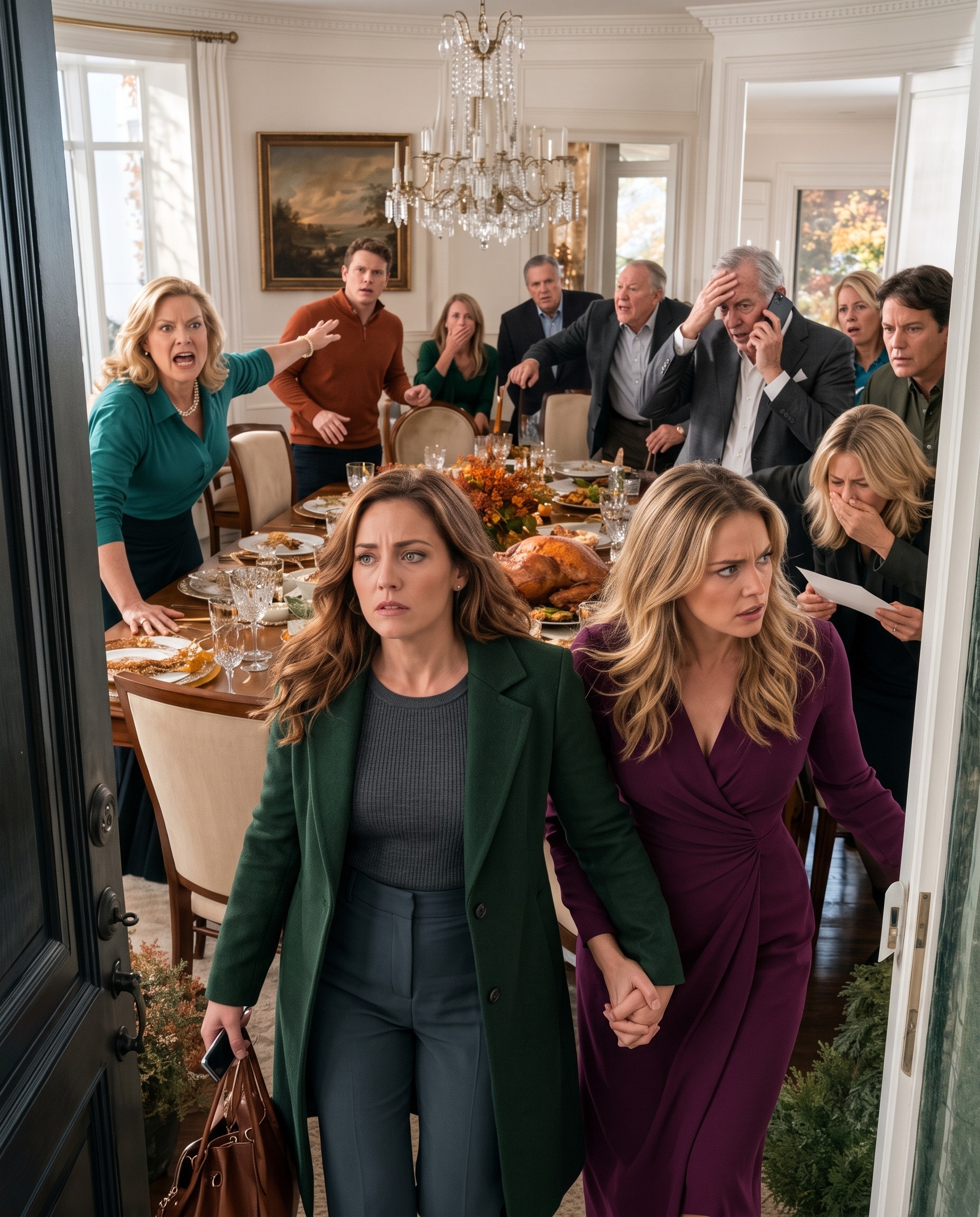
“Dad?”
His voice was careful.
“Are you somewhere safe?”
I looked at Tessa.
“Yes. I’m at her apartment.”
“Good.”
A pause.
Then he said, “Your mother just called me.”
My stomach tightened.
“Why?”
“Because Eleanor called her first.”
I stopped breathing for a moment.
My father continued.
“Your aunt decided that since Diane has spent years measuring her children by what she thinks they’re worth, she should hear the numbers directly.”
I closed my eyes.
“How much did she tell her?”
“Everything.”
I looked at the clock on Tessa’s stove.
Almost exactly two hours had passed since my mother slapped me.
And somewhere across town, the woman who had thrown me out because I was supposedly an embarrassment had just discovered that the daughter she considered the family failure was already a partner in a multimillion-dollar company—and the sole beneficiary of a $2.3 million trust.
But according to my father, that wasn’t the part that had left my mother speechless.
There was one more thing Aunt Eleanor had told her.
And when Dad repeated it to me, even I had to sit down.
Part 2
“What else did she say?”
My father was quiet long enough that I could hear the low murmur of a television in his house.
Then he said, “Eleanor told her the trust is only the beginning.”
Tessa had moved closer.
I put the phone on speaker.
Dad continued.
“Your aunt named you primary beneficiary of the rest of her estate.”
I knew that part.
At least, I thought I did.
Aunt Eleanor had told me eight months earlier that she wanted to leave me most of what she owned.
What she had refused to tell me was the total value.
She said numbers had a way of becoming louder than intentions.
“Mom knew that?” I asked.
“She does now.”
“How much is the remaining estate?”
Another pause.
“Her attorney will explain it tomorrow.”
“Dad.”
“I don’t have the full figure.”
The way he said it told me he knew enough to understand why Aunt Eleanor had kept it vague.
Then he added, “There’s something else she wanted Diane to know.”
I rubbed the tender side of my face.
“What?”
“She invested in your firm.”
I frowned.
“What do you mean?”
“Apparently she’s been talking to your founding partners for months.”
That made me sit straighter.
My firm, Calder Ridge Properties, was privately held.
Any outside equity deal required careful negotiation.
“How much did she invest?”
“Enough to matter.”
I looked at Tessa.
She whispered, “What is happening?”
I almost laughed.
Not because anything was funny.
Because sometimes your brain reaches a point where disbelief and exhaustion become indistinguishable from humor.
Dad said, “Eleanor wanted you to have options.”
That word stopped me.
Options.
Aunt Eleanor had used it during our visit.
We had been sitting on her screened porch while rain moved across the lake behind her house.
She had poured coffee into two chipped blue mugs and said, “Money is not character, Elise. But money can buy distance from people who confuse control with love. I want you to have options.”
At the time, I had thought she meant the trust.
Apparently, she had been thinking much bigger.
“How did Mom react?” I asked.
My father exhaled.
“First she said Eleanor was lying.”
Tessa shook her head.
“Of course.”
“Then she said you must have manipulated her.”
My fingers tightened around the phone.
That one landed where the slaps hadn’t.
Not because I believed it.
Because it was so predictable.
If Brandon succeeded, he was brilliant.
If I succeeded, there had to be a trick.
Dad continued.
“Then she asked why no one had told her about your partnership.”
I closed my eyes.
There it was.
Not, Is Elise okay?
Not, I shouldn’t have hit my daughter.
Not even, I made a terrible mistake.
Why didn’t anyone tell me she was important?
“What did you say?” I asked.
“I told her maybe you didn’t think your financial statements were required reading before she decided whether to respect you.”
Tessa’s eyebrows went up.
“Dad said that?”
Dad heard her.
“Yes, Tessa. Your father occasionally manages a useful sentence.”
For the first time all evening, I laughed.
It hurt my cheek.
I didn’t care.
Then his voice turned serious again.
“Eleanor’s estate attorney wants to see you tomorrow morning. Nine o’clock. I’ll go with you if you want.”
“I want.”
“Good.”
He hesitated.
“Elise?”
“Yeah?”
“I heard what happened.”
The warmth in the apartment seemed to recede.
“Tessa called you?”
“No. Diane told me.”
That surprised me.
“She told you she hit me?”
“Not at first. She said there had been an argument and you had stormed out. I kept asking questions.”
Of course.
Even in confession, my mother had edited herself.
Dad said quietly, “I’m sorry.”
“You didn’t hit me.”
“No.”
The word came heavily.
“But I spent years seeing how that household worked and convincing myself that staying neutral made me a good father.”
I stared at the tea in front of me.
“Neutrality usually helped the person doing the damage.”
“I know that now.”
I didn’t rescue him from the discomfort.
That would have been my old instinct.
Instead, I said, “Okay.”
Another pause.
“I’ll see you tomorrow,” he said.
After we hung up, Tessa and I sat without speaking.
Finally she said, “Two point three million dollars?”
“That’s the trust.”
“And you own part of Calder Ridge.”
“Yes.”
“And Aunt Eleanor invested in it because of you.”
“Apparently.”
Tessa stared at me.
Then she started laughing.
Not delicately.
She bent forward with both hands over her face.
“Oh my God.”
“What?”
“Mom slapped a millionaire.”
I gave her a look.
“I am not calling myself that.”
“You don’t have to. Math did.”
“Tessa.”
She sat up, wiping her eyes.
“I’m sorry. This is awful. I’m furious. But the timing?”
I tried not to laugh again.
I failed.
For maybe thirty seconds, we sat at her kitchen counter laughing like two people who had been dropped into the wrong movie.
Then my phone lit up.
Mom.
The laughter stopped.
I let it ring.
She called again.
And again.
Then a message appeared.
Elise, call me immediately. We need to discuss what Eleanor has done.
Tessa read it over my shoulder.
“Not what she did.”
“No.”
“Not what happened at dinner.”
“No.”
“What Eleanor has done.”
“Exactly.”
A second message arrived.
There are things you don’t understand about this family.
I turned my phone facedown.
Tessa leaned against the counter.
“Are you going to answer?”
“No.”
“Ever?”
“I don’t know yet.”
That was the truth.
People like to imagine big moments produce instant certainty.
Sometimes they do.
Sometimes your mother hits you in front of your siblings and throws you out, and even then there is still a small, humiliating part of you that remembers being six years old and waiting at the window for her car.
Love does not disappear just because clarity arrives.
It simply becomes harder to misuse.
I spent the night at Tessa’s.
The next morning, I woke before sunrise.
My cheek had faded from burning red to a dull ache.
I stood in her bathroom under white fluorescent light and looked at myself.
There was no dramatic bruise.
Nothing that would make a stranger stop me in the street.
That almost bothered me.
Something enormous had happened, and my face looked nearly normal.
At eight-thirty, Dad picked me up.
He had two coffees in the cup holders.
Mine had exactly one packet of sugar.
I noticed because he remembered.
The attorney’s office occupied the fourth floor of an old brick building downtown.
Inside, everything smelled faintly of polished wood, printer paper, and dark roast coffee.
A receptionist led us into a conference room where two people were waiting.
The first was Judith Hale, Aunt Eleanor’s estate attorney, a silver-haired woman in her sixties whose posture made every chair look temporary.
The second was Kevin Marsh, a financial adviser who managed several of my aunt’s accounts.
Judith shook my hand.
“Elise. I wish we were meeting under calmer circumstances.”
“Me too.”
She glanced at my cheek.
She was polite enough not to ask.
Dad sat beside me.
Judith opened a leather folder.
“Your aunt asked me to be direct.”
“That sounds like her.”
The corner of Judith’s mouth lifted.
“Eight months ago, Eleanor established an irrevocable trust naming you sole beneficiary. The initial funding amount was $2.3 million.”
Even knowing the number, hearing it in that room felt different.
Judith slid a document across the table.
“The trust is not controlled by your mother, your father, your siblings, or any family committee. It is yours.”
I scanned the pages.
Dad stayed quiet.
Judith continued.
“Separately, Eleanor revised her will. You are the principal beneficiary of her remaining estate.”
“Can you tell me the approximate value?”
Kevin opened another folder.
“Based on current assets, property, and market valuation, considerably more than the trust.”
He gave me a range.
For several seconds, I thought I had misheard him.
I looked at Judith.
She nodded.
My throat tightened.
It wasn’t joy.
It wasn’t greed.
It was the unbearable strangeness of discovering that someone had quietly spent years building a safety net under you while you were busy proving you could survive the fall.
“Why?” I asked.
It came out softer than I intended.
Judith looked at me for a long moment.
“Because she trusts you.”
She turned to another document.
“Now, Calder Ridge.”
That got my attention.
Judith explained that Aunt Eleanor had spent months conducting due diligence through an investment entity.
She had met my firm’s founders privately.
Reviewed projects.
Reviewed debt.
Reviewed performance.
And then she had made a significant minority investment.
“Was this charity?” I asked.
Judith’s expression sharpened.
“No.”
I almost relaxed.
Aunt Eleanor would have hated that question.
“She believes the firm is a good investment,” Judith said. “She also believes your leadership is undervalued.”
Kevin slid another paper toward me.
There was a letter attached.
Handwritten.
Aunt Eleanor’s handwriting.
I read the first line.
Elise, if you are reading this after another member of your family has decided your value for you, remember that their inability to measure you was never proof that you were small.
I stopped.
Dad looked away.
Judith gave me time.
The rest of the letter was shorter than I expected.
Aunt Eleanor reminded me that money could disappear.
Jobs could change.
Markets could fail.
What mattered, she wrote, was that I never again stay anywhere merely because I believed I had nowhere else to go.
At the bottom she had written one final sentence.
Options, kid. Always keep options.
I folded the letter carefully.
Dad’s hand rested briefly on my shoulder.
My phone vibrated inside my purse.
Once.
Twice.
Then again.
When we finished the meeting, I checked it.
Four missed calls from my mother.
One from Brandon.
And a message from him that said: