Twelve years was not an arbitrary number. It was exactly how long ago I had joined the Army, beginning the conflict that had shaped nearly every interaction between my parents and me since.
My father stared at the envelope.
“I thought you destroyed it.”
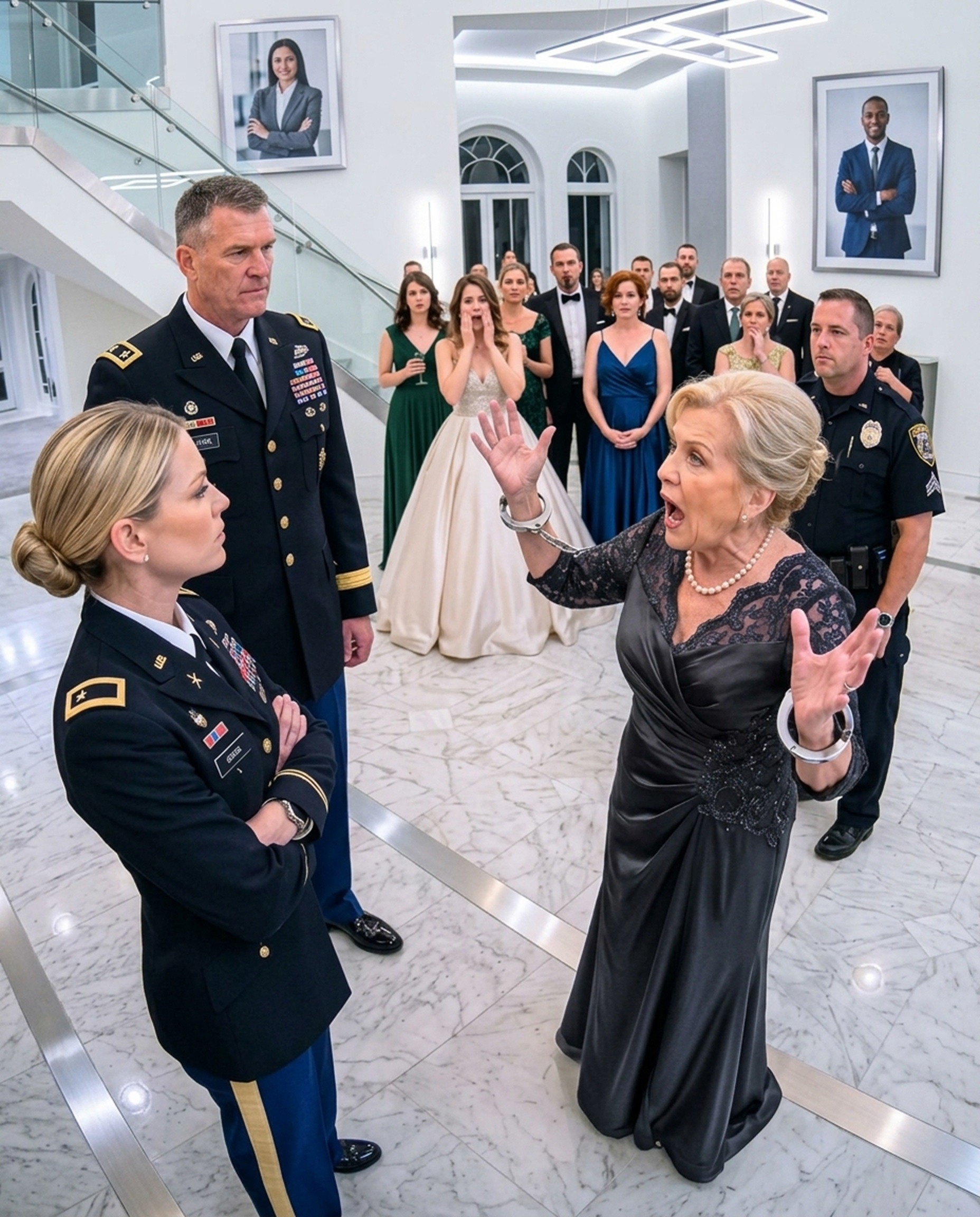
“You asked me to keep it until Emily came back.”
Dad’s expression tightened.
“That was before.”
“Before what?”
Neither of my parents answered. With Lucas’s ceremony minutes away, Reed returned the envelope to his jacket and promised we would speak afterward, but I no longer cared only about why my mother had destroyed my uniform.
Someone had been keeping a message from my father for twelve years.
And judging by my mother’s face, she already knew exactly what it said.
PART 3: What My Father Had Hidden for Twelve Years
Lucas’s wedding ceremony gave us a temporary reason to postpone the questions surrounding the envelope. He cried when Sophie walked down the aisle, although I knew he would deny it later, and for a while I allowed myself to forget everything except watching my younger brother marry the woman he loved.
The reception offered another brief stretch of normalcy as Alexander danced with me, my parents danced together, and Lucas demonstrated that marriage had done nothing to improve his dancing. Even Penny, their Labrador and honorary assistant flower girl, contributed by stealing part of a dinner roll while everyone was distracted.
About ninety minutes into the reception, Samuel Reed approached my table and asked me to walk outside with him. We stopped beneath an old oak tree, where he finally explained that he and my father had known each other since 1998, when Dad had recently taken control of Carter Medical Systems from my grandfather.
Reed remembered my father constantly talking about me when I was young, including the time I dismantled a blood-pressure cuff because I wanted to understand how it worked. I remembered being grounded for that experiment, but according to Reed, Dad had privately told the story with pride.
“You and I apparently knew very different versions of Robert Carter.”
“Perhaps.”
Then Reed told me something that completely contradicted the history I thought I understood. While I was in medical school, my father had approached him about establishing an anonymously funded fellowship for physicians entering military medicine.
“My father told me joining the Army was a waste of my education.”
“I know.”
Reed explained that Dad had been frightened rather than ashamed. My grandfather had returned from war carrying experiences he rarely discussed, and Dad had spent much of his life believing that keeping his children away from military service meant protecting them.
There was another fear underneath that one. Dad suspected I was joining the Army partly because I wanted to escape him and the future he had designed for me at Carter Medical Systems, and although that wasn’t my entire reason, I couldn’t pretend he had been completely wrong.
Reed eventually held out the twelve-year-old envelope. Dad had originally instructed him to give it to me if I ever approached Reed for advice, but two weeks later, my father suddenly called and told him not to deliver it because he had been informed that I had rejected the fellowship and wanted nothing to do with the family company.
“I never knew there was a fellowship.”
“I know that now.”
My stomach tightened because only one question remained.
“Who told him I rejected it?”
Reed glanced toward the reception building before answering.
“Your mother.”
He had only discovered the truth the previous day after speaking with Alexander. For twelve years, Reed had assumed I had deliberately rejected my father’s attempt to support my career, while I had spent those same twelve years believing Dad considered that career an embarrassment.
The envelope contained more than a letter. Inside was also the original agreement establishing the Carter-Reed Military Medicine Fellowship, and Reed revealed that although Carter Medical Systems eventually withdrew from the program, my father had continued financing it personally.
“For how long?”
“Twelve years.”
I broke the seal after Reed left and began reading the letter my father had written when I first chose the Army. He admitted that he had spent so much time telling me what my future should look like that he had forgotten to ask what kind of future I wanted for myself.
“If you choose the Army, I will be afraid. I need to admit that. Not ashamed. Not disappointed. Afraid.”
Dad explained the fear created by my grandfather’s wartime experiences, but the sentence that affected me most came later.
“But fear is mine to manage. It should not become a fence around your life.”
He wrote that the fellowship was his attempt to understand military medicine rather than control me with money. If I chose a different path from the one he had imagined, he wanted to learn enough about that path to understand that leaving his company did not necessarily mean I was leaving him.
The second document proved those feelings had never disappeared. The fellowship had been renewed every year, and the latest amendment carried my father’s signature dated only six weeks earlier.
Dad found me beneath the tree shortly afterward and admitted that he had continued funding the program because eventually he realized I had been right. There were lives worth living beyond the one he had planned for me.
“Did you know Mom told General Reed I rejected it?”
His silence answered before his words did. He admitted learning the truth three years earlier but never telling me because by then I rarely came home, while I reminded him that I had stopped coming precisely because I believed my family wanted nothing to do with the life I had chosen.
“Why didn’t you call me?”
“Pride.”
“And then?”
“Time.”
“That’s not a reason.”
“No. It’s an excuse.”
I asked why Mom had lied, but Dad refused to answer for her. Instead, he looked through the reception windows toward his wife of thirty-eight years and told me something I had never expected to hear.
“I think your mother has spent twelve years believing that if she tells you the whole truth, she’ll lose you.”
Across the room, Mom picked up her purse and headed toward the side exit. Dad gave me a small nod, and this time I followed her.
Not because I wanted another argument, but because the story I had believed for twelve years was already falling apart.
Now I needed to know what my mother had been so afraid of that she had allowed me to believe my father was ashamed of me.
PART 4: The Truth My Mother Was Running From
I followed Mom toward the side exit before she could disappear from the reception. She had spent twelve years allowing me to believe my father despised the career I had chosen, and now that I knew she had deliberately told General Reed I rejected a fellowship I had never even heard about, I wasn’t willing to let another convenient silence stretch into another decade.
She stopped when she realized I was behind her, but she didn’t turn around immediately. When she finally faced me, the anger she usually wore around my military career was gone, replaced by an uneasiness that made my father’s warning suddenly seem possible.
“You told General Reed I rejected the fellowship.”
Mom tightened her grip on her purse but didn’t deny it.
“You were leaving anyway.”
“I didn’t know it existed.”
“You didn’t need it.”
“That wasn’t your decision.”