Part 5: The Fight Over the Twelve
The legal fight lasted three weeks.
It felt longer. Todd and Clara’s lawyer demanded financial records, medical notes, and proof that Grandpa understood his estate plan. Evelyn answered with documents that were almost irritatingly thorough.
Mr. Bell had taken notes during Grandpa’s final meeting.
Walter insists wooden crate and contents pass intact to granddaughter. She has not been informed of potential value. Decision deliberate.
When Evelyn read that sentence aloud, I nearly laughed.
Grandpa had planned the explosion and then conveniently died before hearing it.
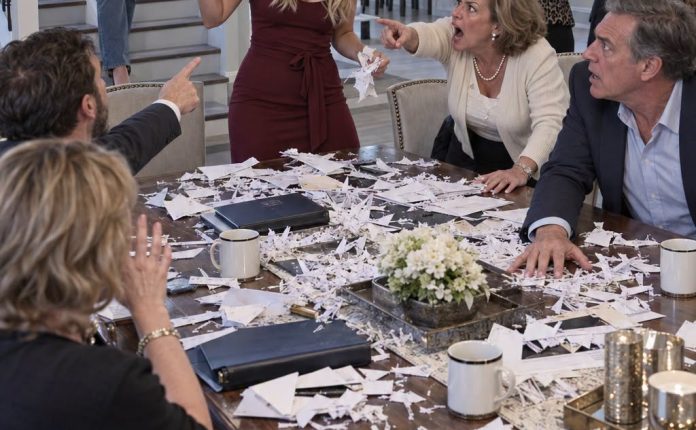
We met once for mediation.
Todd sat across from me with his arms folded.
Clara would not look at the birds’ photographs spread across the table.
“Three ways,” Todd said. “That’s fair.”
“The cabin wasn’t divided three ways.”
“That’s different.” “How?” “Grandpa knew what the cabin was worth.”
“He knew what the birds were worth too.”
Clara’s face tightened. “So he loved you more?”
The anger drained out of me.
There it was beneath all the arguments.
Not greed. Not entirely. Hurt.
I had felt the same thing when Mr. Bell handed me a crate of peeling ducks.
“I don’t think that’s what this means,” I said.
“Easy for you to say.”
“No. It isn’t.” I told them about Grandpa’s letter.
Not every private word. Enough.
Todd looked embarrassed when I repeated the part about ownership.
Clara cried when I explained that Grandpa believed security mattered to her.
“He could have just told us he loved us,” she whispered.
That sentence silenced the room.
“So could we,” I said.
The challenge ended two days later.
Their attorney advised them that the will was clear, the evidence of Grandpa’s intent was overwhelming, and continuing would mostly make lawyers richer.
The birds were legally mine.
I did not feel victorious.
I went home and slept fourteen hours.
Then I called Dr. Vale.
“I want Jethro’s name remembered.”
“So do we.” “I also don’t want to spend the rest of my life choosing between groceries and electricity.”
“You shouldn’t have to.” The museum itself could not afford the full appraised value, but a preservation foundation could.
We built an agreement slowly.
The foundation would acquire the complete set for a substantial amount below what a private auction might bring. The birds would enter the state museum’s permanent collection and could never be separated for individual sale.
I would have enough to clear my debts, replace my dead car, repair my roof, and create retirement savings.
I kept one condition. The exhibit would begin with Jethro Wheeler’s story, not the auction estimate.
Dr. Vale agreed immediately. When the newspaper published the discovery, my phone became unbearable.
Collectors called. Reporters called. People I had not heard from since high school suddenly remembered we were friends.
Todd called ten times in one hour.
I did not answer. Clara came to my door.
“How much are you getting?”
“Enough.” “It’s family money.” I looked at her.
“No. It’s history that passed through our family.”
Her eyes hardened, then softened.
“Why you?” “I think Grandpa believed I would keep them together.”
“So he thought I wouldn’t?”
“I don’t know everything he thought.”
She started crying. For once, I did not close the door.
We sat on the porch where the crate had once gotten wet.
Clara admitted she had spent years believing Todd was Grandpa’s favorite. I admitted I had believed she was rewarded for leaving while I was punished for staying.
We had built whole stories about each other without ever asking whether they were true.
Before she left, Clara touched my shoulder.
“I’m still jealous.” “I know.”
“I’m trying not to hate you.”
“That’s generous.” She laughed despite herself.
It was not forgiveness. But it was movement.
Todd remained furious. He sent one final message.
Hope the rotten birds keep you warm.
I almost answered. Instead, I deleted it.
The next morning, museum staff arrived with padded cases.
One by one, they lifted the decoys from my dining table.
The canvasback went last. I ran my finger beside the burned initials.
J.W. For weeks, I had thought those letters meant money.
Now they meant a man nearly erased.
When the front door closed behind the museum team, the house became startlingly quiet.
The crate remained on the floor.
Empty. For a moment, I panicked.
Then I remembered Grandpa’s words.
You stay. I sat beside the empty crate until sunset.
This time, staying did not feel like being left behind.
The End: What the Birds Were Worth
The museum opened the Jethro Wheeler exhibit six months after Grandpa died.
By then, I had a different car.
I paid off my credit cards. I repaired the leak above my bedroom. I cut my diner schedule from six days a week to three.
The first morning I woke without fearing a bill, relief felt less like joy than ordinary breathing.
Dr. Vale insisted I speak at the opening, though public speaking terrified me more than debt collectors.
So on a Saturday evening in September, I stood behind a podium under lights bright for my comfort.
The twelve birds rested inside a glass case.
Conservators had stabilized the flaking paint without making them look new. The chipped beak remained chipped. The scratches remained visible. Age had not been polished away.
They looked exactly like themselves.
Behind them hung the photograph of fourteen-year-old Grandpa standing beside Jethro in 1947.
The exhibit title read: JETHRO WHEELER: THE TWELVE THAT CAME HOME.
Clara stood near the back with her husband.
Todd did not come. I unfolded Grandpa’s final letter.
“I inherited these birds because nobody else wanted them,” I began.
People laughed softly. “My brother called them wood rot.”
More laughter. “I almost burned them.”
The room became quiet. I told them about Jethro.
About a poor carver who made working birds before anybody decided working birds belonged in galleries.
I told them about Grandpa.
About the frightened fourteen-year-old boy who carried twelve decoys into hiding because a difficult man trusted him.
Then I read one sentence from Grandpa’s letter.
Make somebody say Jethro Wheeler’s name before they say what the birds are worth.
I lowered the page. “So let me tell you what they are worth.”
People leaned closer. “They were appraised at more money than I had made in my entire life.”
I looked toward the glass case.
“But that is not what they are worth.”
My voice began shaking. “They are worth seventy-eight years of a promise kept by a boy who became an old man.”
I looked toward Clara. “They are worth the name of an artist who almost disappeared.”
Then I thought of the will reading, Todd’s smirk, Clara’s bank papers, and myself standing beside a crate believing I had been loved least.
“And to me, they are worth the moment I learned that being given something heavy does not always mean you were valued less.”
I had to stop. The room was silent.
Grandpa was not perfect. Death did not make him wise about everything.
He should have told us more when he was alive.
He should have said plainly that he loved us instead of leaving us property shaped like riddles.
But he had seen something in me I had never recognized.
I could carry weight. Not endlessly.
Not alone. But without immediately turning everything into a price.
After the speech, a little girl approached the display.
“Why is that duck broken?” she asked Dr. Vale.
“Because it survived a long time.”
I had to look away.
Two weeks later, Todd came into the diner near closing.
He sat in my section.
I poured him coffee. For a while, neither of us spoke.
“The cabin has termites,” he finally said.
I laughed so suddenly I nearly dropped the pot.
Todd stared at me. Then he laughed too.
For thirty seconds, we were children again.
Not healed. Not innocent. Just siblings who remembered the same house.
Before leaving, he put five dollars beneath his cup.
Todd had never tipped me more than two.
I took it as progress.
The old crate now sits in my living room.
Inside the false bottom are copies of Grandpa’s diary, his letter, the photograph with Jethro, and one other thing.
Pete’s seven-hundred-dollar transmission estimate. I had walked into Halloran’s shop hoping one ugly duck could rescue my car.
Instead, twelve wooden birds forced me to reconsider almost everything I believed about inheritance.
I used to think wealth meant never fearing a bill.
Money helped. I will never romanticize being broke.
Poverty did not make me kinder. Mostly, it made me tired.
Having enough changed my life.
But Grandpa’s real gift was not the money.
It was evidence that he had noticed me.
For years, I thought staying made me the sibling who had failed to build a better life.
Grandpa saw it differently. You stay. That is rarer than people think.
Last Tuesday, I visited the museum alone.
A school group stood around the decoys.
Their teacher pointed toward the canvasback.
“Notice the tail pattern. That was one of Wheeler’s signatures.”
A little girl pressed closer to the glass.
“Who saved them?” The teacher pointed to Grandpa’s photograph.
“A boy named Walter Haines.”
I stood behind them and covered my mouth.
For seventy-eight years, Grandpa had carried Jethro’s name.
Now strangers were carrying Grandpa’s.
That was when I finally understood the inheritance.
Not the money. Not the birds.
Not even the secret. It was the act of remembering someone carefully enough that their life could outlast your own.
When I returned home, sunset stretched across the porch where the crate once sat in the rain.
The phone rang. It was Clara asking if I wanted dinner Sunday.
I said yes. Then I made coffee and sat beside the old crate while the light moved slowly across the floor.
For the first time since Grandpa died, the house did not feel like a place where something had been taken from me.
It felt like a place where something had been entrusted.
The birds were safe. Jethro was remembered.
Grandpa was gone. And I was still here.
Somewhere inside the quiet, I could almost hear the patient rasp of a carving knife moving through wood.
The End.