
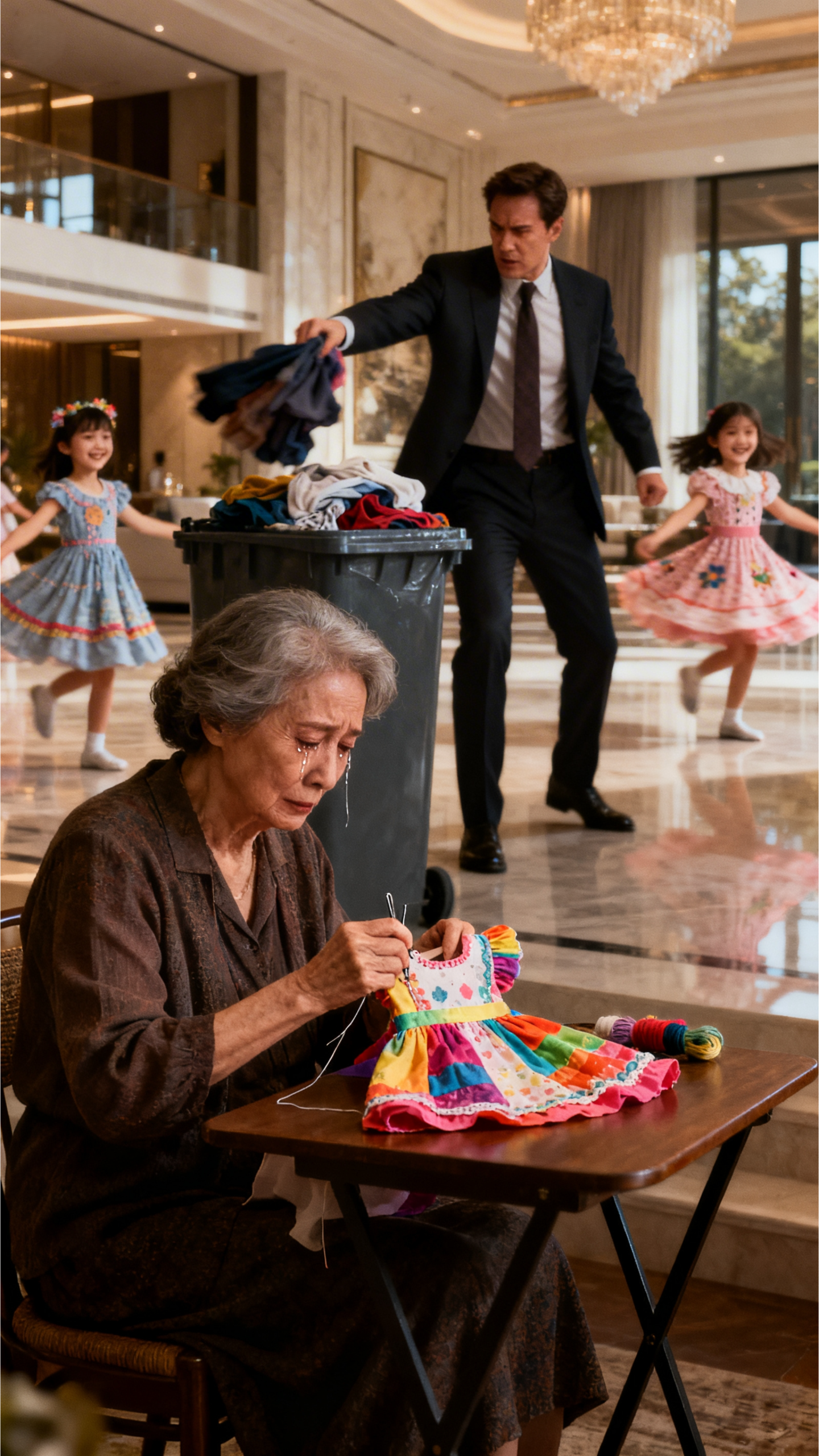
There is a quiet dignity in creating something with your hands—something that doesn’t cost much money but costs time, patience, and care. For me, sewing was never just about fabric or thread. It was about memory. It was about love made visible.
I still remember the first dress I ever made.
It wasn’t perfect. The seams weren’t straight, and the hemline was uneven. But when my son was little, he would sit nearby and watch me work, his small hands playing with scraps of fabric as I guided the needle through cloth. Back then, we didn’t have much, but there was warmth in our home. There was laughter. There was closeness.
Back then, nothing about us was embarrassing.
As the years passed, life changed in ways I couldn’t fully keep up with. My son grew up, worked hard, and eventually stepped into a world that looked nothing like the one he came from. A world filled with polished surfaces, expensive tastes, and unspoken expectations.
When he got married, I told myself this was a good thing.
He had found stability. Opportunity. A better life.
But I didn’t realize that somewhere along the way, “better” had started to mean “different.” And “different” slowly turned into “distant.”
At first, I ignored it. I convinced myself that adulthood simply created space. That love didn’t disappear—it just changed shape.
But love shouldn’t feel like it’s fading.
And yet, every missed call, every shortened visit, every polite but distant conversation began to stack up until it formed something undeniable.
Still, I held onto one thing: my tradition.
Every birthday, I would make something special for my grandchildren. I would carefully pick out fabric, imagining what colors would make them smile. I would measure, cut, and stitch, pouring hours into something that couldn’t be bought in a store.
Because I wanted them to feel seen.
To feel loved.
To feel that someone, somewhere, made something just for them.
It was never about affordability.
It was about intention.
That’s why that moment—the one where my son snapped—cut so deeply.
It wasn’t just rejection.
It was dismissal.
“Stop bringing homemade things. It’s embarrassing.”
The word didn’t just describe the dresses—it redefined them. It stripped them of their meaning and replaced it with shame.
And when he threw them away…
It felt like watching my love being discarded in real time.
I replayed that moment over and over again in my mind. Not just what he said, but how he said it. The tone. The frustration. The urgency to remove those dresses from sight, as if their presence alone was unacceptable.
I went home with questions I didn’t know how to answer.
Had I misread everything?
Had I been holding onto something that no longer had a place in his life?
Or worse—had I become something he needed to hide?
The doubt settled deep.
Until the truth began to surface.
That phone call with my daughter-in-law didn’t just bring clarity—it brought contrast. Because while my son saw embarrassment, my grandchildren saw joy.
And children don’t pretend.
Their happiness in those photos was real. Unfiltered. Unaffected by status or perception.
Which meant the problem wasn’t what I made.
It was what it represented.
And when I finally understood that my son’s reaction wasn’t about me—but about his own insecurities—it shifted something inside me.
Not completely.
Not instantly.
But enough to see beyond the hurt.
Because beneath his anger was fear.
Fear of judgment.
Fear of not belonging.
Fear that the life he came from would somehow diminish the life he had now.
And my dresses… were reminders of that past.
Simple. Honest. Impossible to disguise.
So I made a decision.
If my love had become something he wanted to hide, I would bring it into the light.
Not to embarrass him.
But to remind him.
Remind him that where he came from was not something to be ashamed of.
It was something to be honored.
The birthday party became more than just a celebration—it became a quiet turning point.
Watching my grandchildren run around in those dresses, seeing my daughter-in-law wear something I had made with pride—it felt like reclaiming something that had almost been lost.
And when people began to notice…
When they complimented the dresses…
When they admired the craftsmanship, the uniqueness, the care—
I saw it.
That shift in my son’s expression.
It was subtle, but it was there.
The embarrassment… fading.
Replaced by something else.
Something softer.
Something closer to pride.
But pride born from validation is complicated.
Because it raises a question that doesn’t have an easy answer.
Would he have felt that same pride… if no one had said anything?
Would he have seen value in my work… if it hadn’t been recognized by others?
And now, as I sit with that question, I realize that healing isn’t just about forgiveness.
It’s about understanding what has truly changed—and what hasn’t.
My son reached out.
He asked for something from me.
And part of me wanted to say yes immediately. To fall back into that familiar role. To feel needed again.
But another part of me hesitated.
Because being needed… is not the same as being valued.
And love—real love—should never depend on whether the world approves of it.
So now, I find myself standing at a quiet crossroads.
Not between love and rejection.
But between acceptance and truth.
And I don’t know yet which path I’ll choose.
All I know is this:
I will always love my son.
But I’m still learning whether he truly sees me… or only the version of me that finally fits into his world.