When the emergency team arrived, Margaret initially resisted their attempts to examine her. She insisted that she didn’t need a hospital because her family would return home soon, but Oliver gently encouraged her to accept their assistance.
“Grandma, please let them help you. I don’t want you to be frightened anymore.”
His words seemed to reassure her, and she eventually agreed to accompany the paramedics. At the hospital, doctors discovered that Margaret was dehydrated, severely undernourished, and experiencing significant memory difficulties requiring further assessment.
The medical team explained that she needed consistent supervision and support. While Margaret received treatment, Oliver sat beside me in the waiting room and quietly asked whether he was going to be punished.
“Dad told me not to talk to strangers about what happens at our house. Will he be angry because I told you?”
“Oliver, asking for help when someone isn’t safe is never something you should feel ashamed of.”
A short time later, Oliver’s father, Grant Bennett, arrived at the hospital. He was a forty-year-old warehouse supervisor who worked long shifts, and his exhausted appearance suggested he’d already been struggling with considerable responsibilities.
Grant demanded to know what had happened to his mother, but his initial reaction was defensive. He claimed Margaret had always been stubborn and frequently refused assistance, making it difficult for the family to care for her.
I explained the conditions we’d discovered and told him about the food Oliver had been bringing home from school. Grant fell silent when he realized his son had been trying to feed Margaret because he believed nobody else understood how badly she needed help.
“I thought he was exaggerating. I didn’t realize things had gotten this serious.”
Grant turned toward Oliver and asked why he hadn’t explained the situation more clearly. The little boy looked at his father and answered with a sadness that immediately changed the conversation.
“I did tell you, Daddy.”
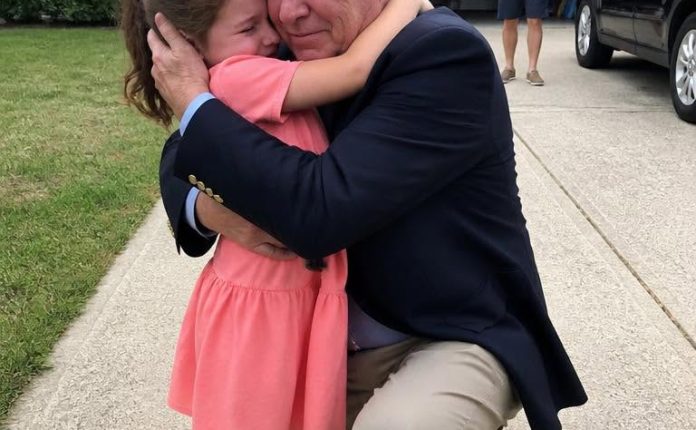
Grant covered his face, visibly shaken by the realization that he’d dismissed his son’s repeated warnings. After a long silence, he knelt beside Oliver and admitted that he’d failed to listen.
Oliver explained that he’d been terrified of losing Margaret because his grandfather had died the previous winter. Since that loss, Margaret’s memory and ability to manage everyday activities had gradually deteriorated.
Grant had mistaken the changes for ordinary aging and grief, believing that occasional visits and grocery deliveries were sufficient. His sister, Patricia, had made similar assumptions, and neither had recognized how much Margaret’s condition had worsened.
Oliver, however, spent afternoons at his grandmother’s house while his father worked. He witnessed her forgotten meals, increasing confusion, unopened correspondence, and difficulty moving around the house.
For weeks, he’d tried to explain what he was seeing, but the adults interpreted his concerns as childish anxiety. They hadn’t understood that he was describing a genuine medical and caregiving emergency.
Hospital social workers became involved and helped the family establish a plan to protect both Margaret and Oliver. Grant and Patricia cooperated with the professionals, acknowledging that their mother needed more consistent care.
Margaret remained hospitalized for several days before entering a rehabilitation program. Although doctors remained cautious about her recovery, she gradually regained strength with proper meals, medical attention, and supervision.
Oliver visited regularly with his father, bringing drawings and stories from school. Sometimes he simply sat beside Margaret and held her hand, but he no longer had to shoulder the responsibility of keeping her safe by himself.
PART 3: THE LETTER THAT CHANGED EVERYTHING
Three weeks after meeting Oliver outside Brookfield Elementary School, I received a handwritten letter at the police station. His handwriting was large and uneven, but the message was so sincere that I read it several times before placing it carefully inside my desk.
“Dear Officer Rebecca, Grandma has people helping her now, and she eats breakfast, lunch, and dinner. Dad says I don’t have to worry about her all day anymore, and yesterday I played soccer after school because I remembered how much I love it. Thank you for believing me. Love, Oliver.”
The letter reminded me that helping Margaret hadn’t only improved an elderly woman’s circumstances. It had also allowed a seven-year-old boy to stop acting like a caregiver and begin enjoying his childhood again.