I went to work at the emergency dispatch center and quickly became absorbed in the day’s calls. Between a highway collision, an elderly woman who’d fallen, and a teenager worried about his younger brother swallowing a battery, I’d almost forgotten about the fair.
At 2:18 that afternoon, my phone rang while I was eating lunch in the break room. The caller ID displayed Whitman Elementary, and my experience handling emergency calls immediately made me fear something had happened to Morgan.
His fifth-grade teacher, Bernadette Quinn, answered in an unusually strained voice. She’d taught at Whitman for twenty-six years and was normally composed, but that afternoon she began crying before explaining why she’d called.
“Mrs. Quinn, is Morgan hurt?”
“No, Khloe. He’s completely fine, but I need you to come to school as quickly as possible.”
She confirmed that Morgan had brought fifty dollars to the fair and asked whether I’d given him the money. When I said yes, she struggled to contain her emotions before telling me that I needed to see what he’d done with it.
I informed my supervisor about the family emergency and drove to Whitman, imagining every possible explanation. Perhaps someone had stolen Morgan’s money, he’d gotten into an argument, or he’d spent it on something that had caused trouble.
Mrs. Quinn was waiting outside the gymnasium wearing a cardigan decorated with orange pumpkins. Her eyes were red, and she silently directed me toward the double doors when I asked where Morgan was.
Inside, the gym was crowded with children enjoying carnival games, face painting, pizza, and a bouncing inflatable play area. Orange and black streamers hung from the basketball hoops, and the smell of popcorn filled the room.
I eventually spotted Morgan sitting on the bottom row of the bleachers, surrounded by approximately fourteen children. He wasn’t eating pizza, holding prizes, or enjoying the games, but every child around him had something from the fair.
Some held slices of pizza or enormous cookies, while others displayed tickets and small toys. One little boy had a tiger painted on his face and carefully held a goldfish in a plastic bag.
For an instant, I feared the children had pressured Morgan into buying everything for them. Then I noticed his peaceful smile, the same expression he’d worn when the judge finalized his adoption.
Mrs. Quinn explained that she’d watched Morgan purchase fifty tickets when the fair opened at eleven-thirty. Instead of visiting the games, he’d walked directly to the bleachers where children without spending money usually gathered.
Every year, some students remained there throughout the fair because their families couldn’t afford tickets, had forgotten to provide money, or were dealing with difficult circumstances. Mrs. Quinn had occasionally purchased food or tickets for them, but she’d never truly considered what it felt like to sit there watching everyone else.
Morgan had joined the children, divided his tickets among them, and then spent his own twelve dollars purchasing additional tickets. He’d helped everyone get pizza, cookies, or opportunities to play while refusing to buy anything for himself.
I was overwhelmed by his generosity, but Mrs. Quinn explained that the money wasn’t the main reason she’d called. Something Morgan had said to a quiet boy named Eli Parker had affected her even more deeply.
Eli was ten years old and had recently arrived at Whitman after entering his fourth foster placement that year. He lived at Harbor House, a temporary group home, and rarely spoke to anyone.
When Morgan offered him tickets, Eli refused to accept them. Instead of insisting, Morgan sat quietly beside him before returning with a giant cookie.
Eli eventually accepted the gift and asked why Morgan was being so kind. Mrs. Quinn began crying again as she repeated my son’s explanation.
“When I was four, I didn’t have any tickets either. A lady sat beside me and bought me a giant cookie, and eventually she became my mom.”
Only then did I understand that Morgan hadn’t simply given away his money. He was offering other children the same kindness that had once changed his own life.
PART 3: THE COOKIE THAT BROUGHT TWO BOYS TOGETHER
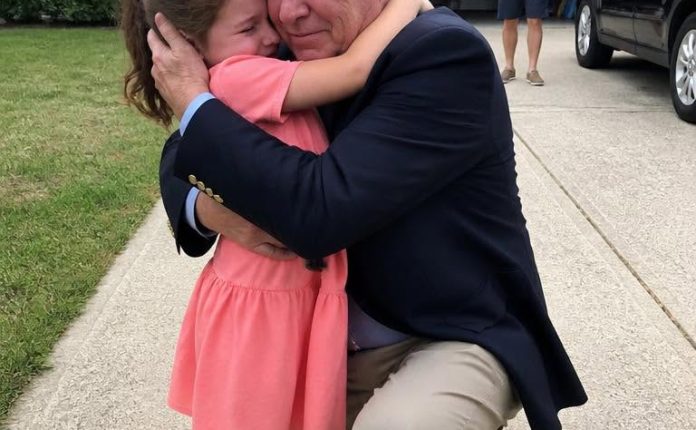
I crossed the gym toward Morgan, struggling to control my emotions as I approached the bleachers. When he noticed me, his smile briefly disappeared because he worried that spending all his money on other children might have disappointed me.
He explained that I’d told him to purchase whatever made him happy, but he wasn’t certain whether he’d made a foolish choice. I knelt in front of him and gently asked whether helping the other children had brought him happiness.
Morgan looked around at the students enjoying their food and prizes before answering. His expression softened as he realized that seeing them included in the celebration had meant more to him than any game or cookie.