At my sister’s wedding, staff said, “your name isn’t here”; i called her; she laughed: “no one wants you here, you really thought you’d be invited?”; my parents agreed; i left a silver box and walked away; hours later, my phone kept ringing; my parents froze; her husband asked, “what else… have you lied about?”; “this marriage may be over.”
PART 1: The Birthday Camera That Showed Me Who Truly Saw Me
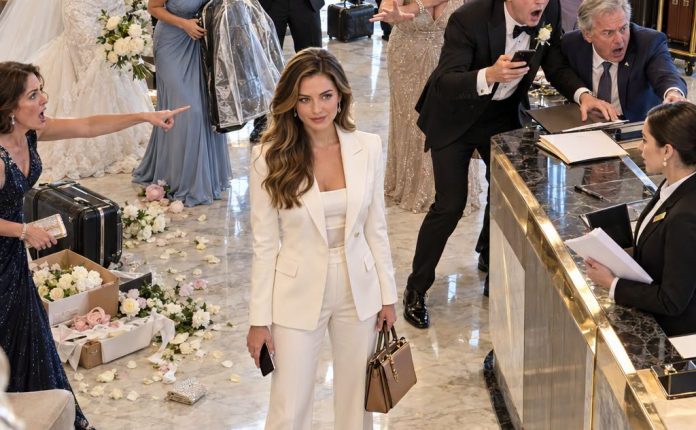
The woman at the wedding desk looked at the guest list for the third time before lifting her eyes to mine. Behind her, music drifted through the marble lobby of the Plaza Hotel, softened by the murmur of hundreds of guests arriving for my sister’s wedding. I stood there with a small silver box in my hands, still foolishly hoping she had simply missed my name.
“I’m sorry,” she said quietly. “Camille Torres isn’t on the list.”
I looked past her toward the ballroom doors.
White flowers rose from enormous arrangements. Servers moved between guests carrying champagne. Everything Bianca had spent months describing was happening only a few yards away.
Apparently, the bride’s sister was the one detail they had deliberately left out.
I stepped aside and called Bianca.
She answered sounding irritated before I finished saying hello.
“What do you want?”
“I’m at the hotel. They’re saying I’m not on the guest list.”
There was a pause.
Then my sister laughed.
“You actually came?”
My fingers tightened around the silver box.
“I’m your sister.”
“That doesn’t mean you were invited.”
The words hurt, but not because they surprised me.
If I was honest, I had been preparing for that sentence for most of my life.
My name is Camille Torres. I was twenty-eight when I stood outside Bianca’s wedding, although sometimes I felt as if the important parts of my life had begun eighteen years earlier, on the morning of my tenth birthday.
I grew up in a three-story brownstone on Manhattan’s Upper East Side. From the sidewalk, our family looked like something polished for a magazine: money, education, charity events, summers in the Hamptons, and family photographs where everyone wore the right clothes.
Inside that house were two daughters.
Only one seemed to matter.
Bianca was three years older than me. She had the larger bedroom and the designer wardrobe. She had private lessons, elaborate parties, and parents who rearranged their schedules for anything important in her life.
I learned early that my events were easier to move.
Or forget.
When I turned ten, I woke before anyone else because I had been counting down to double digits for weeks. I imagined balloons in the kitchen, maybe pancakes, maybe a cake waiting somewhere.
Bianca had once had pony rides and catered food for one of her birthdays.
I would have been thrilled with a banner.
Instead, I went downstairs and found my mother on the telephone.
Lorraine Torres barely looked at me.
She was discussing Bianca’s upcoming cotillion with someone, flipping through notes while coffee cooled beside her.
“Mom?”
She held up one finger.
I waited.
Finally, she covered the receiver.
“What is it, sweetheart?”
“It’s my birthday.”
Her expression changed just enough to tell me she had forgotten.
“I know. Of course I know.”
She glanced at the clock.
“We’ll do something later.”
My father, Gregory, had already gone to work.
Later never came.
Dinner was ordinary. Bianca complained about something at school. Mom discussed dresses. Dad took a business call.
Nobody mentioned cake.
I went upstairs feeling ridiculous for caring.
That night, someone knocked softly on my bedroom door.
My grandmother entered carrying a carefully wrapped package.
Carmen Delgado was my father’s mother, but even as a child I understood she saw our family differently from the way my parents did. She watched people closely. She listened past whatever they were trying to show.
“Happy birthday, my darling girl.”
She sat beside me on the bed.
Inside the package was not a toy.
It was a camera.
A real one.
The metal body felt heavy in my hands. A leather strap curled across my lap. I was afraid to touch the lens.
“Grandma, this is too much.”
“No.”
She brushed a strand of hair from my face.
“You notice things other people miss.”
I looked at her.
“You have an artist’s eye, Camille.”
No one had ever said anything like that to me.
She tapped the camera gently.
“One day, other people will see what I see.”
At ten, I heard praise.
Years later, I understood she had also been making a promise.
That camera became the thing I carried when the rest of my family became too loud.
I photographed light across our staircase.
Rain on windows.
People on sidewalks.
My grandmother laughing when she thought no one was watching.
I learned that a photograph could reveal what a person’s words tried to conceal.
Bianca remained the center of my parents’ attention.
I became good at occupying the edges.
By high school, photography was no longer a hobby.
I worked constantly.
I entered competitions, built a portfolio, stayed late in the school studio, and applied to programs my parents barely knew existed.
Then I received a full scholarship to Parson School of Design.
For once, I thought achievement might force my family to see me.
At graduation, I had also been selected to give a speech.
I practiced for weeks.
On the morning of the ceremony, I came downstairs wearing my cap and gown and holding the pages even though I had already memorized every line.
Bianca sat at the table scrolling through her phone.
My parents were looking at something on Dad’s laptop.
“The ceremony starts at two,” I said. “We should probably leave around one.”
Mom did not look up immediately.
When she finally did, her expression was painfully familiar.
“Camille, something came up.”
I stood still.
Dad closed the laptop halfway.
“Bianca has a networking event with Caldwell Capital Partners.”
Bianca smiled slightly at her phone.
“This could be important for her career,” Dad continued. “We need to be there.”
I looked down at my gown.
“It’s my graduation.”
“We know.”
“I’m giving a speech.”
Mom sighed.
“Sweetheart, there will be other events.”
There would never be another high school graduation.
I knew that.
Apparently, they did too.
Dad looked at the camera bag sitting near my things.
“Honestly, Camille, you should think about a practical direction eventually. Photography isn’t much of a career.”
Bianca finally looked up.
She did not defend me.
She gave me the smallest satisfied smile.
I went to graduation alone.
I stood backstage pretending I was not searching the audience.
Then the curtain moved.
I saw her.
My grandmother was sitting in the front row.
When my name was announced, Carmen stood before anyone else did.
She clapped so hard that the people beside her turned to look.
I gave my speech.
I walked across the stage.
I accepted my diploma.
And every time I looked toward the audience, I focused on the one person who had shown up.
Afterward, she found me outside and took both my hands.
“I’m proud of you.”
Those four words nearly broke me.
She must have seen something on my face because her grip tightened.
“Remember something.”
I nodded.
“The most valuable things in a family are not always the things everyone fights to possess.”
I frowned slightly.
She continued.
“Sometimes the important things are passed quietly to the person who understands them.”
I thought she was speaking metaphorically.
Years later, I would discover just how literal she had been.
After graduation, I packed two suitcases.
I bought a one-way ticket to San Diego.
I did not stage a dramatic goodbye.
There was no point.
My parents had already demonstrated where their attention would go.
Bianca had the career they understood.
I had a camera.
So I left.
For the next ten years, I built my life quietly.
At first, that meant carrying equipment for other photographers.
I hauled light stands through hotel corridors. I changed batteries while couples argued. I adjusted veils in parking lots and learned which moments disappeared if you hesitated for even half a second.
I watched everything.
I learned everything.
Then I began taking my own clients.
One wedding became three.
Three became ten.
I hired help.
I built a team.
Valora Studios grew slowly enough that I almost failed to notice when it stopped being a struggling photography business and became something substantial.
My family never noticed at all.
When Bianca called, she talked about herself.
She told me about promotions.
Her office.
Her campaigns.
The people she knew.
One evening, she called while I was sitting in my downtown San Diego office, floor-to-ceiling windows behind my desk and industry awards displayed along the wall.
“I just closed a seven-figure campaign,” she announced.
“That’s great, Bianca.”
“I’m senior marketing director now.”
“Congratulations.”
She paused.
“What about you?”
I almost smiled.
“What about me?”
“Still doing those little photo shoots?”
I looked through the glass wall at the people working for the company I had built.
“We’re doing well.”
“That’s nice.”
She told me Mom and Dad were hosting a celebration dinner.
Then, almost casually, she added that I was not invited.
“Immediate family only.”
The sentence settled between us.
Immediate family.
I did not challenge her.
“I hope you have a beautiful evening.”
Then I hung up.
Valora Studios had generated more than four million dollars in revenue the previous year.
Bianca did not know.
My parents did not know.
I had stopped telling myself that one more accomplishment would finally make them curious.
Then my grandmother died.
And the secret she left behind changed everything.
END PART 1