For six months, my 13-year-old son said every paycheck from his Saturday job was going toward the bike he desperately wanted. But the bike never appeared, and Evan grew strangely secretive about his money. Then his boss called me, asked one question about those paychecks, and I grabbed the car keys.
I found out Evan had taken a Saturday job when he came home one evening smelling like fryer oil and lemon soap.
“Where have you been, buddy?”
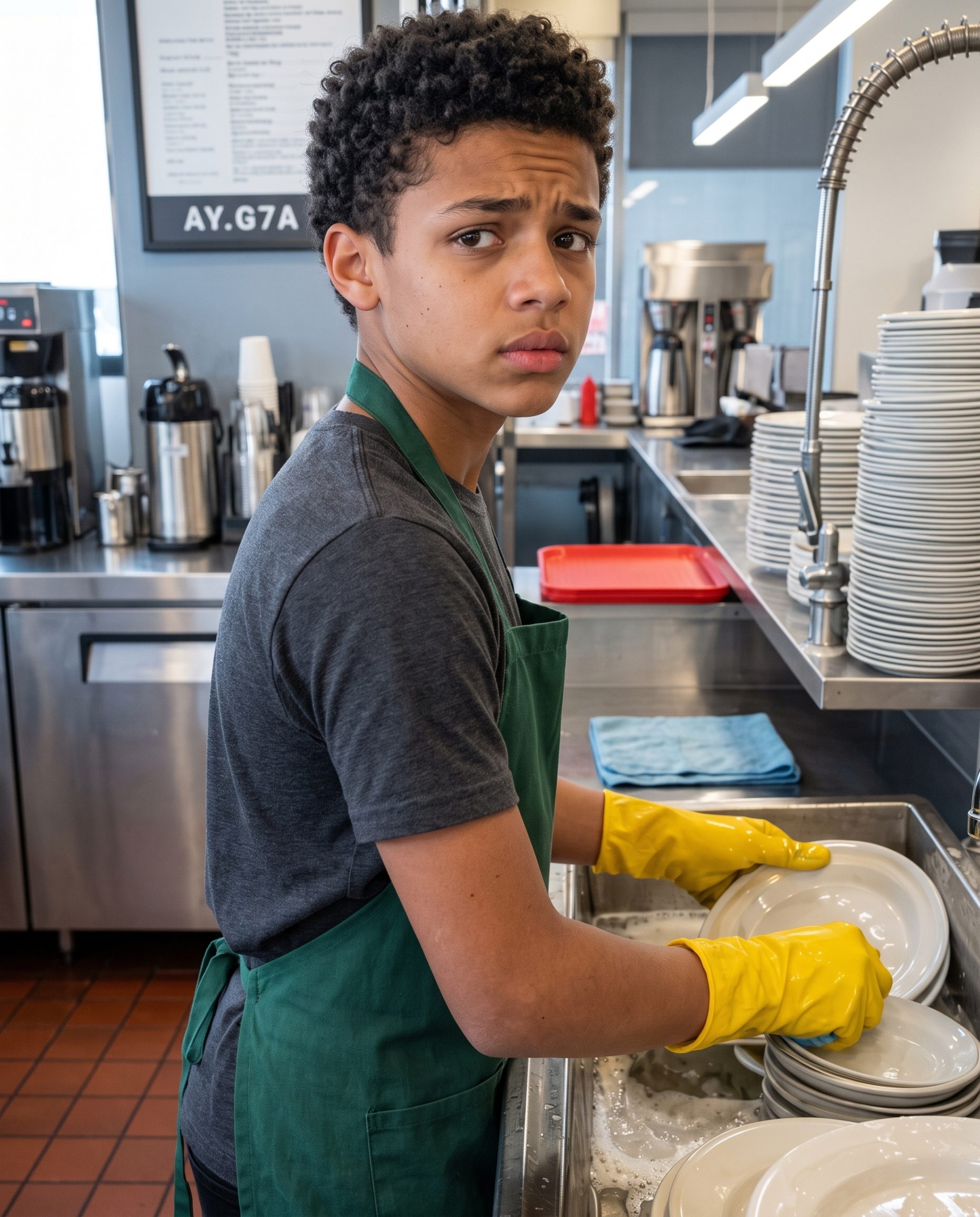
He froze.
Evan grew strangely secretive about his money.
“Working.”
“Working where?”
“Mr. Alvarez lets me help at the diner on Saturdays.”
I stared at him.
“You got a job without telling me?”
He looked down.
“I wanted to earn the bike myself, Mom.”
Six months later, there was still no bike.
“You got a job without telling me?”
Every week, when I asked how much he’d saved, he gave me the same answer.
“Almost enough.”
A week earlier, I’d walked past his bedroom and seen him shove a handful of bills into his backpack the second he noticed me.
Every week, when I asked how much he’d saved, he gave me the same answer.
Another Saturday, he came home almost two hours late with mud dried around his sneakers and a tear near one sleeve.
“What happened to you?”
“Fell walking home.”
“Where’s your paycheck?”
His eyes dropped.
“Somewhere safe.”
I stared at him.
“Evan, what’s going on?”
“Nothing, Mom.”
“Where’s your paycheck?”
I’d started wondering what “nothing” meant when my phone rang one Saturday afternoon.
Mr. Alvarez’s name was on the screen.
“Hello?”
“Ma’am? We need to talk about Evan.”
I stood up from the kitchen table.
“Did he do something?”
“I honestly don’t know how to answer that…”
“Ma’am? We need to talk about Evan.”
“What does that mean?”
He went quiet for a second.
Then he asked, “Do you know what he does with every paycheck?”
“He says he’s saving for a bike.”
“Everything that boy tells you is a lie.”
Before I could answer, Evan shouted somewhere behind him.
“Do you know what he does with every paycheck?”
“Please! Don’t tell my mom!”
Something crashed.
“Evan?” I shouted.
Mr. Alvarez came back on, breathing hard.
“Ma’am, get here now. Your son tried to do it again.”
The line went dead.
“Ma’am, get here now. Your son tried to do it again.”
The first thing I saw when I ran into the diner was a metal bus tub lying upside down on the floor.
And right in the middle of it stood Evan.
His apron was soaked. One sleeve of his shirt was twisted at the shoulder. His cheeks were red from arguing.
The first thing I saw when I ran into the diner was a metal bus tub lying upside down on the floor.
Across from him, an older man had both hands wrapped around a white envelope.
Evan had the other end.
“Give it back, Cal!” my son shouted.
“No.”
“It’s mine!”
“Exactly,” Cal snapped. “That’s why I’m not taking it.”
The diner owner, Mr. Alvarez, spotted me near the door.
Across from him, an older man had both hands wrapped around a white envelope.
“Ma’am… Thank God.”
Evan spun around.
The second he saw me, he let go of the envelope.
“Mom?”
“What’s going on?”
Nobody answered.
I pointed at the envelope.
“Is that your paycheck?”
Evan stared at the floor.
“Yes.”
“And why was Cal holding it?”
The second he saw me, he let go of the envelope.
Cal tossed the envelope onto the counter.
“Because your son tried giving me every cent.”
I looked at Evan.
“What?”
“It’s not like that,” he muttered.
Cal folded his arms.
“Then tell her what it’s like.”
Evan’s head snapped up.
“Stay out of it.”
“Evan,” I said sharply.
“Because your son tried giving me every cent.”
He went quiet.
I picked up the paycheck.
“Evan, why would you give Cal your money?”
His answer came immediately.
“Because I owed him.”
Cal slapped one palm against the counter.
“There! That’s what he keeps saying.”
“I did owe you,” Evan argued.
“For what?”
“For helping me.”
“Evan, why would you give Cal your money?”
“You helped me carry 12 boxes of potatoes last month. Am I supposed to sign over my Social Security?”
Evan glared at him.
“That’s different.”
“Why?”
“Because it is.”
I looked at Mr. Alvarez.
“Can someone please tell me what’s happening?”
“You helped me carry 12 boxes of potatoes last month. Am I supposed to sign over my Social Security?”
The owner leaned against the register.
“How much do you think Evan has saved toward that bicycle?”
The question caught me off guard.
“I don’t know. He keeps saying he’s almost there.”
Mr. Alvarez nodded slowly.
“That’s what he tells us too.”
Evan looked like he’d just been slapped.
“Don’t.”
“How much do you think Evan has saved toward that bicycle?”
Mr. Alvarez ignored him.
“You know how many paychecks he’s actually kept in six months?”
I waited.
“One,” he said.
For a second, I thought I’d misunderstood.
“One?”
Mr. Alvarez nodded.
“The first one.”
I turned toward Evan.
“Where did the others go?”
“Mom…”
“Where?”
“You know how many paychecks he’s actually kept in six months?”
He didn’t answer.
That silence frightened me more than the wrecked dishes.
Evan had wanted that used mountain bike for almost a year. When he’d first shown it to me, I offered to help pay.
“No. I want to earn it myself, Mom.”
At the time, I’d been proud.
“No. I want to earn it myself, Mom.”
Evan was 10 when we lost Jeremy. After that, he stopped asking me for things.
The diner was small and family-owned.
Mr. Alvarez knew us from the neighborhood, and once I learned about the job, I let Evan keep it because the work was limited to Saturday afternoons: bussing tables, light cleanup, and dishroom help.
Evan was 10 when we lost Jeremy. After that, he stopped asking me for things.
I looked around the diner again.
“Where did the money go?”
Evan folded his arms.
“It’s mine.”
“Yes, it is. And you’re 13.”
“That doesn’t mean you get to know everything, Mom.”
“Where did the money go?”
“No, Sir. But when your boss calls me because you’re trying to hand an adult your entire paycheck and breaking dishes over it, privacy gets a little smaller.”