His fingers slipped beneath the mattress, and when his hand came back into view, a folded cloth pouch was clenched between them.
The responder nearest him immediately told him to stop moving and set it down.
My husband obeyed, but his eyes never left the pouch.
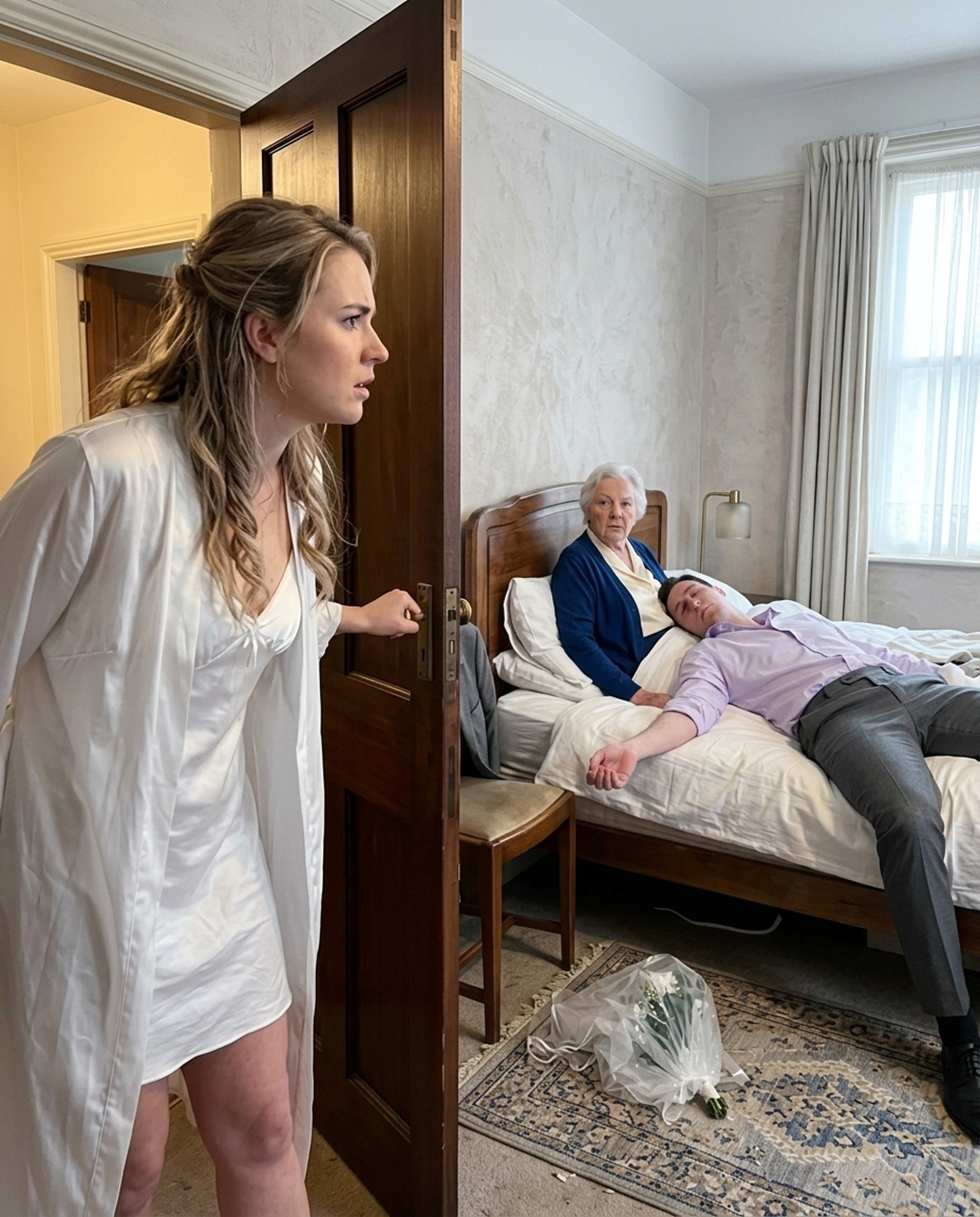
His grandmother did.
She looked at the responder, then at me, then toward the bedroom door as though she were calculating which person she could still control.
“That has nothing to do with this,” she said.
Nobody had accused her of anything yet.
That mattered.
The pouch was placed on a clean surface while the responders concentrated on getting my husband downstairs and into the ambulance.
I caught only a glimpse inside when the fabric unfolded slightly: sealed alcohol wipes, a small capped syringe, and a narrow piece of paper covered with handwriting.
His grandmother saw me looking.
“You don’t understand our family,” she said.
I stared at her.
“I understand my husband said no.”
For the first time since I had walked into that bedroom, she had no quick answer.
My husband was weak enough that the responders did not let him walk.
As they rolled him through the hallway, he reached for my hand.
“Come with me.”
“I am.”
His grandmother followed us to the front door.
One responder turned and told her there was not enough room for everyone.
“I’m his grandmother.”
My husband opened his eyes.
“Not her.”
The words were quiet.
They still stopped her.
I rode with him.
During the drive, pieces of the previous night started returning to him in fragments.
He remembered going into his grandmother’s room because he had been raised to believe refusing the ritual would humiliate his mother and insult the older relatives who had gathered for the wedding.
He remembered being angry with himself for agreeing.
He remembered the drink.
She had brought it in a small glass and told him it would help him relax enough to sleep.
He said no.
She laughed.
He said no again.
Then she started talking about family duty.
According to him, she told him that every groom before him had managed one simple night without creating drama, and that if he truly intended to be a husband, he needed to prove he could put the family above his own discomfort.
He had taken one sip only because he wanted the argument to end.
The taste was wrong.
Bitter.
He set the glass down.
Then he started feeling heavy much faster than he expected.
At the hospital, while we waited for the staff to finish the first round of checks, he suddenly grabbed my hand harder.
“The sheet.”
“What about it?”
“I knocked the glass over.”
I leaned closer.
He shut his eyes, concentrating.
“That stain. I knocked it out of her hand when she tried to make me drink more.”
That explained the dark patch near his side.
It did not explain the puncture.
He knew that too.
He looked at the small mark on his arm and went pale again.
“I remember her getting mad.”
“What happened after that?”
“I don’t know.”
He swallowed.
Then another fragment returned.
“A pinch.”
He touched the area beside the puncture without pressing it.
“I thought she scratched me.”
He looked toward the hospital-room door as if he expected her to walk through it.
“She said I was making this harder than it needed to be.”
After that, he remembered nothing until my voice woke him the next morning.
The hospital staff did not speculate about what had been in the drink or the vial.
They documented his condition, the puncture, his account of what he remembered, and the fact that an unknown vial and the cloth pouch had been found in the room.
That restraint helped me more than I expected.
I did not need another person telling us what the story meant before the facts were clear.
I had already spent one night being told that something disturbing was harmless because his family had a name for it.
I was done accepting labels in place of answers.
A few hours later, my husband’s mother arrived.
She came alone.
She looked exhausted, still wearing the clothes she had put on that morning after hearing that her son had been taken to the hospital.
She hugged him first.
Then she looked at me.
“I’m sorry.”
I could not tell what she meant.
For the wedding night?
For her mother?
For believing the tradition?
Maybe all of it.
My husband asked her a question before I could.
“Did Dad do this too?”
Her face changed.
Not dramatically.
Just enough.
He noticed.
“So he did.”
She sat down.
She told us her husband had spent their wedding night in the same room with the family matriarch decades earlier, although the matriarch at that time had been someone else.
He had returned the following morning sick, groggy, and furious.
The family said he had drunk too much.
He insisted he had not.
Nobody believed him.
His wife had been young, overwhelmed, and terrified of starting her marriage by accusing the oldest woman in the family of lying.
So she had let the explanation stand.
My husband stared at his mother.
“Did he have a mark on his arm?”
She looked down.
“I don’t remember.”
“Think.”
She rubbed her palms together.
Then she nodded once.
“There was a bruise near his elbow. I thought it came from the reception.”
My husband turned his face away.
For several seconds, all I could hear was the low mechanical hum from the room around us and footsteps in the hallway.
His mother started crying.
Not loudly.
“I should have told you.”
“Yes,” he said.
She flinched.
He did not take it back.