My mother had been dead for 9 days when I found the secret she had protected for nearly 40 years. I expected the locked drawer in her bedroom to contain jewelry or old photographs. Instead, it held the name of a man who changed everything I knew about myself.
Her house still smelled like lavender hand cream and coffee. Every room felt paused, as if she might return from the grocery store and ask why I was going through her things. I had been delaying the bedroom because it felt too intimate, too final. But the estate lawyer needed documents, and grief did not excuse paperwork.
The drawer in her old walnut dresser had always been locked. As a child, I assumed it contained Christmas presents. As a teenager, I decided it held private letters. As an adult, I stopped wondering. After the funeral, I found a small brass key taped underneath the dresser.
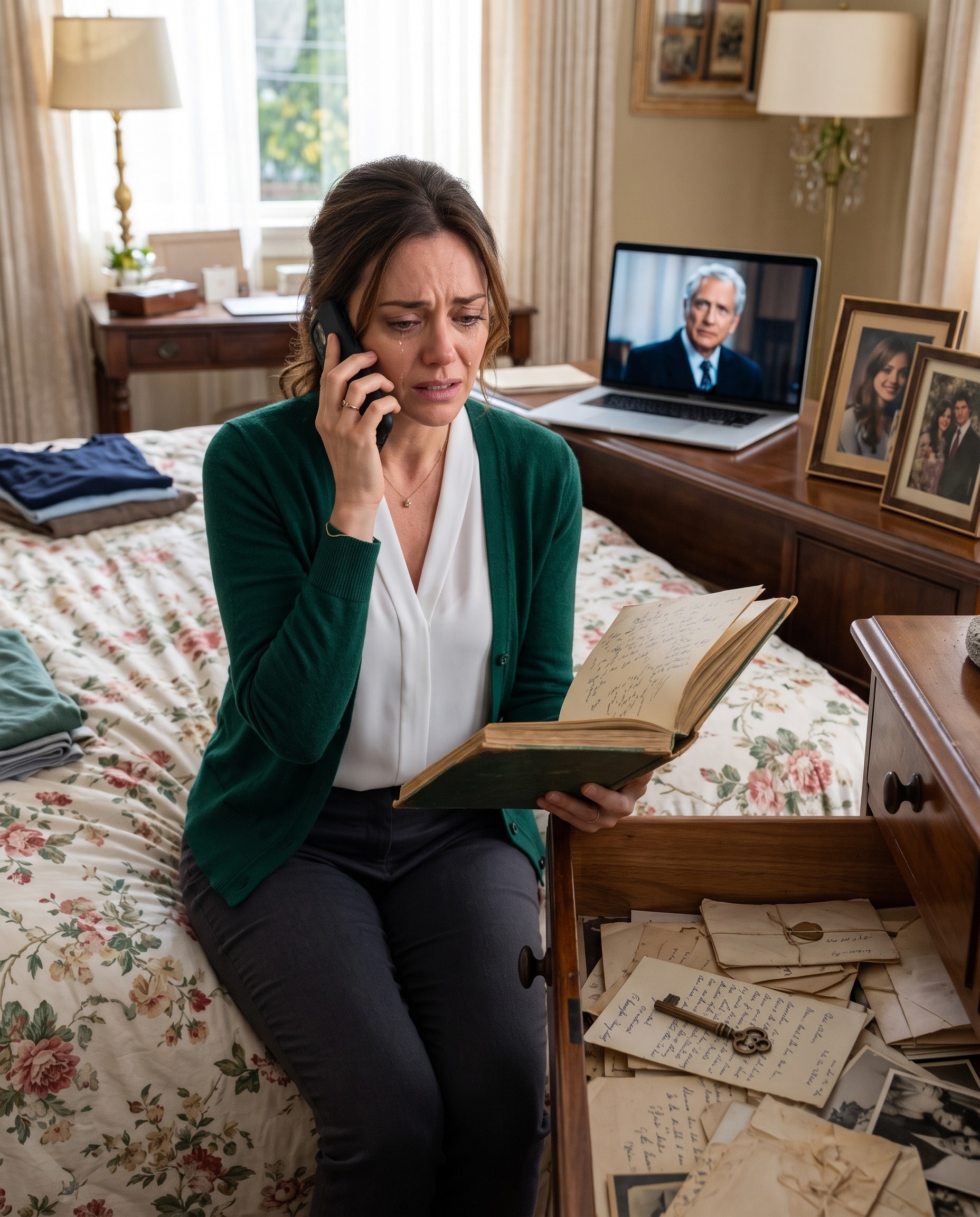
Inside were several envelopes, a velvet jewelry box, and a thick green yearbook.
Margaret Ellis, Senior Year, 1974.
I sat on the edge of her bed and opened it.
My mother appeared on page after page with the long brown hair she had kept until I was born. In a photograph, she stood beside the debate team, smiling as though the future had never frightened her. In another, she was laughing with friends beneath a banner for the spring dance.
For a few minutes, I forgot I was grieving.
Then I reached the autograph pages in the back.
Most messages were ordinary: promises to stay in touch, jokes I did not understand, wishes for college and marriage. Near the bottom of the final page, written in dark blue ink, was a message longer than the rest.
“To Margaret. I will find you again. I promise. Love, James.”
I read it 3 times.
My father’s name was Robert.
Robert Bennett had raised me from infancy. He taught me to ride a bicycle, sat beside me through fevers, paid for college, walked me down the aisle, and died when I was 31. Nothing in my childhood had ever suggested another man mattered to my mother in any serious way.
Yet the words “I will find you again” felt less like a schoolboy farewell and more like a promise made after something had already been taken away.
I searched the yearbook index.
James Fuller. His senior portrait showed a handsome boy with dark hair, serious eyes, and the kind of confident smile photographers probably loved. Beneath his name were several activities: student council, debate club, baseball.
Class President. Most Likely to Succeed.
I stared at his face longer than I meant to.
Something about the eyes bothered me.
I carried the yearbook downstairs, opened my laptop, and searched his name with the school and graduation year.
The result appeared almost immediately.
Honorable James A. Fuller, retired Superior Court judge, Savannah, Georgia.
There were photographs from retirement ceremonies, legal conferences, charity dinners, and newspaper interviews. He was 71 now, silver-haired and thinner, but those same dark eyes looked back at me from every photograph.
My eyes. I told myself that was ridiculous.
Thousands of people had dark eyes.
Still, I found a public office number, then a personal number listed through a civic association.
For nearly an hour, I stared at it.
Finally, before courage could disappear, I called.
A man answered after 4 rings.
“Hello?” My throat tightened. “Is this James Fuller?”
There were 8 seconds of silence.
I know because I watched the timer on my phone.
Then the stranger on the other end whispered 2 words that made my skin go cold. “Margaret’s daughter.”
Part 2: The Man Who Knew My Name
I gripped the phone tighter.
“How do you know who I am?”
James did not answer immediately.
Finally, he said, “$600 each month.”
I frowned. “What are you talking about?”
“$600 every month. For 38 years. I sent it to a post office box in your mother’s name.”
For a moment, grief disappeared beneath confusion.
“What money?” “I never missed a payment,” he said. His voice was unsteady now. “Not once.”
I stood in my mother’s kitchen staring at the yearbook open beside me.
“Why would you send my mother money?”
Another pause. Then his voice cracked.
“Because you’re my daughter.” The room seemed to tilt sideways.
I lowered myself to the floor because my legs stopped feeling reliable.
“My father was Robert Bennett.”
“I know.” “No. You don’t understand. Robert was my father.”
“I know he raised you.”
“Then what are you saying?”
James inhaled slowly. “Biologically, I am your father.”
I wanted to laugh, scream, hang up, and call my mother all at once. But my mother was dead, Robert was gone, and the only person offering answers was a stranger whose handwriting had been hidden in a locked drawer.
“You’re wrong,” I said. “I wish there were a gentler way to tell you.”
“You have no proof.” “I have your mother’s letters.”
“My mother wrote to you?”
“Yes.” “How many?” “So many I stopped counting.”
My chest tightened. “If you believe this, take a DNA test.”
“I will.” “Immediately.” “Yes.” He agreed so quickly that it frightened me more than denial would have.
I chose the laboratory, verified every step, and paid for the test myself because I needed something tangible in this story that belonged completely to me.
Then came the waiting. During those 2 weeks, I could not look at family photographs normally.
Every picture became an investigation.
I studied my face beside Robert’s. His nose was different. His chin was broader. I had always been told I inherited my mother’s features, but now I wondered whether that explanation had simply been convenient.
Robert holding me on his shoulders.
Robert teaching me to fish.
Nothing about those photographs became less real.
If James was telling the truth, then biology had been hidden from me, but fatherhood had not.
The results arrived on a Thursday afternoon.
I carried the envelope into my mother’s dining room and sat at the table where she used to fold laundry.
My hands shook so badly I tore the paper unevenly.
I read the percentage once.
Then again. 99.99%. Probability of paternity.
James Fuller was my biological father.
I pressed both hands over my mouth.
For 38 years, my mother had watched me celebrate Father’s Day with Robert while another man sent money every month.
38 years of birthdays. 38 Christmases.
38 years of medical forms asking for family history.
38 years of looking into mirrors without knowing whose eyes were looking back.
I called James. He answered before the 2nd ring.
“I got the results,” I said.
He was silent. “So did I.”
I closed my eyes. “Tell me everything.”
James spoke softly. “Not on the phone.”
“Why?” “Because there are things about your mother you deserve to hear while looking at someone who was there.”
I hated that he was right.
We agreed to meet at a quiet restaurant outside Savannah the following Saturday.
“Did my mother love you?”
James did not hesitate. “Yes.”
Then he added, “And that was exactly why they made sure we never got to choose.”