
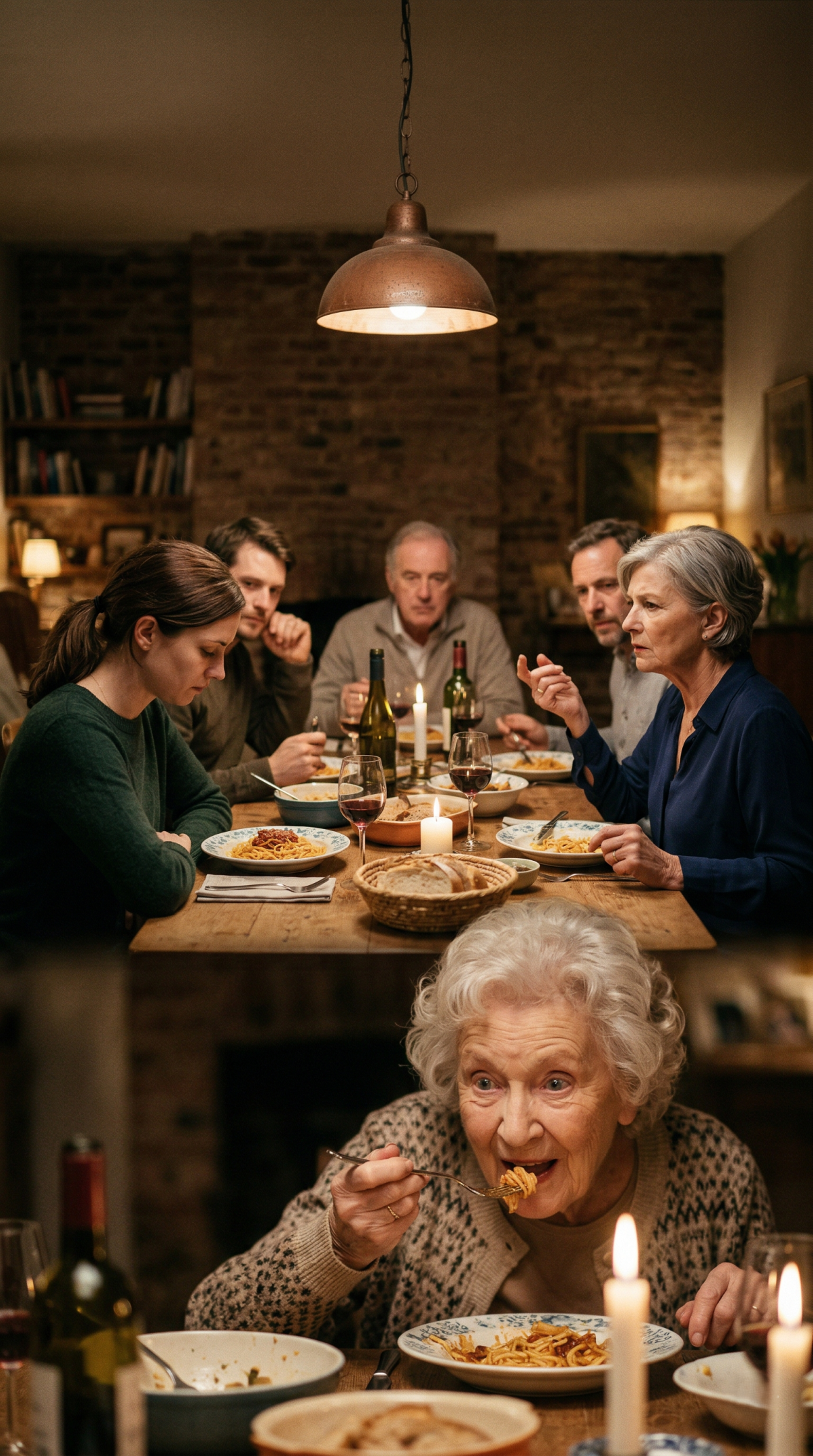
There’s a particular kind of silence that can cut deeper than words—the kind that sits at a dinner table, disguised as politeness, but felt like rejection.
That’s what family dinners became for me.
When I first married into the family, I wanted to belong. I wanted to contribute, to be seen not just as someone who married in, but as someone who added something meaningful. Cooking felt like the most natural way to do that.
Food, to me, was love.
It was how I was raised. It was how care was expressed in my home. You didn’t just say you appreciated someone—you showed it. You spent time preparing something, thinking about what they liked, putting effort into every detail.
So I brought that same intention into my new family.
The first dinner, I remember being nervous—but hopeful. I chose a dish I knew well, something comforting, something I had made countless times before. I watched as everyone served themselves, trying to read their reactions without being obvious.
Everyone… except her.
My mother-in-law didn’t touch it.
At first, I thought maybe she just wasn’t hungry. Or maybe she didn’t like that particular type of food. I brushed it off, telling myself not to overthink it.
But then it happened again.
And again.
And again.
Every family gathering became a quiet repetition of the same pattern. I would cook, carefully and thoughtfully, and she would avoid my dish completely. Not subtly, either. It was deliberate. Noticeable.
Sometimes she would fill her plate with everything else, leaving mine untouched in a way that felt almost… pointed.
Other times, she would make small comments—not direct enough to confront, but clear enough to sting.
“Oh, I’ll stick to what I know I like.”
Or, “I’m a bit picky with food.”
Always said with a light tone. Always said in front of others.
And every time, I felt it.
That subtle shift in the room. The awareness. The unspoken attention drawn toward what she wasn’t eating.
It’s strange how something so small can feel so big.
Because it wasn’t just about food anymore.
It was about acceptance.
Or the lack of it.
Over time, I started to dread family dinners. Not because of the gatherings themselves, but because of what they represented—a stage where I felt quietly judged, consistently dismissed, and unable to defend myself without making things worse.
So I stayed quiet.
I smiled.
I kept cooking.
Because part of me believed that if I just kept trying, something would eventually change.
But years passed.
And nothing did.
Until that potluck.
It wasn’t supposed to be different. Just another gathering, another table filled with dishes, another moment where I would blend into the background.
I almost didn’t bring anything at all.
But habit—and maybe hope—made me do it anyway.
I chose a dish I loved. Not because I expected recognition, but because it felt honest. Something I enjoyed making. Something that felt like me.
When I placed it on the table, I didn’t think much of it.
I had learned not to expect anything.
The room filled with conversation, laughter, the usual rhythm of people gathering over food. Plates were passed around, people sampled a little of everything, and I kept my focus elsewhere, deliberately avoiding watching who took what.
And then it happened.
A voice broke through the noise.
“Who made this?!”
It wasn’t subtle. It wasn’t polite. It was loud—full of surprise, almost disbelief.
The room went quiet.
Every head turned.
And suddenly, attention—something I had spent years avoiding—was focused directly on me.
For a moment, I froze.
Not because I didn’t know the answer—but because I wasn’t used to being asked.
Slowly, almost cautiously, I raised my hand.
“I did.”
The elderly woman who had spoken didn’t hesitate. She stood up immediately, her chair scraping slightly against the floor, and walked straight toward me.
Her expression wasn’t critical.
It wasn’t neutral.
It was… delighted.
“This is incredible,” she said, loud enough for everyone to hear. “You have to give me this recipe.”
There was no hesitation. No politeness masking indifference. Just genuine appreciation, openly expressed.
And for the first time in years, I felt something shift.
Not in the room—but in myself.
Because validation, when it finally comes after being denied for so long, doesn’t just feel good—it feels overwhelming.
I wrote down the recipe right there, my hands slightly unsteady, aware of every pair of eyes still watching.
And among those eyes…
Was my mother-in-law.
Silent.
Observing.
For once, she had nothing to say.
The rest of the evening passed in a blur. Conversations resumed, attention moved on, but something had already changed.
Not loudly.
Not dramatically.
But enough.
On the drive home, the quiet between us felt different.
Not tense.
Not heavy.
Just… unfamiliar.
And then she spoke.
Softly.
Almost carefully.
“Do you still have the recipe for that dish?”
I glanced over, unsure if I had heard her correctly.
She continued, avoiding eye contact.
“I wanted to try it… I just didn’t want to say anything in front of everyone.”
That moment was more complicated than I expected.
Because part of me felt validated.
Part of me felt vindicated.
But another part…
Felt something else.
Something quieter.
Understanding.
Because suddenly, it wasn’t just about rejection anymore. It was about perception. About pride. About the difficulty some people have in acknowledging something they didn’t expect to value.
So I didn’t question it.
I didn’t push.
I just nodded.
And that night, I sent her the recipe.
No commentary.
No expectations.
Just the same thing I had always offered—something made with care.
The following Sunday, when I arrived for dinner, I noticed it immediately.
The dish.
My dish.
Placed at the center of the table.
But this time, it wasn’t coming from me.
She served it confidently, presenting it as part of the meal, offering it to others without hesitation.
And people loved it.
They complimented it.
They went back for seconds.
And I watched.
Quietly.
Taking it all in.
Because I understood what was happening.
She didn’t say it was mine.
She didn’t acknowledge where it came from.
But she didn’t reject it anymore, either.
And strangely…
That was enough.
Because sometimes, change doesn’t come in the form of apologies.
Sometimes, it comes in actions.
In small shifts.
In things that aren’t said—but are still felt.
So I let her have it.
Not because she deserved the credit.
But because I didn’t need it anymore.
I had already received something more important.
Recognition.
Validation.
And the quiet realization that my worth was never dependent on her approval to begin with.