
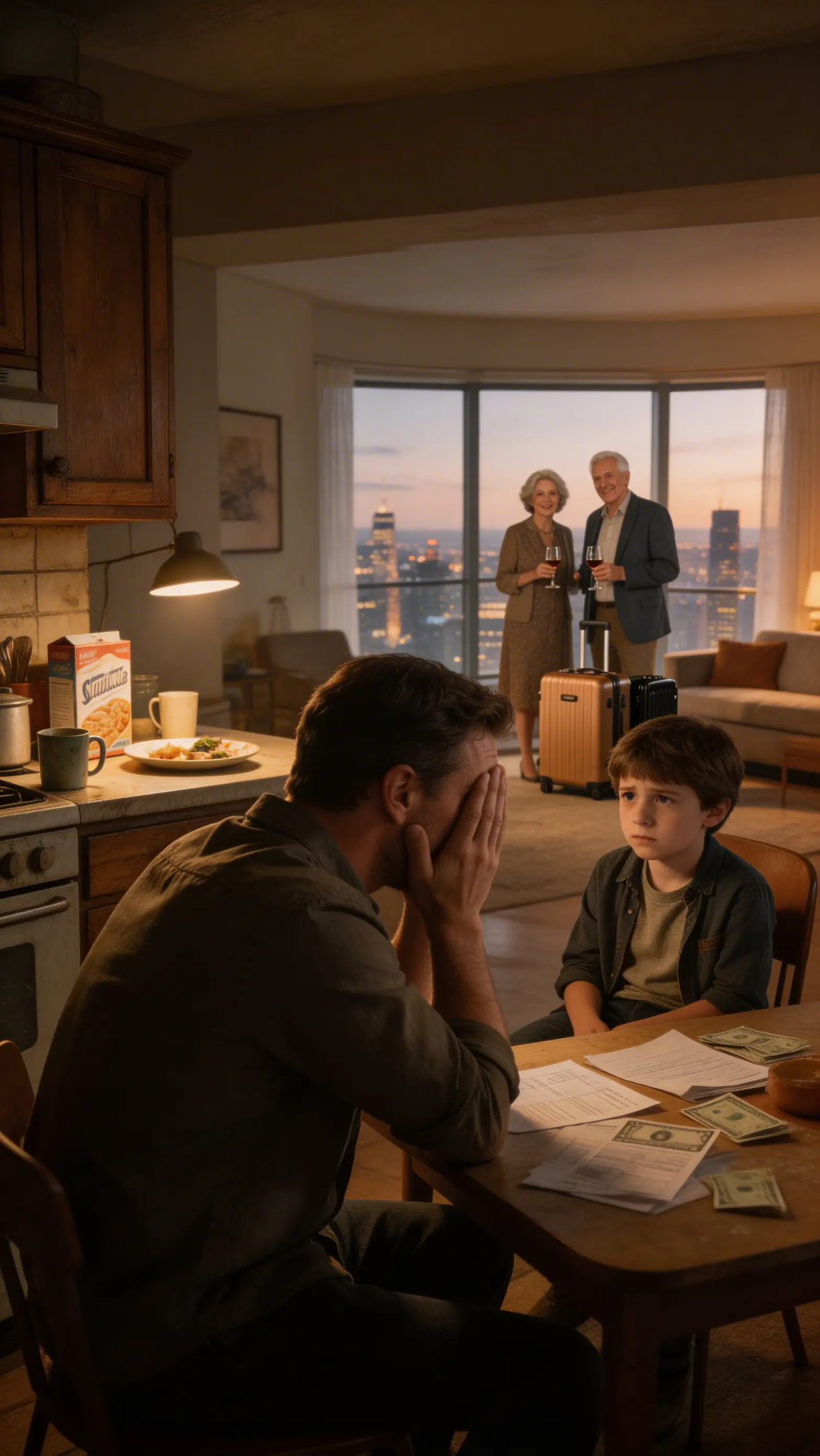
There’s a moment in life when you realize that the people who raised you are no longer the ones protecting you—but the ones you may need protection from.
I didn’t expect that moment to come from my own parents.
When they sold their house three years ago, it wasn’t just a financial decision—it was a declaration. A declaration that they were done being careful, done being responsible, done living within limits. They wanted freedom. They wanted luxury. They wanted to feel like they were finally living the life they believed they had earned.
And in some ways, I understood that desire.
After decades of working, sacrificing, and raising a family, who wouldn’t want to enjoy the rewards?
But there was one problem.
They didn’t have enough to sustain that dream.
I remember sitting with them, trying to explain it gently. I showed them the numbers. I walked them through realistic projections. I pointed out how quickly expenses add up when you’re living in short-term rentals, constantly moving, constantly paying premium prices for comfort and convenience.
They listened—but not really.
They had already made up their minds.
“Don’t worry so much,” they said. “We deserve this.”
That word—deserve—stuck with me.
Because it suggested that reality didn’t matter.
That consequences didn’t apply.
That wanting something badly enough somehow made it sustainable.
So they left.
They traded stability for movement. Ownership for experience. Security for the illusion of endless possibility.
And for a while, it probably felt amazing.
New places. New views. A life that looked exciting and enviable from the outside.
But I wasn’t looking at the photos.
I was thinking about the timeline.
Because money doesn’t last forever—not even when it feels like it should.
And slowly, quietly, that timeline started shrinking.
Until now, there are only two years left.
That’s not a guess.
That’s not an estimate.
That’s reality.
And reality has a way of catching up—whether you’re ready for it or not.
When they called me last month, I knew something had shifted.
It wasn’t just what they said—it was how they said it.
There was a carefulness in their tone, a kind of hesitation that hadn’t been there before. And then they said it.
“You should start looking for a bigger place.”
At first, it didn’t fully register.
A bigger place?
For what?
And then they clarified.
For all of us.
Just like that, the weight of their future landed squarely on my shoulders.
No discussion.
No acknowledgment of what that would mean for me.
Just an expectation.
I refused immediately.
Not because I don’t care—but because I do.
Because I understand what that decision would cost.
I’m not living comfortably. I’m not financially secure. I’m not in a position to absorb additional responsibilities without consequences.
I’m surviving.
Balancing work, expenses, and raising a child in a world that already demands more than it gives.
There is no extra space in my life—for risk, for instability, for someone else’s long-term dependency.
So I said no.
Clearly.
Honestly.
And I thought that would be enough.
I thought they would understand.
But instead of understanding, they pushed harder.
The second call wasn’t a conversation.
It was pressure disguised as concern.
They told me to sell my car.
To move into a smaller apartment.
To make sacrifices now—before they even needed help—just to prove that I loved them.
That’s when the anger hit.
Not slowly.
Not gradually.
But all at once.
Because love is not something you prove by dismantling your own life.
It’s not something you measure by how much you’re willing to lose.
And yet, that’s exactly what they were asking of me.
“It’s your turn,” they said.
As if raising me had been a transaction.
As if everything they had done as parents came with a bill that was now due.
And that’s where something inside me shifted.
Because I realized this wasn’t about survival.
It was about entitlement.
They weren’t asking because they had no choice.
They were asking because they believed they deserved to be taken care of—no matter the circumstances, no matter the consequences.
Even if those consequences fell entirely on me.
And that realization didn’t just hurt.
It scared me.
Because I could suddenly see the future they were heading toward.
A future where the money runs out.
Where the luxury disappears.
Where reality steps in—and demands to be dealt with.
And in that future, they weren’t planning to stand on their own.
They were planning to stand on me.
That’s what sent me into panic.
Not the present.
The future.
Because once they run out of money, there’s no reset button.
No second chance.
No hidden safety net.
There’s only what comes next.
And what comes next is responsibility.
Long-term, expensive, emotionally draining responsibility.
The kind that doesn’t just affect your finances—but your entire life.
And I have a child.
A daughter who depends on me.
A future that I am responsible for protecting.
Every decision I make now shapes her opportunities later.
Her stability.
Her security.
And I cannot sacrifice that.
Not for choices that weren’t mine.
Not for decisions I warned against.
Not for a lifestyle that was never sustainable to begin with.
This is the part no one talks about.
The part where love and boundaries collide.
Because I do love my parents.
That hasn’t changed.
But love does not mean surrender.
It does not mean accepting responsibility for someone else’s mistakes.
It does not mean allowing their lack of planning to become my burden.
And that’s the truth I’m being forced to face.
Not later.
Not eventually.
Now.
Because if I don’t draw the line now, it will only get harder.
More complicated.
More painful.
And eventually… impossible.
So yes, I’m angry.
But underneath that anger is something deeper.
Clarity.
The understanding that I cannot save them from the consequences of their own choices.
And more importantly—
I shouldn’t have to.
Because if I give in now, I won’t just be helping them.
I’ll be sacrificing everything I’ve worked to build.
Everything my daughter depends on.
Everything that keeps us stable in an already unstable world.
And that’s not love.
That’s destruction.
So I’m standing firm.
Not because it’s easy.
Not because it doesn’t hurt.
But because sometimes, the hardest thing you can do for the people you love…
Is refuse to carry the weight they chose for themselves.